The tradition & historical record
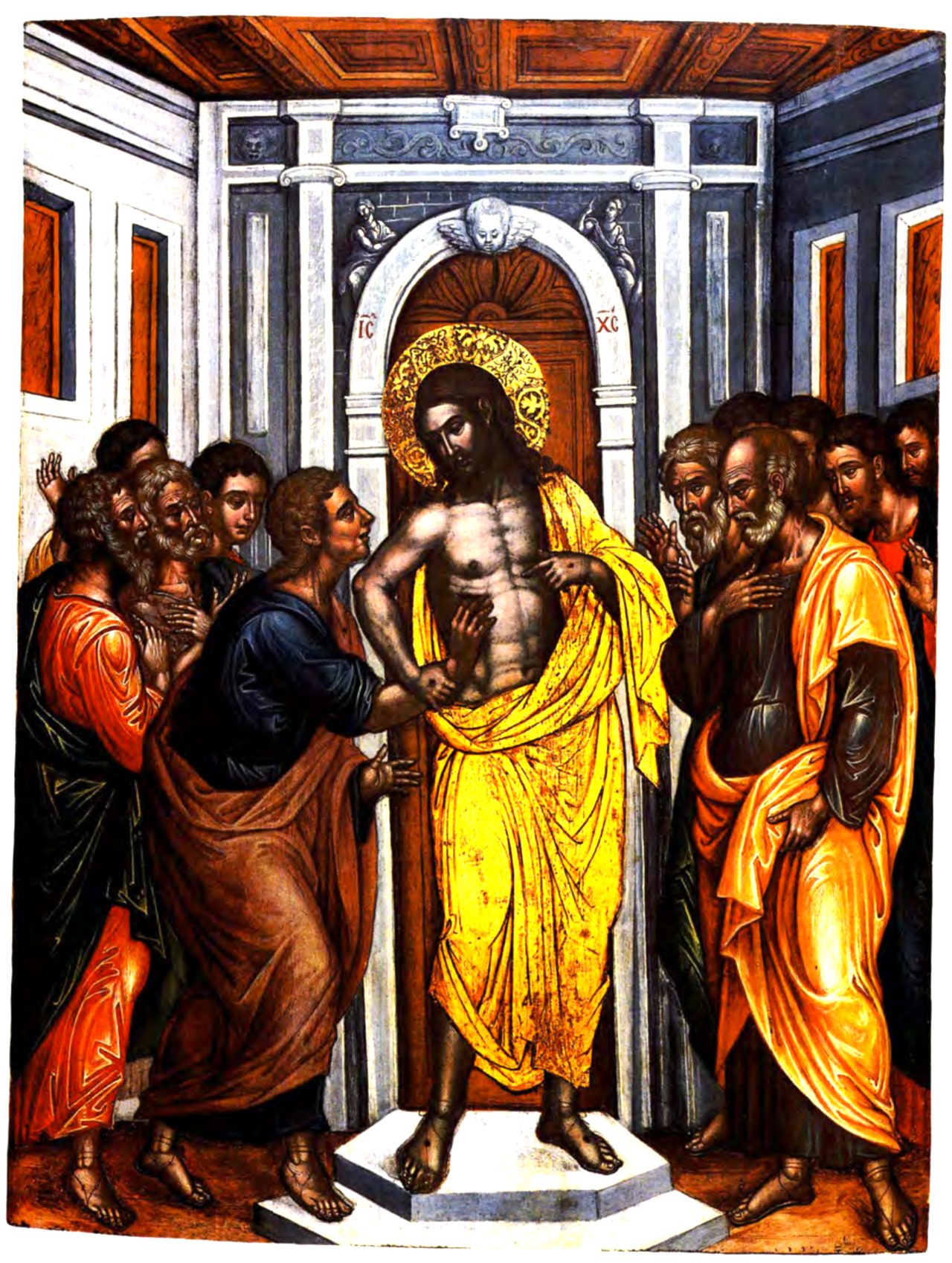
3 min read · 2 sourcesThe Incredulity of Saint Thomas is a tempera painting created by Greek painter Emmanuel Tzanes. Tzanes features a catalog of artwork numbering over one hundred works. He was one of the most prolific artists of the 1600s painting in Crete, Corfu, and Venice. His two brothers Marinos Tzanes and Konstantinos Tzanes were also famous painters but Marinos is more well known for his famous poem The Cretan War (O Kritikos Polemos) Ο Κρητικός Πόλεμος. All three artists were members of the Late Cretan School and early Heptanese School (painting) they were known for participating in the movement that integrated Flemish engravings into the Greek and Italian art world. According to the account of the Gospel of John; the Apostle Thomas doubted to believe the resurrection of Jesus Christ without direct personal experience. He did not believe the resurrected Jesus appeared to the ten other apostles until he could see and feel Jesus' crucifixion wounds. In the story the Apostle Thomas is known as Doubting Thomas. The work of art is a depiction of the historic event. Countless Greek and Italian painters have artistically depicted the dramatic event. Caravaggio created a notable depiction known as The Incredulity of Saint Thomas (Caravaggio). Two works of art are similar to the painting. 1
History
The painting was created using the traditional egg tempera paint and wood panel. The height of the work is 30.7 inches (77.9 cm) and the width of the work is 23.6 inches (59.9cm). The work was completed later in the artists career and is considered one of his mature works. It is similar to two other works completed by Tzanes entitled Christ Healing the Blind and the Samaritan Woman at the Well. Two works by other artists that resemble the painting are an engraving completed by famous German artist Albrecht Dürer and a painting entitled The Incredulity of Thomas created by Maerten de Vos. Tzanes was exposed to the works of both artists. Greek painters of the period copied Flemish and German paintings and engravings. The work is extremely complex and falls in the era of the early Heptanese School. In the background, the artist painted a wall with complex decorative pillars. The wall features painted sculptures and an archway above a door. Maerten de Vos also painted a similar complex geometric design. Albrecht Dürer grouped the figures in his engraving in an orientation similar to both artists. Both Durer and Tzanes painted a heavenly aura above the Christ figure. Thomas has an overwhelming expression of joy that he can see Jesus Christ through direct personal experience. According to John 20:27, Jesus appeared to his disciples, including Thomas, eight days after his resurrection. Jesus invited Thomas the Apostle to touch his hands on his side to feel his wounds which led to doubting Thomas' confession of faith. The Christ figure is sculpturesque and the artist attempts to reveal the figure's anatomy clearly establishing lines, contours, and grooves. Eleven figures are present to witness the event. 1
The text above is adapted from the Wikipedia article “The Incredulity of Saint Thomas (Tzanes)”, available under the Creative Commons Attribution-ShareAlike 4.0 licence. 1
Doubting Thomas is painting by Emmanuel Tzanes, according to the structured record cited below. This entry was generated automatically from that record and has not yet been reviewed by a person familiar with the tradition. 2