The tradition & historical record
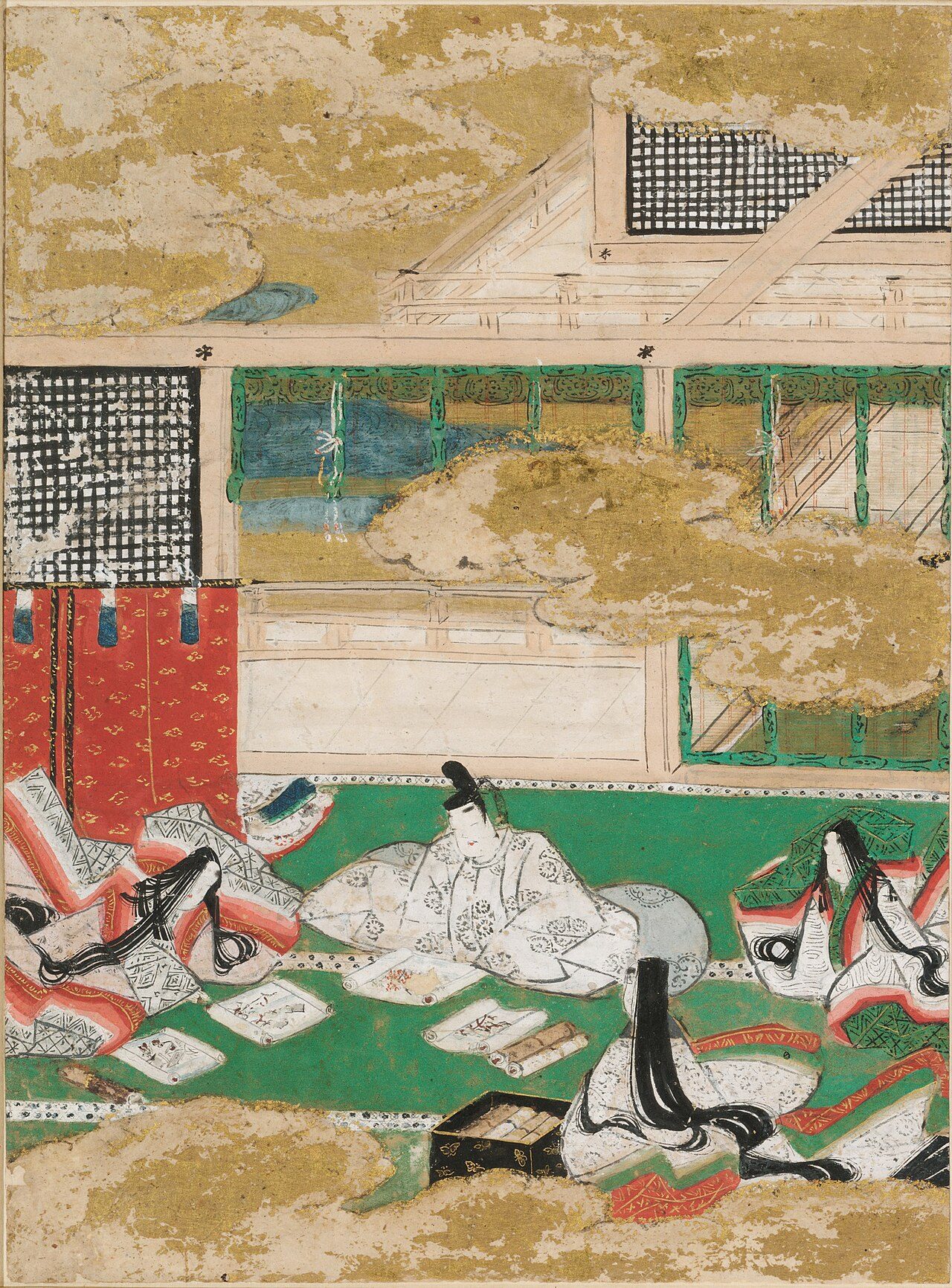
2 min read · 2 sourcesE-awase (絵合, painting contest) was a pastime popular among Japanese nobles during the Kamakura period, although its history dates back to the Heian. In an e-awase contest, participants were divided into two teams and created paintings on a predetermined topic, which were then judged by their peers, as in the older uta-awase poetry contests. It was a popular entertainment at parties and social gatherings. An e-awase contest of this type appears in The Tale of Genji, forming the central theme of chapter 17. An alternative version of the picture contest was simpler, with players matching or associating pre-painted images. This was a development of an older game known as kai-awase (貝合 "shell matching"). Matching scenes would be painted on the inner surfaces of a number of clam shells; these would then be spread on the floor, image side down, and turned over by competitors who would attempt to match the corresponding images. 1
The text above is adapted from the Wikipedia article “E-awase”, available under the Creative Commons Attribution-ShareAlike 4.0 licence. 1
e-awase is Japanese traditional pastime, according to the structured record cited below. This entry was generated automatically from that record and has not yet been reviewed by a person familiar with the tradition. 2
The source record links this tradition to 2 external registers, which can be verified through the citation. 2