The tradition & historical record
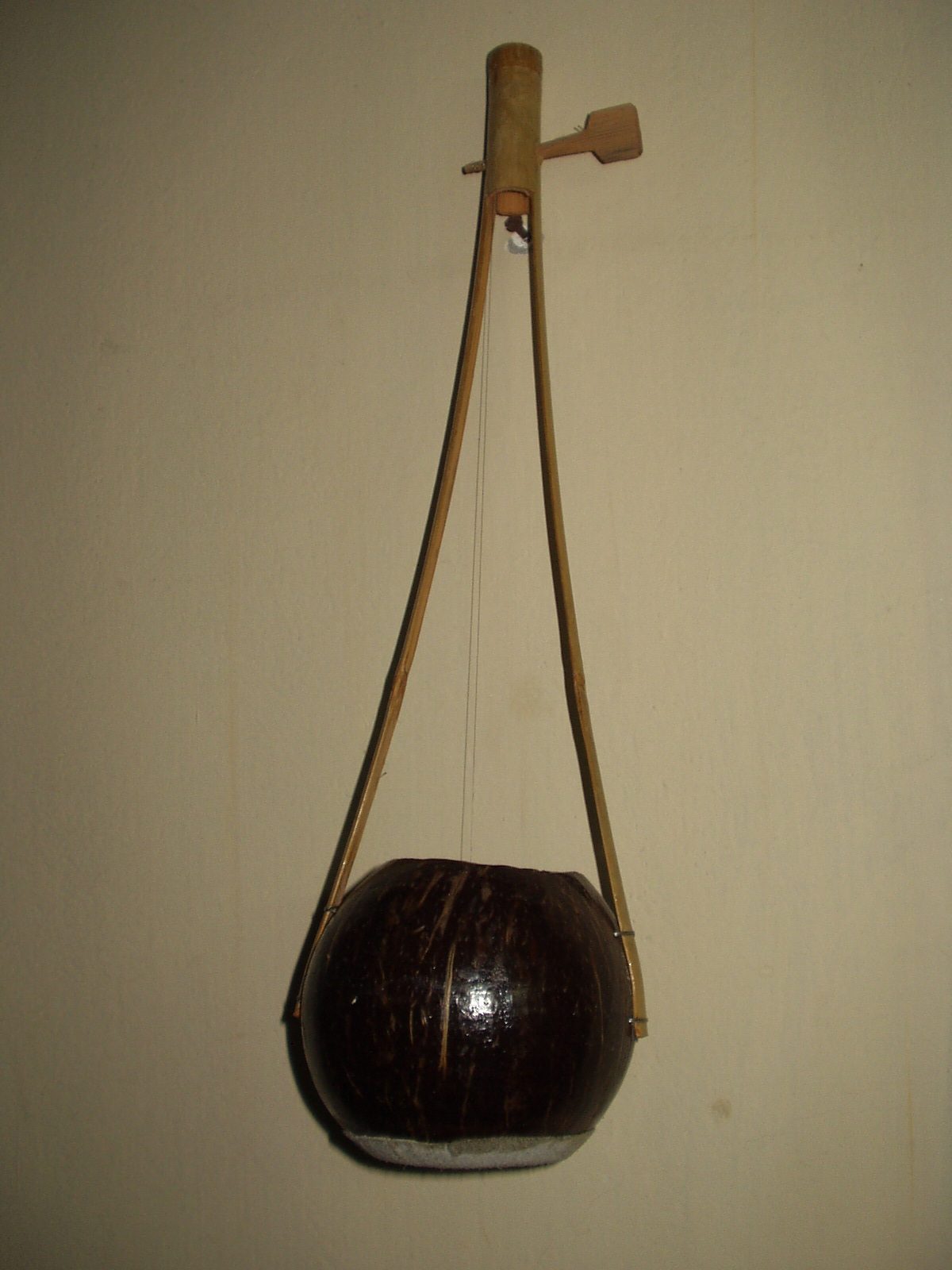
3 min read · 2 sourcesThe ektara (Bengali: একতারা, Nepali: एकतारे; literally 'one-string', also called, ektar, golki Nepali: गोल्) is a one-stringed musical instrument used in the traditional music of Bengal, and used in modern-day music of Bangladesh, and eastern India. Two-stringed versions are called dotara (two strings), a name which also applies to another instrument of the same name. In origin, the ektara was a regular string instrument of Bauls and is plucked with one finger. The ektara is a drone lute consisting of a gourd resonator covered with skin, through which a bamboo neck is inserted. It is used in parts of India and Nepal today by Yogis and wandering holy men to accompany their singing and prayers. In Nepal, the instrument accompanies the singing of the Ramayana and Mahabharata. 1
There are three other instruments used in South Asia which sometimes go by the same name as the ektara but are not related. One form resembles a lute. To make that version, a bamboo stick (90 cm long) is inserted through the side of a wooden bowl (called a "tumbo") and the top of the bowl is covered with deerskin. The instrument has a single string running from a peg at the top, down the length of the stick-neck, across a bridge on the deerhide soundboard, and is tied at the "spike" where the stick pokes through the bowl. 1
Performance
Grove Music Online describes the playing of an ektara as: "The ektārā player holds his instrument upright, gripping the neck just above the resonator and plucking the playing string or strings with the index finger of the same hand. If he is dancing, he supports the gourd resonator with his other hand, in which he carries clusters of small bells which sound as he beats his hand against the gourd." Pressing the two halves of the neck together loosens the string, thus lowering its pitch. The modulation of the tone with each slight flexing of the neck gives the ektara its distinctive sound. There are no markings or measurements to indicate what pressure will produce what note, so the pressure is adjusted by ear. The various sizes of ektara are soprano, tenor, and bass. The bass ektara, sometimes called a dotara often has two strings (as literally implied by do, 'two'). 1
Use
The ektara is a common instrument in Baul music from Bengal. Some controversy has arisen in recent years over the adoption and alleged corruption of Baul music by popular bands and films in Bengal. It has become common to mix traditional instruments like the ektara with more modern sounds in an attempt to appeal to a wide audience, which according to Purna Das Baul is "destroying the true beauty" of Baul music. 1
Kirtan and Sufi chanting
The ektara is commonly used in kirtan chanting, a Hindu devotional practice of singing the divine names and mantras in an ecstatic call and response format. The ektara is used by Sadhus (wandering holy men) for Sufi chanting, as well as by the Bauls. The use of a stringed drone instrument to accompany the voice in religious settings can be documented in images as far back as the 4th-5th century, when a singer was painted in the Ajanta Caves. He was singing or chanting to Indra, and was accompanied by a one-stringed zither that is structurally the same as the alapini vina. 1
The text above is adapted from the Wikipedia article “Ektara”, available under the Creative Commons Attribution-ShareAlike 4.0 licence. 1
ektara is stringed musical instrument, according to the structured record cited below. This entry was generated automatically from that record and has not yet been reviewed by a person familiar with the tradition. 2
The source record links this tradition to 5 external registers, which can be verified through the citation. 2