The tradition & historical record
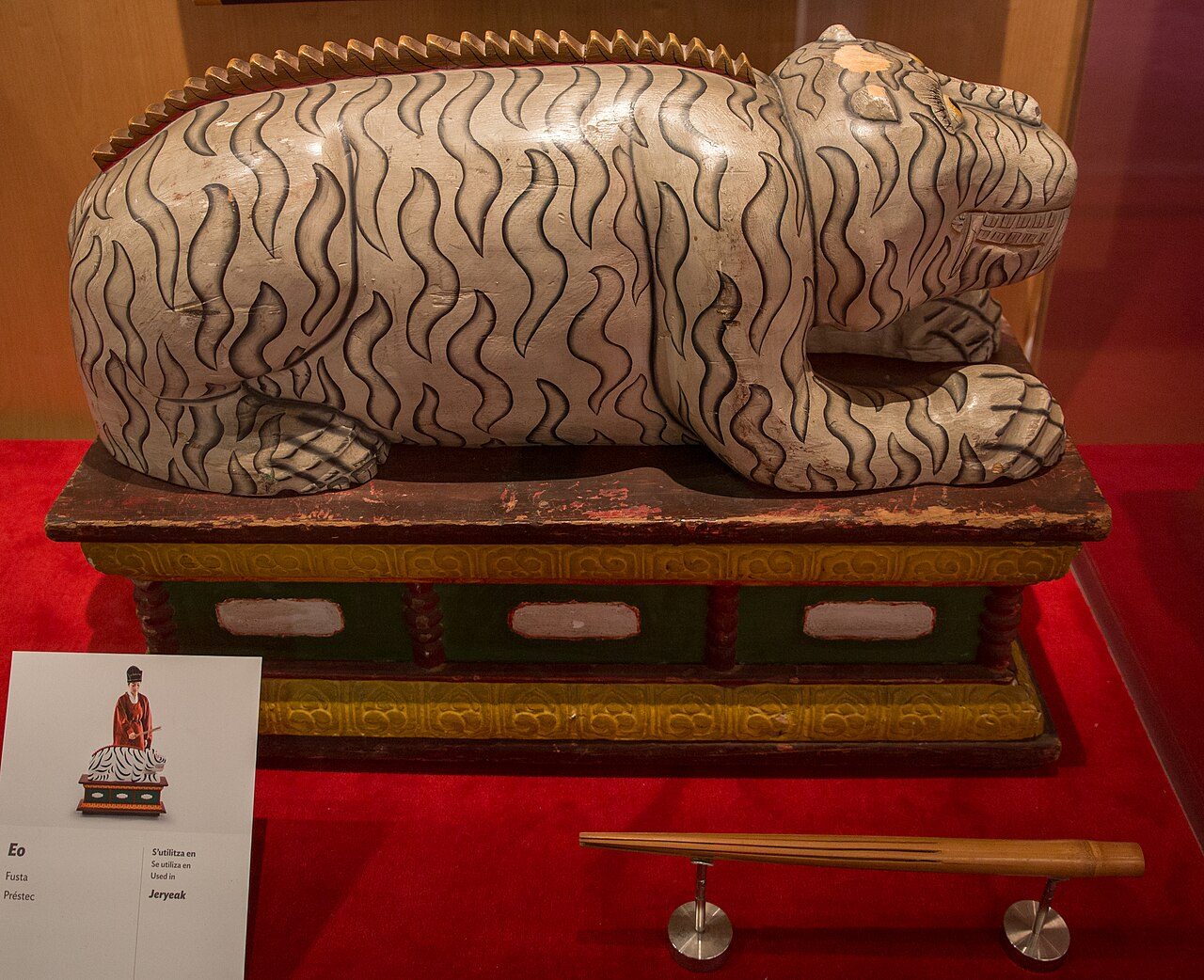
1 min read · 2 sourcesThe eo (Korean: 어; Hanja: 敔) or tiger is a wooden percussion instrument carved in the shape of a tiger with a serrated back, played by running a bamboo whisk across the serrations. The instrument is often played to punctuate the ends of sections of music. It is derived from the Chinese yu. On the back of the tiger is a jeoeo (저어, 齟齬) that looks like 27 saws. When the music stops, the performer knocks and scratches this jeoeo through the jin (진) and gives a signal. 1
The text above is adapted from the Wikipedia article “Eo (instrument)”, available under the Creative Commons Attribution-ShareAlike 4.0 licence. 1
Eo is Korean percussion instrument, according to the structured record cited below. This entry was generated automatically from that record and has not yet been reviewed by a person familiar with the tradition. 2
The source record links this tradition to 2 external registers, which can be verified through the citation. 2