The tradition & historical record
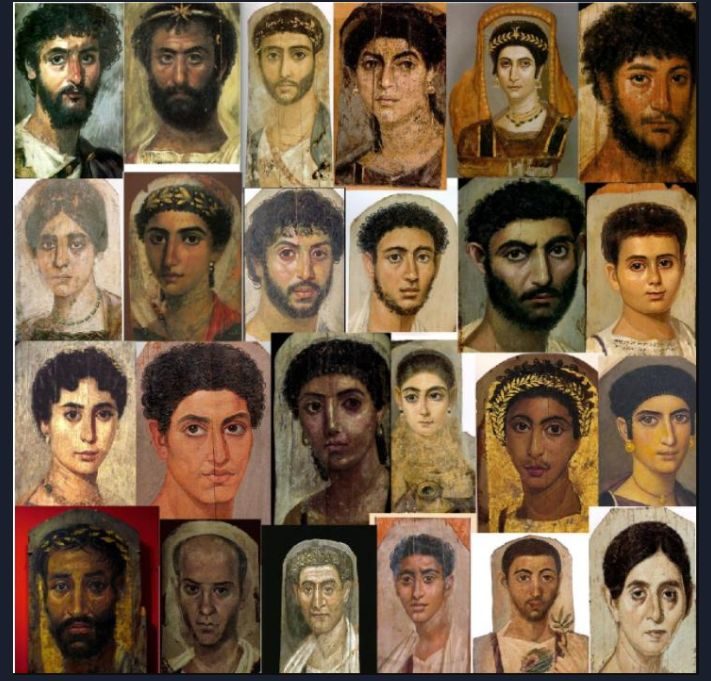
5 min read · 2 sourcesMummy portraits or Fayum mummy portraits are a type of naturalistic encaustic portrait typically painted on wooden boards attached to the mummies of upper class individuals living in Egypt during the Roman period. They belong to the tradition of panel painting, one of the most highly regarded forms of art in the Classical world. The Fayum portraits are the only large body of art from that tradition to have survived. Mummy portraits have been found across Egypt, but are most common in the Faiyum Basin, particularly from Hawara and the Hadrianic Roman city Antinoopolis. "Faiyum portraits" is generally used as a stylistic, rather than a geographic, description. While painted cartonnage mummy cases date back to pharaonic times, the Faiyum mummy portraits were an innovation dating to the time of Roman rule in Egypt. The portraits date to the Imperial Roman era, from the late 1st century BC or the early 1st century AD onwards. It is not clear when their production ended, but some research suggests the middle of the 3rd century. They are among the largest groups among the very few survivors of the panel painting tradition of the classical world, which continued into Byzantine, Eastern Mediterranean, and Western traditions in the post-classical world, including the local tradition of Coptic Christian iconography in Egypt. The portraits covered the faces of bodies that were mummified for burial. 1
Materials and techniques
A majority of images show a formal portrait of a single figure, facing and looking toward the viewer, from an angle that is usually slightly turned from full face. The figures are presented as busts against a monochrome background which in some instances are decorated. The individuals are both male and female and range in age from childhood to old age. 1
Painted surface
The majority of preserved mummy portraits were painted on boards or panels, made from different imported hardwoods, including oak, lime, sycamore, cedar, cypress, fig, and citrus. The wood was cut into thin rectangular panels and made smooth. The finished panels were set into layers of wrapping that enclosed the body and were surrounded by bands of cloth, giving the effect of a window-like opening through which the face of the deceased could be seen. Portraits were sometimes painted directly onto the canvas or rags of the mummy wrapping (cartonnage painting). 1
Painting techniques
The wooden surface was sometimes primed for painting with a layer of plaster. In some cases the primed layer reveals a preparatory drawing. Two painting techniques were employed: encaustic (wax) painting and animal glue tempera. The encaustic images are striking because of the contrast between vivid and rich colours, and comparatively large brush-strokes, producing an "Impressionistic" effect. The tempera paintings have a finer gradation of tones and chalkier colours, giving a more restrained appearance. In some cases, gold leaf was used to depict jewellery and wreaths. There also are examples of hybrid techniques or of variations from the main techniques. The Fayum portraits reveal a wide range of painterly expertise and skill in presenting a lifelike appearance. The naturalism of the portraits is often revealed in knowledge of anatomic structure and in skilled modelling of the form by the use of light and shade, which gives an appearance of three-dimensionality to most of the figures. The graded flesh tones are enhanced with shadows and highlights indicative of directional lighting. 1
People of Fayum
Under Hellenistic rule, Egypt hosted several Greek settlements, mostly concentrated in Alexandria, but also in a few other cities, where Greek settlers lived alongside some seven to ten million native Egyptians, or possibly a total of three to five million for all ethnicities, according to lower estimates. Faiyum's earliest Greek inhabitants were soldier-veterans and cleruchs (elite military officials) who were settled by the Ptolemaic kings on reclaimed lands. Native Egyptians also came to settle in Faiyum from all over the country, notably the Nile Delta, Upper Egypt, Oxyrhynchus and Memphis, to undertake the labor involved in the land reclamation process, as attested by personal names, local cults and recovered papyri. It is estimated that as much as 30 percent of the population of Faiyum was Greek during the Ptolemaic period, with the rest being native Egyptians. By the Roman period, much of the "Greek" population of Faiyum was made-up of either Hellenized Egyptians or people of mixed Egyptian-Greek origins. Later, in the Roman Period, many veterans of the Roman army, who, initially at least, were not Egyptian but people from disparate cultural and ethnic backgrounds, settled in the area after the completion of their service, and formed social relations and intermarried with local populations. While commonly believed to depict Greek settlers in Egypt, the Faiyum portraits instead reflect the complex synthesis of the predominant Egyptian culture and that of the elite Greek minority in the city. 1
Age profile of those depicted
Most of the portraits depict the deceased at a relatively young age, and many show children. According to Susan Walker, C.A.T. scans reveal a correspondence of age and sex between mummy and image. She concludes that the age distribution reflects the low life expectancy at the time. A number of portraits of adolescent males indicate some form of facial hair either on the chin or upper lip. There are no real attestations for growth of facial hair in Egyptian culture given the culture of hairlessness as a manifestation of cleanliness. This indicates perhaps a deep cultural influence from the Greeks rather than the Romans, as emphasis would be on the removal of facial hair. Egyptologist Dominic Monserrat concludes that this detail could indicate the depicted deceased would have died according to Greek cultural values "at his optimum sexual vitality and attractiveness." 1
The text above is adapted from the Wikipedia article “Fayum mummy portraits”, available under the Creative Commons Attribution-ShareAlike 4.0 licence. 1
Fayum mummy portraits is type of ancient naturalistic portraits from Egypt, according to the structured record cited below. This entry was generated automatically from that record and has not yet been reviewed by a person familiar with the tradition. 2
The source record links this tradition to 12 external registers, which can be verified through the citation. 2