The tradition & historical record
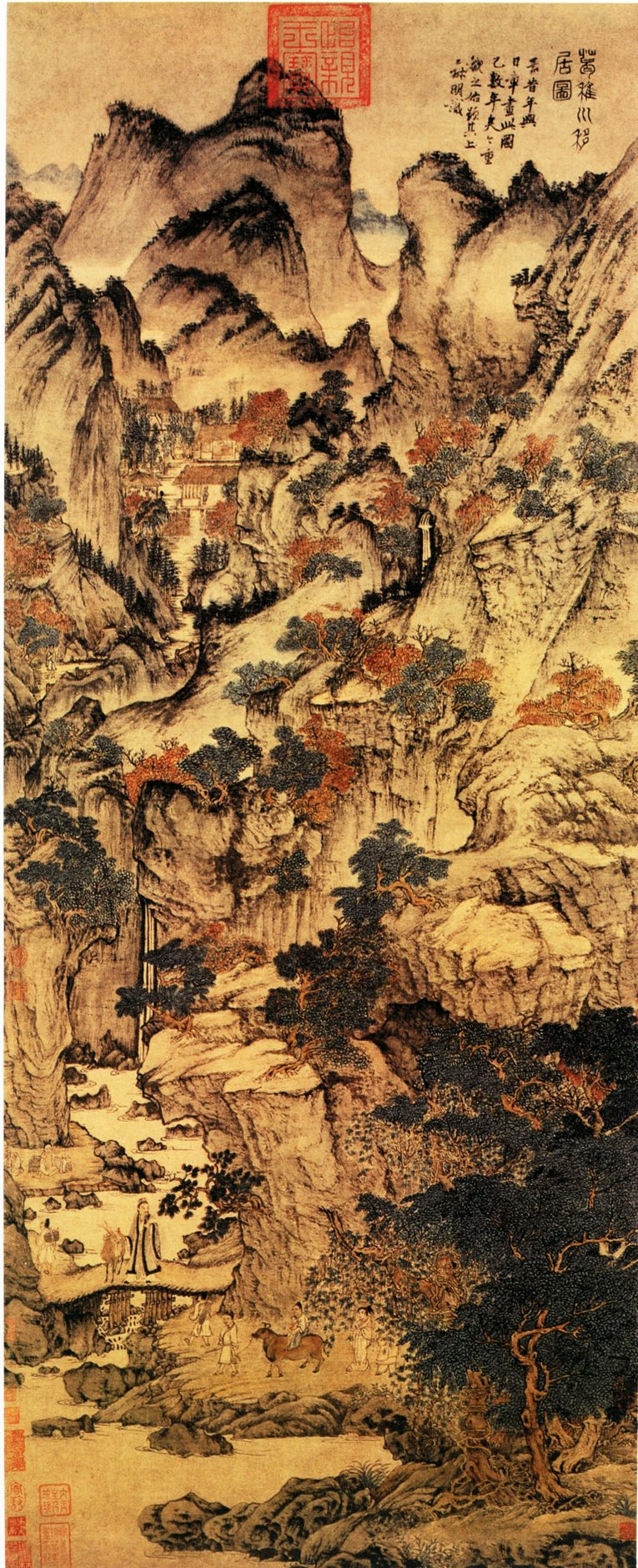
2 min read · 2 sourcesThe Four Masters of the Yuan dynasty (Chinese: 元四家; pinyin: Yuán Sì Jiā) is a name used to collectively describe the four Chinese painters: Huang Gongwang, Wu Zhen, Ni Zan, and Wang Meng, who were active during the Yuan dynasty (1271–1368). They were revered during the Ming dynasty and later periods as major exponents of the tradition of “literati painting” (wenrenhua), which was concerned more with individual expression and learning than with outward representation and immediate visual appeal. Huang Gongwang and Wu Zhen belonged to the earlier generation of artists in the Yuan period and consciously emulated the work of ancient masters, especially the pioneering artists of the Five Dynasties period, such as Dong Yuan and Juran, who rendered landscape in a broad, almost Impressionistic manner, with coarse brushstrokes and wet ink washes. While these painters were also respected by the two younger Yuan masters, the restrained thinness of Ni Zan and the almost embroidered richness of Wang Meng distinguished their work from that of their immediate predecessors. The work of the Four Masters spurred experimentation with novel brushstroke techniques, with a new attention to the vocabulary of brush manipulation. 1
The text above is adapted from the Wikipedia article “Four Masters of the Yuan dynasty”, available under the Creative Commons Attribution-ShareAlike 4.0 licence. 1
Four Masters of the Yuan Dynasty is term describe the four Chinese painters, according to the structured record cited below. This entry was generated automatically from that record and has not yet been reviewed by a person familiar with the tradition. 2
The source record links this tradition to 4 external registers, which can be verified through the citation. 2