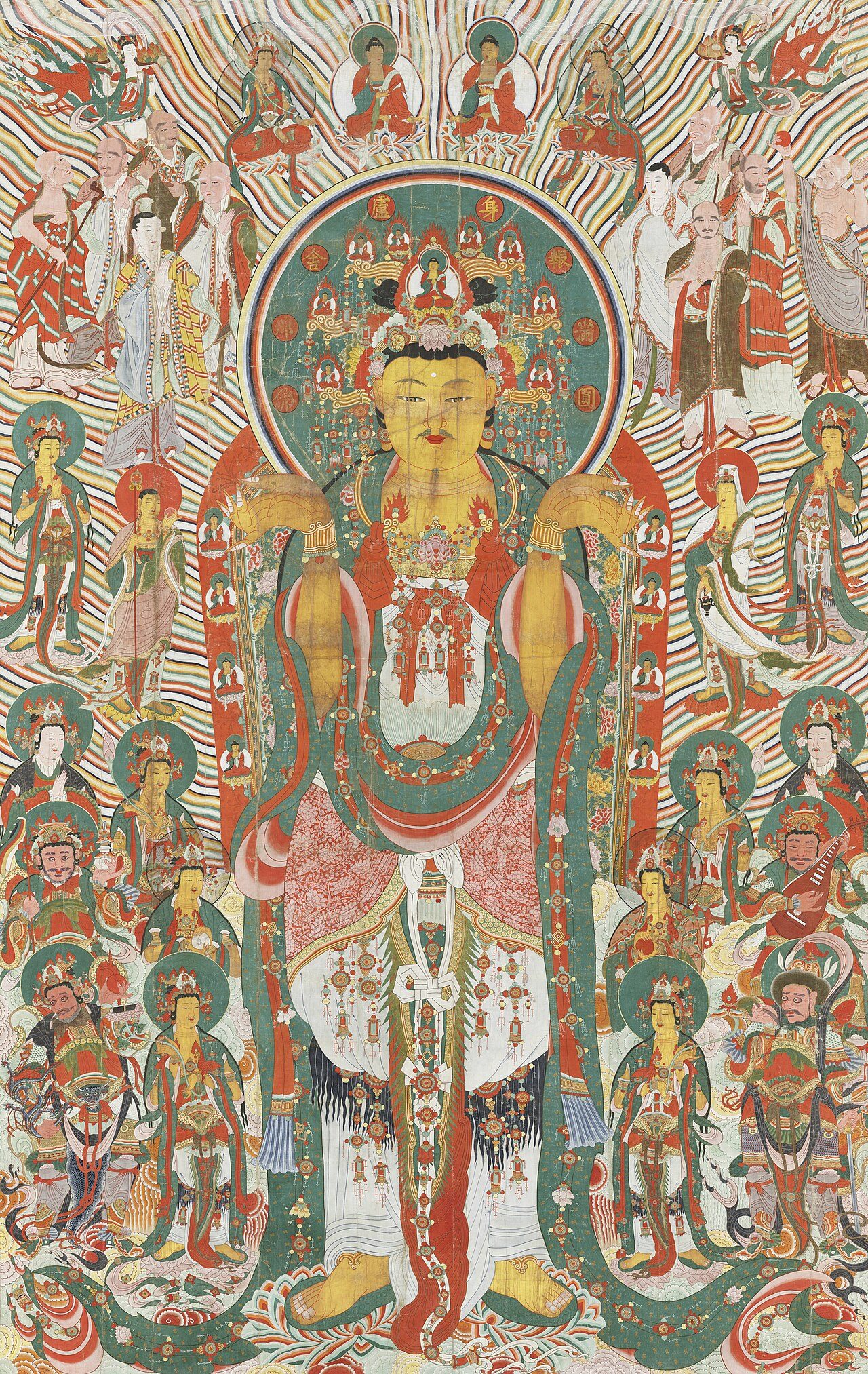
The tradition & historical record
1 min read · 2 sourcesGwaebul (괘불), meaning "Large Buddhist Banner Painting," are extremely large-scale Buddhist scroll paintings found throughout Korea. They are fairly rare, and only 53 were studied between 1986 and 2001. The paintings are typically brought out only rarely for special festivals or holidays such as Buddha's Birthday or Gwaebul Festivals when they are unrolled and hung from tall poles in the temple courtyard. When not in use, gwaebul are stored in a box behind the altar in a temple hall. They compare with the thongdrels of Bhutanese and Tibetan art. These are made from applique silk, and in Tibetan monasteries thangka walls are constructed specially for their display. 1
Status as Cultural Assets
Of the known gwaebul, seven have been designated as National Treasures, 47 as Treasures, and eight as Registered Cultural Heritage objects. 1
The text above is adapted from the Wikipedia article “Gwaebul”, available under the Creative Commons Attribution-ShareAlike 4.0 licence. 1
Gwaebul is Painted Buddha on a woven fabric, according to the structured record cited below. This entry was generated automatically from that record and has not yet been reviewed by a person familiar with the tradition. 2
The source record links this tradition to 2 external registers, which can be verified through the citation. 2