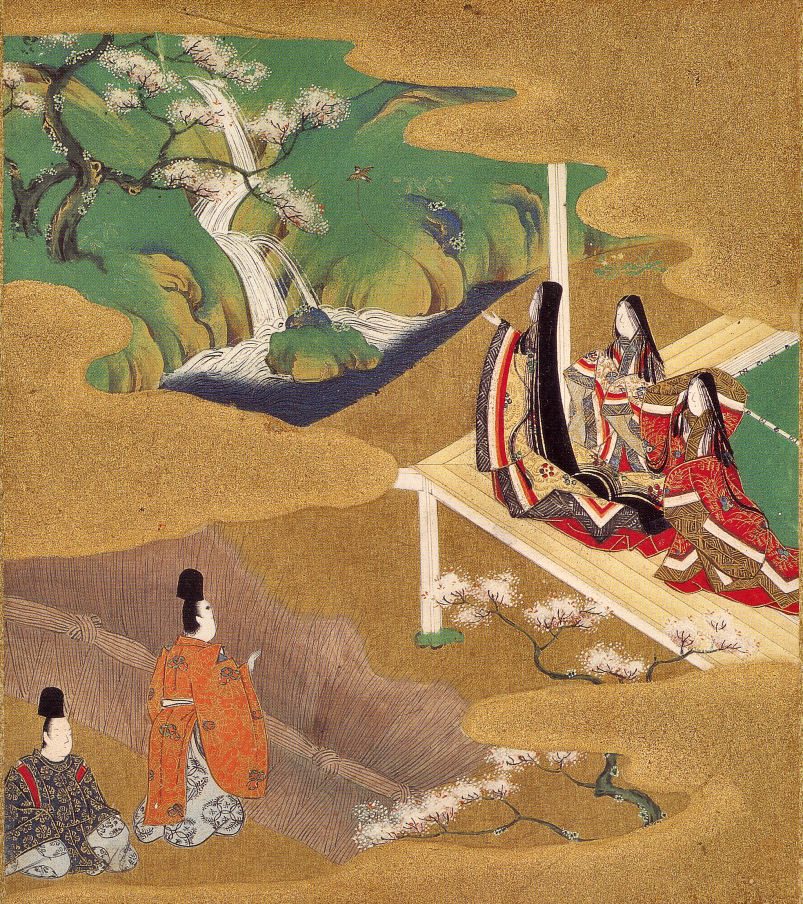
The tradition & historical record
1 min read · 2 sourcesHikime kagibana (引目鉤鼻) describes a feature of illustration continuing in the repertoire of Japanese Art from the Heian period through the Kamakura period, most notably in yamato-e e-maki. Its influence can be traced right up the Edo-period ukiyo-e or later. 1
Works done in the hikime kagibana style show faces with essentially identical features.: slit eyes and hook nose. The Hikime Kagibana style also does not allow a full front view of a face. There are only two main viewpoints used to depict faces: an oblique angle of 30 degrees from the front and a right angle giving a profile. When faces are shown from a right angle, the eyebrows and corners of the eyes are visible but the nose is not – something that is not possible in actuality. 1
The text above is adapted from the Wikipedia article “Hikime kagibana”, available under the Creative Commons Attribution-ShareAlike 4.0 licence. 1
hikime kagibana is recorded in open cultural data. The structured record cited below does not describe the practice, and this entry has not yet been reviewed by a person familiar with the tradition. 2
The source record links this tradition to 2 external registers, which can be verified through the citation. 2