The tradition & historical record
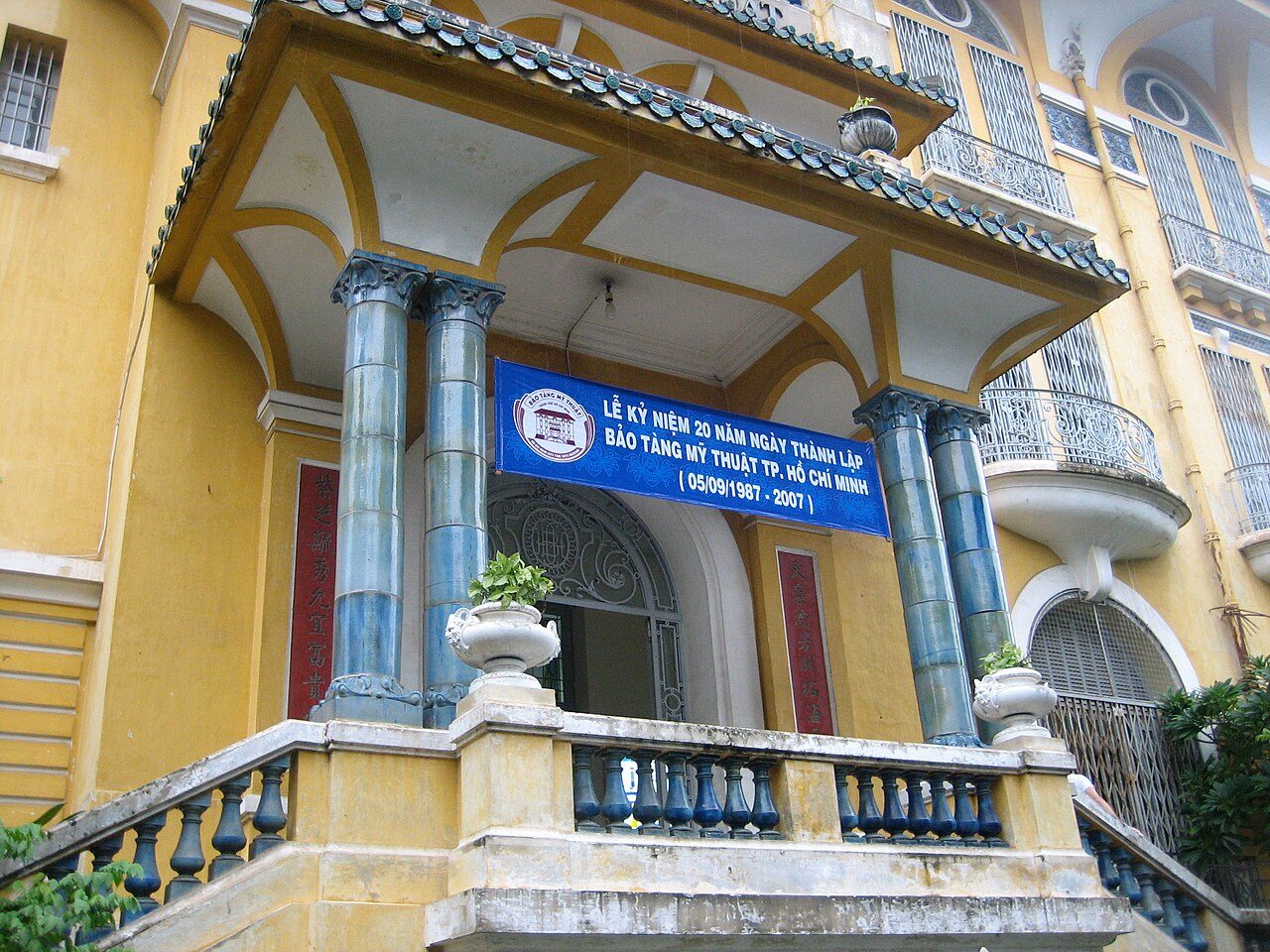
2 min read · 2 sourcesHo Chi Minh City Museum of Fine Arts (Vietnamese: Bảo tàng Mỹ thuật Thành phố Hồ Chí Minh) is the major art museum of Ho Chi Minh City, Vietnam, and second in the country only to the Vietnam National Museum of Fine Arts in Hanoi. The museum covers three three-floor buildings which house a collection featuring Vietnamese art works in sculpture, oil, silk painting and lacquer painting, as well as traditional styles including woodcut paintings in the Hàng Trống, Đông Hồ, and Kim Hoàng styles, as well as Vietnamese ceramics and a collection of ancient Buddhist art. The first floor also includes a commercial gallery of art works. Archaeological exhibits such as some of the country's best Champa and Óc Eo relics are displayed on the third floor. The main building was constructed by a French architect Rivera between 1929 and 1934 as a villa for the Hua (Hui-Bon-Hoa; Traditional Chinese: 黄文華; Sino-Vietnamese: Huỳnh Văn Hoà) family. The museum moved there in 1987. 1
The text above is adapted from the Wikipedia article “Ho Chi Minh City Museum of Fine Arts”, available under the Creative Commons Attribution-ShareAlike 4.0 licence. 1
Ho Chi Minh City Museum of Fine Arts is art museum in Vietnam, according to the structured record cited below. This entry was generated automatically from that record and has not yet been reviewed by a person familiar with the tradition. 2
The source record links this tradition to 7 external registers, which can be verified through the citation. 2