The tradition & historical record
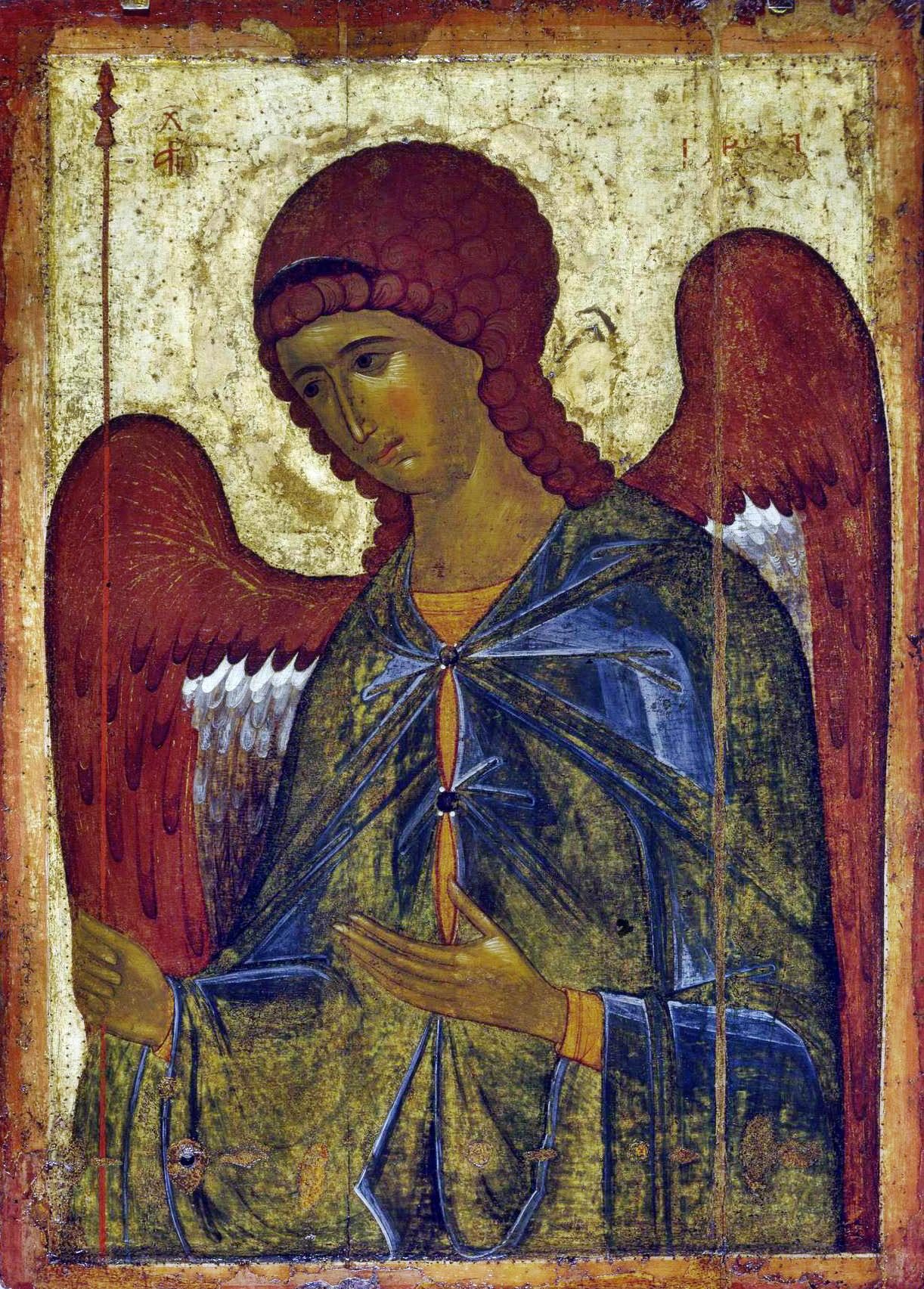
6 min read · 2 sourcesAn icon is a religious work of art, most commonly a painting, in the cultures of the Eastern Orthodox, Oriental Orthodox, Catholic, and Lutheran churches. The most common subjects include Jesus, Mary, saints, and angels. Although especially associated with portrait style images concentrating on one or two main figures, the term also covers most of the religious images in a variety of artistic media produced by Eastern Christianity, including narrative scenes, usually from the Bible or the lives of saints. Icons are most commonly painted on wood panels with egg tempera, but they may also be cast in metal or carved in stone or embroidered on cloth or done in mosaic or fresco work or printed on paper or metal, etc. Comparable images from Western Christianity may be classified as "icons", although "iconic" may also be used to describe the static style of a devotional image. In the Greek language, the term for icon painting uses the same word as for "writing", and Orthodox sources often translate it into English as icon writing. Eastern Orthodox tradition holds that the production of Christian images dates back to the very early days of Christianity, and that it has been a continuous tradition since then. Modern academic art history considers that, while images may have existed earlier, the tradition can be traced back only as far as the 3rd century, and that the images which survive from Early Christian art often differ greatly from later ones. 1
Origins in primitive Christianity in the first century
Pre-Christian religions had produced and used art works. Statues and paintings of various gods and deities were regularly worshiped and venerated. It is unclear when Christians took up such activities. Christian tradition dating from the 8th century identifies Luke the Evangelist as the first icon painter, but this might not reflect historical facts. A general assumption that early Christianity was generally aniconic, opposed to religious imagery in both theory and practice until about 200, has been challenged by Paul Corby Finney's analysis of early Christian writing and material remains (1994). His assumption distinguishes three different sources of attitudes affecting early Christians on the issue: "first that humans could have a direct vision of God; second that they could not; and, third, that although humans could see God they were best advised not to look, and were strictly forbidden to represent what they had seen". These derived respectively from Greek and Near Eastern pagan religions, from Ancient Greek philosophy, and from the Jewish tradition and the Old Testament. Of the three, Finney concludes that "overall, Israel's aversion to sacred images influenced early Christianity considerably less than the Greek philosophical tradition of invisible deity apophatically defined", so placing less emphasis on the Jewish background of most of the first Christians than most traditional accounts. Finney suggests that "the reasons for the non-appearance of Christian art before 200 have nothing to do with principled aversion to art, with other-worldliness, or with anti-materialism. The truth is simple and mundane: Christians lacked land and capital. Art requires both. 1
Icons in Eusebius to Philostorgius (425 AD)
Elsewhere in his Church History, Eusebius reports seeing what he took to be portraits of Jesus, Peter and Paul, and also mentions a bronze statue at Banias/Paneas under Mount Hermon, of which he wrote, "They say that this statue is an image of Jesus". Further, he relates that locals regarded the image as a memorial of the healing of the woman with an issue of blood by Jesus (Luke 8:43–48), because it depicted a standing man wearing a double cloak and with arm outstretched, and a woman kneeling before him with arms reaching out as if in supplication. John Francis Wilson suggests the possibility that this refers to a pagan bronze statue whose true identity had been forgotten. Some have thought it to represent Aesculapius, the Greek god of healing, but the description of the standing figure and the woman kneeling in supplication precisely matches images found on coins depicting the bearded emperor Hadrian (r. 117–138) reaching out to a female figure—symbolizing a province—kneeling before him. When asked by Constantia (Emperor Constantine's half-sister) for an image of Jesus, Eusebius denied the request, replying: "To depict purely the human form of Christ before its transformation, on the other hand, is to break the commandment of God and to fall into pagan error." Hence Jaroslav Pelikan calls Eusebius "the father of iconoclasm". After the emperor Constantine I extended official toleration of Christianity within the Roman Empire in 313, huge numbers of pagans became converts. This period of the Historiography of Christianization of the Roman Empire probably saw the use of Christian images become very widespread among the faithful, though with great differences from pagan habits. 1
Theodosius to Justinian
After adoption of Christianity as the only permissible Roman state religion under Theodosius I, Christian art began to change not only in quality and sophistication, but also in nature. This was in no small part due to Christians being free for the first time to express their faith openly without persecution from the state, in addition to the faith spreading to the non-poor segments of society. Paintings of martyrs and their feats began to appear, and early writers commented on their lifelike effect, one of the elements a few Christian writers criticized in pagan art—the ability to imitate life. The writers mostly criticized pagan works of art for pointing to false gods, thus encouraging idolatry. Statues in the round were avoided as being too close to the principal artistic focus of pagan cult practices, as they have continued to be (with some small-scale exceptions) throughout the history of Eastern Christianity. Nilus of Sinai (d. c. 430), in his Letter to Heliodorus Silentiarius, records a miracle in which Saint Plato of Ankyra appeared to a Christian in a dream. The saint was recognized because the young man had often seen his portrait. This recognition of a religious apparition from likeness to an image was also a characteristic of pagan pious accounts of appearances of gods to humans, and was a regular topos in hagiography. One critical recipient of a vision from Saint Demetrius of Thessaloniki apparently specified that the saint resembled the "more ancient" images of him—presumably the 7th-century mosaics still in Hagios Demetrios. Another, an African bishop, had been rescued from Arab slavery by a young soldier called Demetrios, who told him to go to his house in Thessaloniki. 1
Luke's portrait of Mary
It is in a context attributed to the 5th century that the first mention of an image of Mary painted from life appears, though earlier paintings on catacomb walls bear resemblance to modern icons of Mary. Theodorus Lector, in his 6th-century History of the Church 1:1 stated that Eudokia (wife of emperor Theodosius II, d. 1
Iconoclast period
There was a continuing opposition to images and their misuse within Christianity from very early times. 1
The text above is adapted from the Wikipedia article “Icon”, available under the Creative Commons Attribution-ShareAlike 4.0 licence. 1
icon is religious work of art, generally a panel painting, in Eastern Christianity, according to the structured record cited below. This entry was generated automatically from that record and has not yet been reviewed by a person familiar with the tradition. 2
The source record links this tradition to 45 external registers, which can be verified through the citation. 2