The tradition & historical record
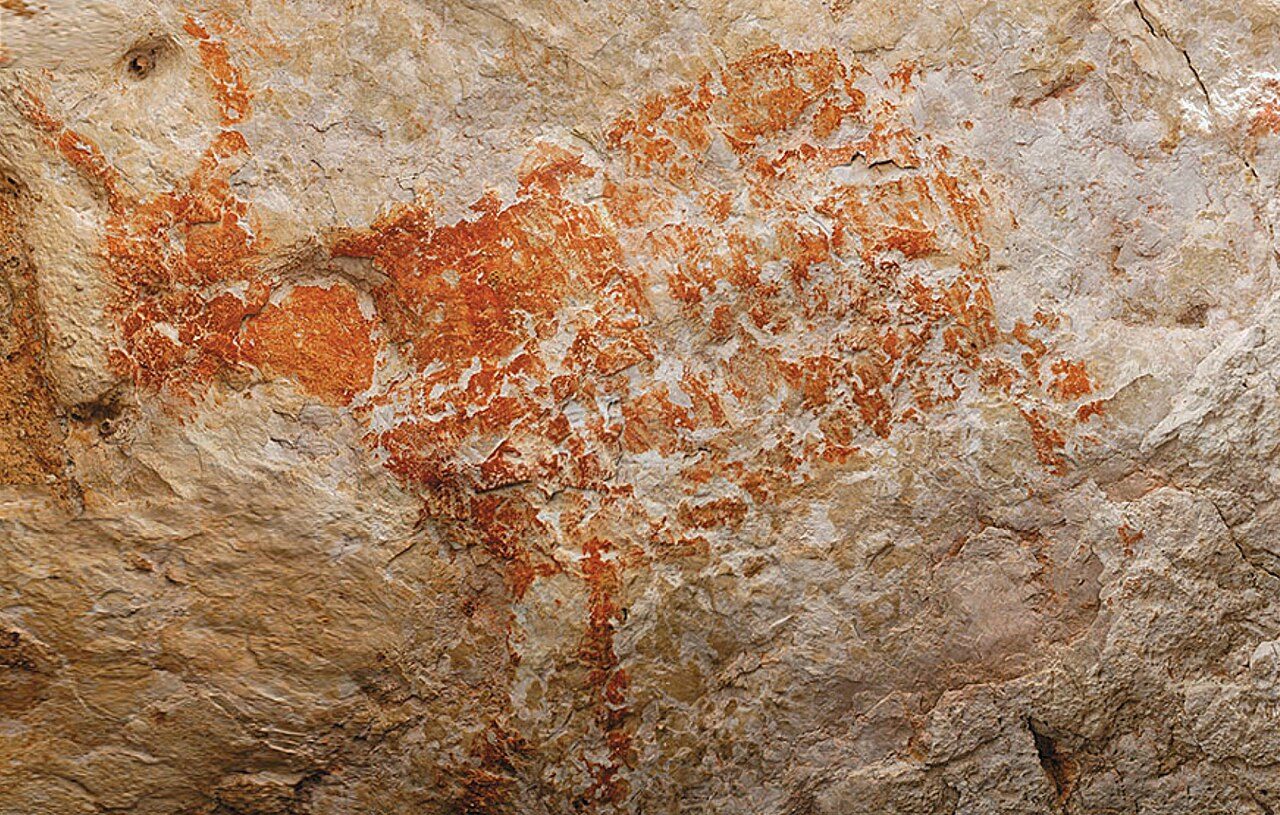
6 min read · 2 sourcesIndonesian painting has a very long tradition and history in Indonesian art, though because of the climatic conditions very few early examples survive, Indonesia is home to some of the oldest paintings in the world. The earliest Indonesian paintings were the rock paintings of prehistoric times, such as the petroglyphs found in places like in the caves in the district of Maros in Sulawesi, Indonesia. The Stone Age rock paintings found in Maros Cave are approximately 40,000 years old and are listed as one of the oldest paintings in the world. In November 2018, however, scientists reported the discovery of the then-oldest known figurative art painting, over 40,000 (perhaps as old as 52,000) years old, of an unknown animal, in the cave of Lubang Jeriji Saléh on the Indonesian island of Borneo (Kalimantan). In December 2019, figurative cave paintings depicting pig hunting in the Maros-Pangkep karst in Sulawesi were estimated to be even older, at at least 43,900 years old. The finding was noted to be “the oldest pictorial record of storytelling and the earliest figurative artwork in the world”. And more recently, in 2021, cave art of a pig found in an Indonesian island, and dated to over 45,500 years, has been reported. 1
Prehistoric
In prehistoric times, painting played an important role because every painting had a specific meaning and purpose. At that time the paintings were made on cave walls and rocks. One of the techniques used by cave people to paint on cave walls is by placing their hands on the cave walls, then spraying them with chewing leaves or colored mineral stones. This spraying technique is known as the aerograph. Another medium used to make paintings is clay. The dyes used come from natural ingredients such as minerals and animal fats. In general, the purpose and theme chosen for making these paintings are magical. Examples of prehistoric paintings can be seen at Leang Pattakere Cave in Maros, South Sulawesi. The painting depicts a hunting scene. In addition, there are also paintings on cave walls on the south coast of West Papua on the island of New Guinea. The paintings in these places depict ancestors. The thing that drew attention to the paintings scattered over such a vast area were the silhouettes of the hands everywhere. These handprints are also found in South Sulawesi, on paintings on rock cliffs in the bay of Seram Island, in the Berau Gulf region, Papua, and on the island of Arguni and in the Kai Island. Apart from the hand shadow motif, the motifs found in many places are human figures, boats, sun, moon, birds, fish, turtles, humans, lizards, legs, and hog deer. 1
Classical Hindu-Buddhist art
After the end of prehistoric times, the Indonesian people had various kinds of expertise, such as making large stones in the form of stepped pyramids, metal casting, agriculture and tools, sculpture, and batik making, which were developed with the addition of new elements at the time of the influx of Hindu influence. This period is a new chapter in the periodization of culture in Indonesia. It is a historical era because relics have been found in the form of writing from this time. This happened because of cultural contact with India around the 5th century AD. Common themes used in works of art at this time include religion, mythology, legends, and historical stories. For example, a classical Balinese painting containing the Ramayana and Mahabharata stories. The style used in the wall carvings of the Majapahit era is the wayang style with a dense, stylized composition of the horizontal plane. The term wayang style here shows a sign of similarity in the stylized forms of the characters from wayang kulit stories and classical Balinese paintings. Painting color is limited to the colors that can be achieved by natural materials such as bark, leaves, soil, and soot. The painting is made on elongated fabric without being attached to the span frame to resemble a scroll painting. Along with temple wall carvings and lontar pictures, classical Balinese painting is an educational medium following religious teachings or the philosophy of life in the Hindu era. Painting in Bali began when the Hindu culture of East Java was pressured by Islamic culture. Paintings that blend and acculturate Hindu culture are unique and have been recognized by various countries until now. 1
Islamic art
As in the Hindu era, Islamic art in Indonesia is centered in the Kraton or palace. An artist's job is not only to create works of art, but he is also an expert in various sciences and philosophies, in addition to knowing other branches of art. In Islamic art, there is a prohibition against depicting the motives of living things in realistic forms. The artists made efforts to compromise with the previous culture. In this case, Islamic tolerance supports the continuity of the previous fine art tradition, but with a new breath, such as decoration with stylized animal and human motifs combined with Arabic letters, both in the application of aesthetic elements to mosques, the cultivation of craft art, painting or calligraphy. As for the making of the statues, they are made so disguised that it is as if this image is only a decoration of leaves or flora. Usually paintings are made as decorations depicting stories of characters in wayang or animal paintings of candra sangkala and about the history of the prophet. The form of painting disguised as a glass painting originating from Cirebon. 1
Modern art
The new Indonesian painting that has developed in Indonesia, like art in general, cannot be fully understood without placing it within the overall framework of Indonesian society and culture. The development of Indonesian painting works was strongly influenced by historical forces. Indonesian painting only developed after the era of Islamic painting. Painting at this time experienced a very rapid development along with the development of Indonesian art in which figures such as Raden Saleh, Affandi, Basuki Abdullah and others. Indonesian modern painting began with the entry of Dutch colonialism in Indonesia. The trend of Western European art at that time towards romanticism made many Indonesian painters participate in developing this genre. Raden Saleh Syarif Bustaman is one of the assistants who was lucky enough to learn European-style painting which was practiced by Dutch painters. Raden Saleh then continued to study painting in the Netherlands, so that he became a respected Indonesian painter and became a court painter in several European countries. However, Indonesian painting did not go through the same developments as during the European renaissance, so its development did not go through the same stages. The era of revolution in Indonesia made many Indonesian painters shift from romantic themes to tend toward "populist". Objects related to the natural beauty of Indonesia were considered a theme that betrayed the nation, because they were considered to be a curse on the capitalists who were enemies of the popular ideology of communism at that time. 1
The Period of Raden Saleh (Pioneer)
In the mid-19th cen… 1
The text above is adapted from the Wikipedia article “Indonesian painting”, available under the Creative Commons Attribution-ShareAlike 4.0 licence. 1
Indonesian painting is recorded in open cultural data. The structured record cited below does not describe the practice, and this entry has not yet been reviewed by a person familiar with the tradition. 2