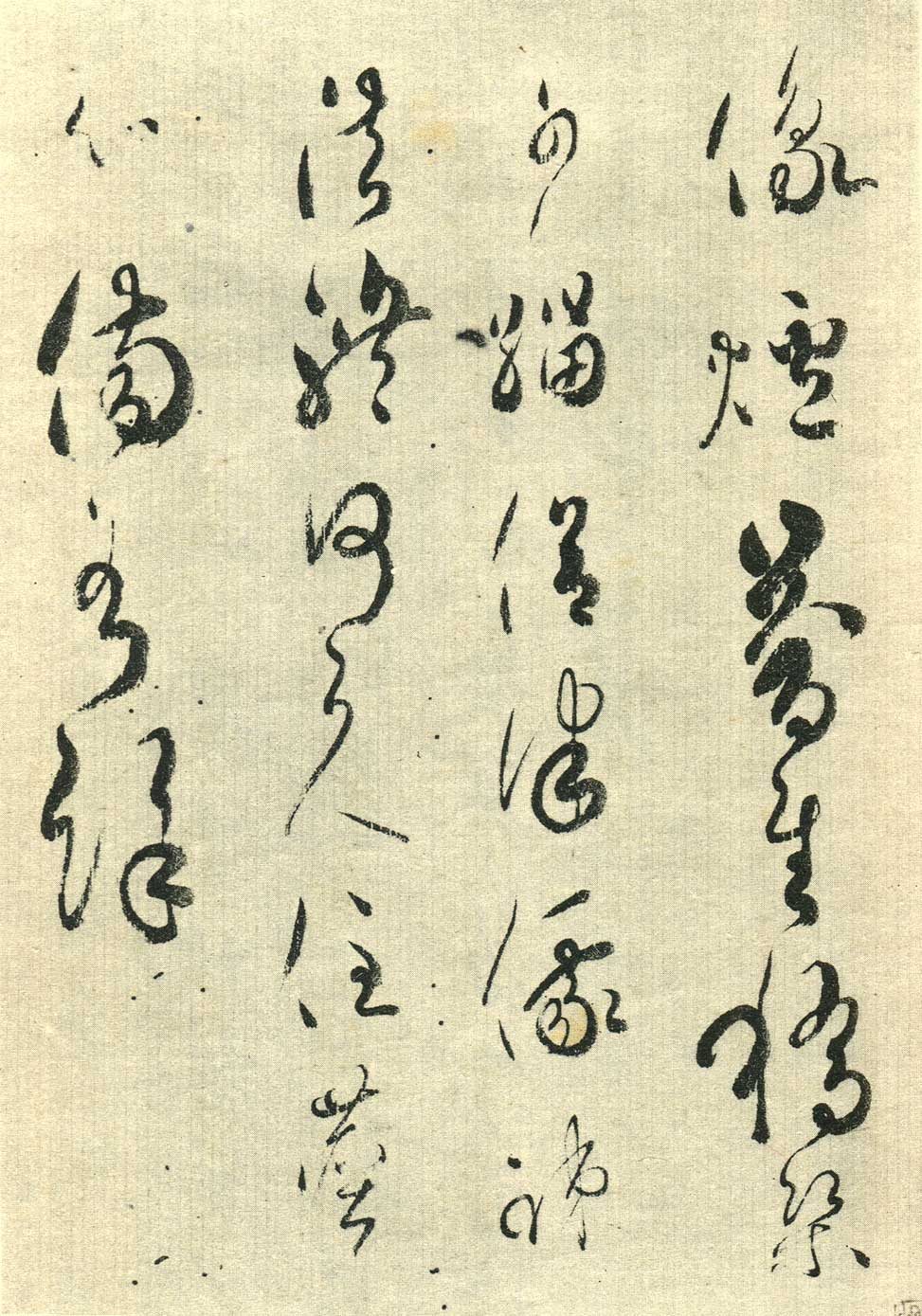
The tradition & historical record
7 min read · 2 sourcesJapanese calligraphy (書道, Shodō), also called Shūji (習字), is a form of calligraphy, or artistic writing, of the Japanese language. Written Japanese was originally based on Chinese characters only, but the advent of the hiragana and katakana Japanese syllabaries resulted in intrinsically Japanese calligraphy styles. 1
Styles
The term Shodō (書道, "way of writing") is of Chinese origin and is widely used to describe the art of Chinese calligraphy during the medieval Tang dynasty. Early Japanese calligraphy originated from Chinese calligraphy. Many of its principles and techniques are very similar, and it recognizes the same basic writing styles: 1
seal script (篆書 Tensho) (pinyin: zhuànshū). The seal script (tensho) was commonly used throughout the Zhou dynasty (1046–256 BCE) and the following Qin dynasty (221–206 BCE) of China. After this time period, tensho style fell out of popularity in favor of reisho. However, tensho was still used for titles of published works or inscriptions. The clear and bold style of tensho made it work well for titles and this tradition of using tensho only for titles is still around today. By the time Chinese characters and calligraphy migrated over to Japan, tensho was already only used for titles and as a result, was never commonly used in Japan. In 57 AD, the Chinese emperor Guangwu of Han presented a golden seal to a king of a small region near what is now known as Fukuoka Prefecture. While this seal was not made in Japan, it is believed to be the first instance of tensho in Japan. The first work in Japan that actually utilized tensho was during the Nara period (646–794) was a six-paneled screen called the Torige Tensho Byobu. Each panel is divided into two columns and each column has eight characters. The screen speaks to a ruler and recommends that he use the counsel of wise ministers in order to rule justly. clerical script (隷書 Reisho) (pinyin: lìshū) The clerical script or scribe's script (reisho) is a very bold and commanding style of Chinese calligraphy; each of the strokes are greatly exaggerated at the beginning and end. 1
Tools
A number of tools are used to create a work of modern calligraphy. 1
The four most basic tools were collectively called the Four Treasures of the Study (文房四宝, bunbō shihō). A brush (筆, fude) An inkstick (墨, sumi).The hardened mixture of vegetable or pine soot and glue in the shape of a stick. The best inksticks are between 50 and 100 years old. Mulberry paper (和紙, washi) An inkstone (硯, suzuri) to grind the inkstick against, mixed with water. Other tools include: A paper weight (文鎮, bunchin) to hold the paper in place A cloth (下敷き, shitajiki) to place under the paper (often newsprint is used as well) to prevent ink from bleeding through. A seal (印, in). The art of engraving a seal is called "tenkoku" 篆刻. The student is encouraged to engrave his own seal. The position of the seal or seals is based on aesthetic preferences. One is not allowed to put a seal on calligraphy of a sutra. During preparation, water is poured into the inkstone and the inkstick is ground against it, mixing the water with the dried ink to liquefy it. As this is a time-consuming process, modern-day beginners frequently use bottled liquid ink called Bokuju (墨汁, bokujū) . More advanced students are encouraged to grind their own ink. Paper is usually placed on a desk, while a large piece of paper may be placed on the floor or even on the ground (for a performance). The brushes come in various shapes and sizes, and are usually made using animal hair bristles. Typical animal hair may come from goats, sheep, or horses. The handle may be made from wood, bamboo, plastic or other materials. 1
Chinese roots
The Chinese roots of Japanese calligraphy go back to the 13th century BC, to the late Shang dynasty, a time when pictographs were inscribed on bone for religious purposes. When this writing developed into an instrument of administration for the state, the need for a uniform script was felt and Li Si, prime minister in the Chinese dynasty of Qin, standardized a script and its way of being written. He sanctioned a form of script based on squares of uniform size into which all characters could be written from eight strokes. He also devised rules of composition where horizontal strokes are written first and characters are composed starting from top to bottom, left to right. Because the symbols were inscribed with sharp instruments, the lines were originally angular; and in many ways, Li Si's achievements were made obsolete by the appearance of brush and ink (see Chinese calligraphy). The ink-wet brush creates a line quite different from a sharp stylus. It affords variation in thickness and curve of line. Calligraphy retained the block form of Li Si and his eight strokes, but the writer was free to create characters that emphasized aesthetically pleasing balance and form. The way a character was written gave a message of style. Calligraphy in the Chinese tradition was thus introduced to Japan about AD 600 Known as the karayō (唐様) tradition, it has been practiced up to today, rejuvenated continuously through contact with Chinese culture. The oldest existing calligraphic text in Japan is the inscription on the halo of the Medicine Buddha statue in the Hōryū-ji Temple. This Chinese text was written in Shakyōtai (写経体) style, prominent in the Chinese Six Dynasties period. 1
Before the Nara period
The Hōryū-ji Temple also holds bibliographic notes on the Lotus Sutra: the Hokke Gisho (法華義疏) was written early in the 7th century and is considered the oldest Japanese text. It is written in Cursive script and illustrates that calligraphy in the Asuka period was already refined to a high degree. The oldest hand-copied sutra in Japan is the Kongō Jōdaranikyō. Copied by the priest Hōrin in AD 686, the calligraphy style shows influences from the work of Ouyang Xun. "Broken Stone in Uji Bridge" (宇治橋断碑, ujibashi danpi) (mid-7th century) and Stone in Nasu County "Stone in Nasu County" (那須国造碑, nasu kokuzō hi) are also typical examples from this time. Both inscriptions were influenced by the Northern Wei robust style. In the 7th century, the Tang dynasty established hegemony in China. Their second Emperor Taizong esteemed Wang Xizhi's calligraphic texts and this popularity influenced Japanese calligraphers. All of the original texts written by Wang Xizhi have been lost, and copies such as Gakki-ron (楽毅論) written by the Empress Kōmyō are highly regarded as important sources for Wang Xizhi's style. However Wang's influence can barely be overstated, in particular for the wayō (和様) style unique to Japan: "Even today, there is something about Japanese calligraphy that retains the unchanged flavour of Wang Xizhi's style". 1
Heian period
Emperor Kanmu moved the capital from Heijō-kyō in Nara, first to Nagaoka-kyō in 784, and then to Heian-kyō, Kyoto in 794. This marks the beginning of the Heian era, Japan's "golden age". Chinese influences in calligraphy were not changed in the early period. 1
The text above is adapted from the Wikipedia article “Japanese calligraphy”, available under the Creative Commons Attribution-ShareAlike 4.0 licence. 1
Japanese calligraphy is artistic writing of the Japanese language, according to the structured record cited below. This entry was generated automatically from that record and has not yet been reviewed by a person familiar with the tradition. 2
The source record links this tradition to 12 external registers, which can be verified through the citation. 2