The tradition & historical record
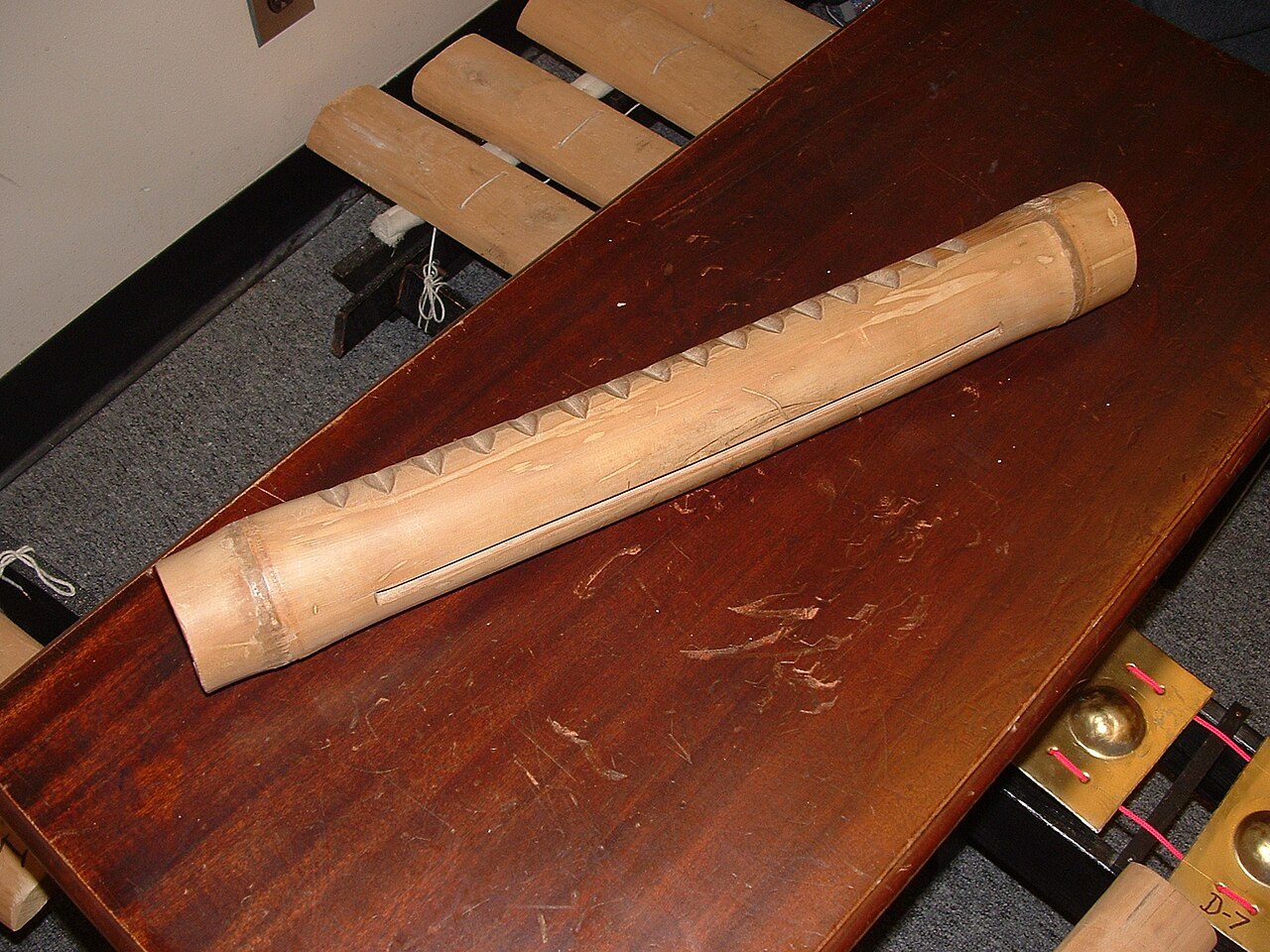
2 min read · 2 sourcesThe kagul is a type of Philippine bamboo scraper gong/slit drum of the Maguindanaon and Visayans with a jagged edge on one side, played with two beaters, one scraping the jagged edge and the other one making a beat. The Maguindanaon and the Banuwaen use it in the rice paddies to guard against voracious birds, using the sound it produces to scare them away. The Maguindanaon and the indigenous inhabitants of Bukidnon also used to use it for simple dance rhythms during social occasions. The rhythms were usually simplistic in nature, consisting of one rhythmic pattern sometimes combined with another. Use of the kagul in the former way is no longer practiced. Also called tagutok (Maranao), bantula or tagungtung (Bukidnon) and kuratung (Banuwaen). 1
Pictures of kagul and its other derivatives
Photograph of a Bantula – Close-up pictures of a bantula - by Hans Brandeis. Photograph of a Tagungtung - A tagungtung used as accompaniment - by Hans Brandeis. Photograph of a Tagungtung - A tagungtung being played - by Hans Brandeis. Photograph of a Tagutok – Close-up pictures of a tagutok - by Fekke de Jagar. 1
The text above is adapted from the Wikipedia article “Kagul”, available under the Creative Commons Attribution-ShareAlike 4.0 licence. 1
kagul is type of Philippine bamboo scraper gong/slit drum of the Maguindanaon and Visayans with a jagged edge on one side, played with two beaters, one scarping the jagged edge and the other one making a beat, according to the structured record cited below. This entry was generated automatically from that record and has not yet been reviewed by a person familiar with the tradition. 2
The source record links this tradition to 1 external register, which can be verified through the citation. 2