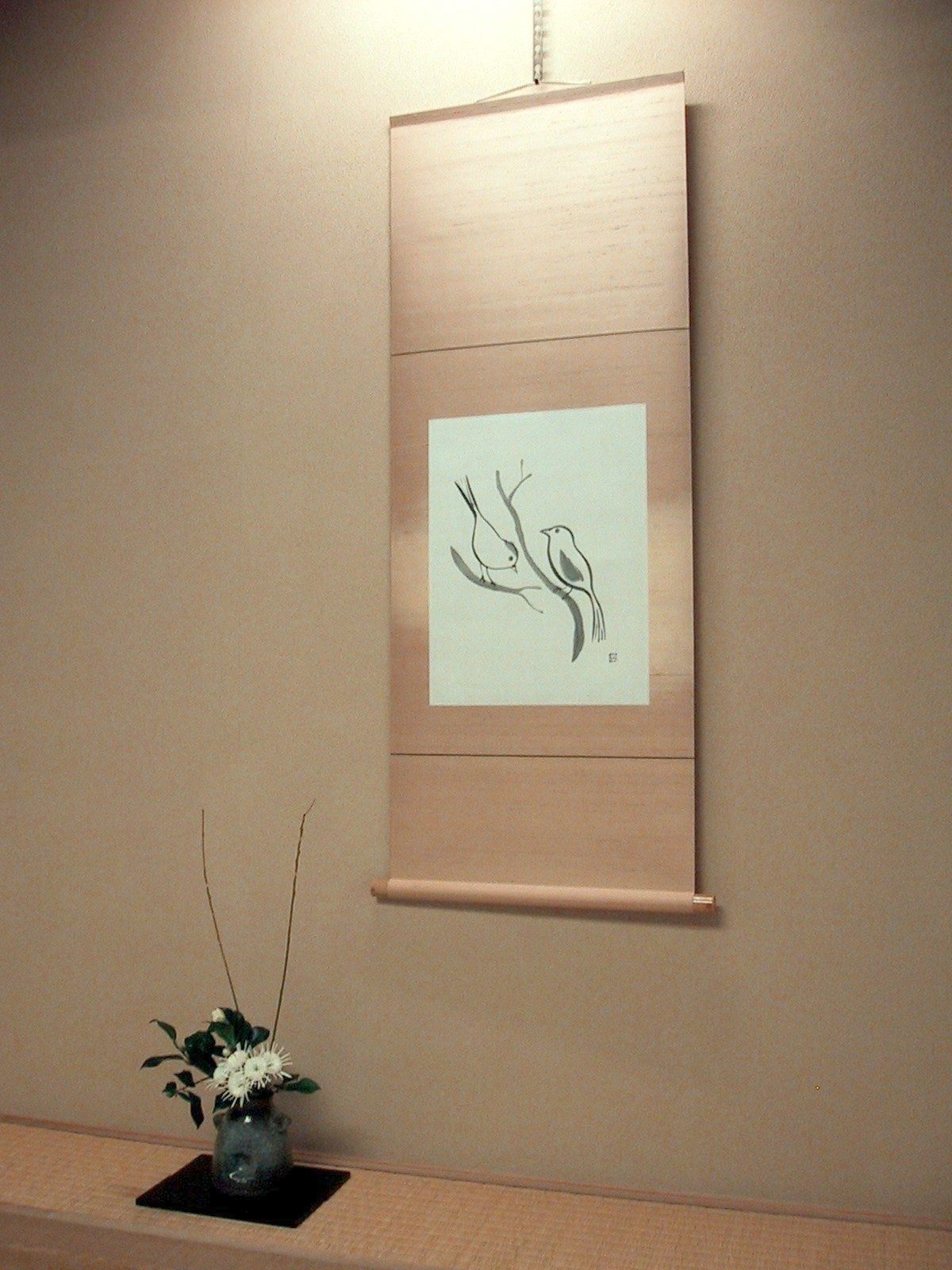
The tradition & historical record
2 min read · 2 sourcesA kakemono (掛物; "hanging thing"), more commonly referred to as a kakejiku (掛軸; "hung scroll"), is a Japanese hanging scroll used to display and exhibit paintings and calligraphy inscriptions and designs mounted usually with silk fabric edges on a flexible backing, so that it can be rolled for storage. The origin is said to date back to the Nara period (710-794). Buddhist kakejikus, which often depict buddhas, bodhisattvas and religious founders like Bodhidharma, are also referred to by various names like Butsuji-gake (仏事掛け) or Butsuga (仏画). Furthermore, if the scroll serves as the main object of worship on an altar., it may be referred to by terms like Meimyō, Jōmyō and Gohonzon (本尊). The "Maruhyōsō" style of kakejiku has four distinct named sections. The top section is called the ten, 'heaven'. The bottom is the chi, 'earth', with the hashira pillars supporting the heaven and earth on the sides. The maruhyōsō style also contains a section of ichimonji made from kinran, gold thread. On observation, the ten is longer than the chi. This is because in the past, kakemono were viewed from a kneeling (seiza) position and this provided perspective to the honshi, main work. This tradition carries on to modern times. There is a cylindrical rod called jikugi (軸木) at the bottom, which becomes the axis or center of the rolled scroll. 1
The text above is adapted from the Wikipedia article “Kakemono”, available under the Creative Commons Attribution-ShareAlike 4.0 licence. 1
kakemono is Japanese hanging scroll showing paintings and calligraphy, according to the structured record cited below. This entry was generated automatically from that record and has not yet been reviewed by a person familiar with the tradition. 2
The source record links this tradition to 12 external registers, which can be verified through the citation. 2