The tradition & historical record
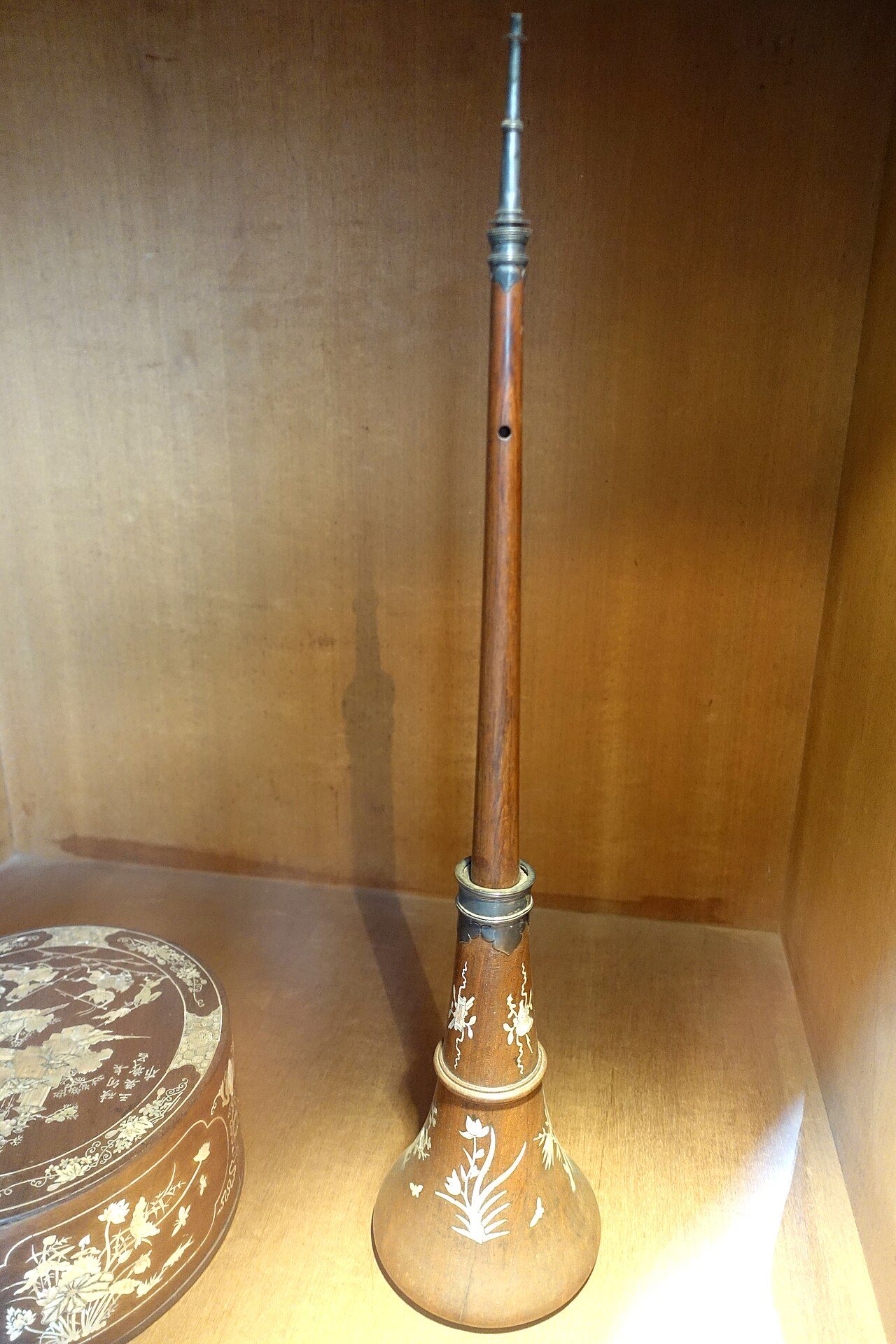
1 min read · 2 sourcesThe kèn (Vietnamese: [kɛ̂n]) is an instrument used in traditional Vietnamese music. It has a double reed and a conical wooden body. It produces a powerful and penetrating high-pitched sound, similar to the Chinese suona, the Korean taepyeongso, the Thai Pi, and the Persian/Indian shehnai. Its musical context resembles that of the oboes played by the Tai peoples, who call it the "Pí Lè", and the Muong people, who call it the "Bi". The name "Kèn" is also used to informally refer to Gourd mouth organs. The best-known player of the kèn is the award-winning musician Nguyễn Ngọc Khánh (b. 1956), who is acknowledged as a "national treasure" in Vietnam, where he is known as "Khánh of the kèn." 1
Varieties
Kèn bầu - with a wooden bell carved in a gourd shape; comes in several sizes Kèn đám ma - with a metal bell; used for funerals in northern Vietnam 1
The text above is adapted from the Wikipedia article “Kèn”, available under the Creative Commons Attribution-ShareAlike 4.0 licence. 1
kèn is musical instrument from Vietnam, according to the structured record cited below. This entry was generated automatically from that record and has not yet been reviewed by a person familiar with the tradition. 2
The source record links this tradition to 2 external registers, which can be verified through the citation. 2