The tradition & historical record
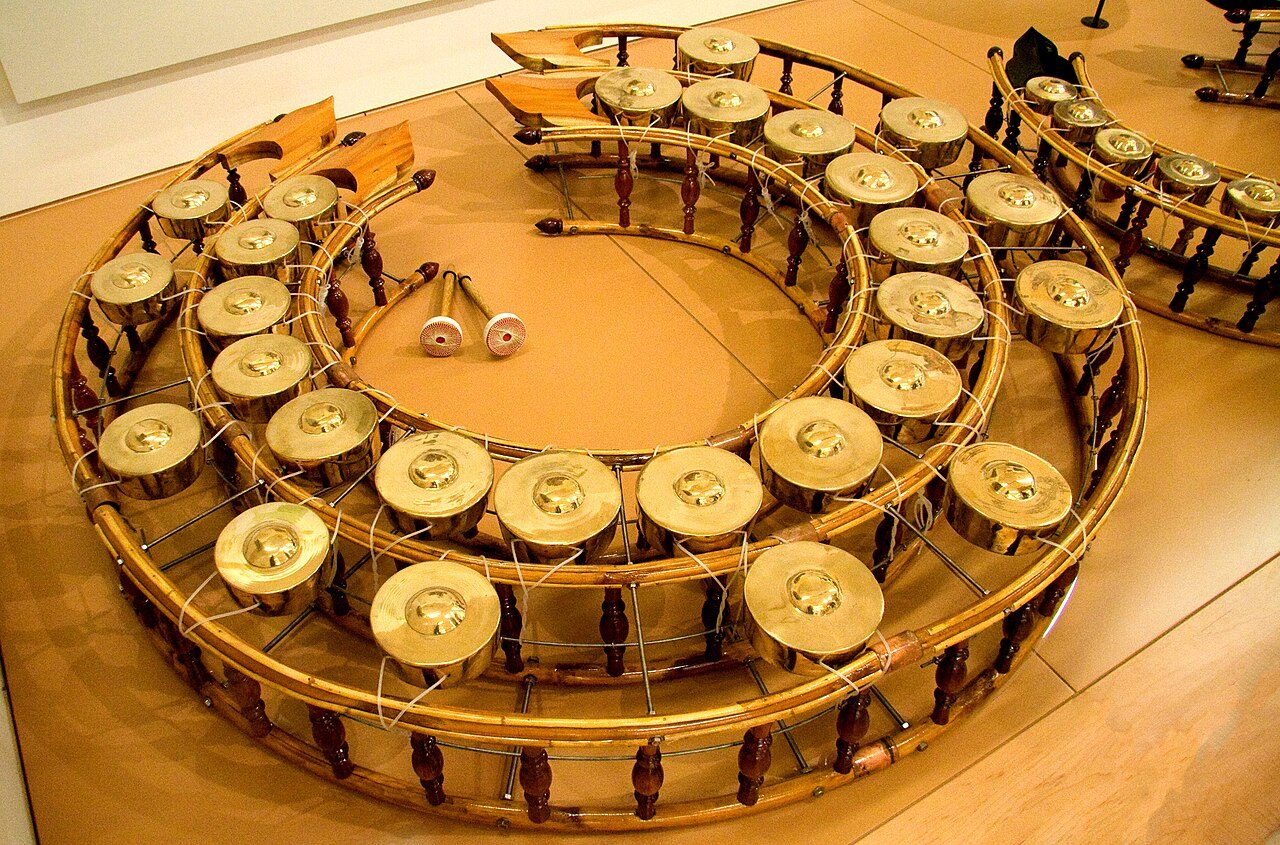
2 min read · 2 sourcesThe kong von thom or kong thom (Khmer: គងធំ) plays a melodic line in the Cambodian pinpeat ensemble almost identical to that of the roneat thung (large xylophone). The kong thom dwells more steadily on the pulse without pulling or delaying the beat (melody). The player uses soft mallets for indoor performance, hard ones for outdoors. The kong von thom is analogous to the khong wong yai used in Thailand. 1
History
The Khmer word korng/ kong "gong" is refers to all types of gong including the flat or bossed gong, single or in a set, suspended on cords from hooks, or a gong placed over a frame. The history of these gongs can be traced in part from the epigraphy and iconography of Funan-Chenla and Angkor periods, for many can be seen carved on ancient Khmer temple. 1
Construction
The gong circle-maker creates sixteen bossed gongs made of copper with bronze admixture. He suspends them on rattan frames in a circle around the player. He tunes the individual gongs by dripping into the upturned boss a mixture of mud-lead, rice husks, and beeswax. The kong thom's smaller cousin is called kong toch. 1
Name similarity
Another also uses instrument the shorter name Kong thom — a hanging gong. That instrument is not used in orchestras. 1
The text above is adapted from the Wikipedia article “Kong von thom”, available under the Creative Commons Attribution-ShareAlike 4.0 licence. 1
kong thom is musical instrument, according to the structured record cited below. This entry was generated automatically from that record and has not yet been reviewed by a person familiar with the tradition. 2
The source record links this tradition to 1 external register, which can be verified through the citation. 2