The tradition & historical record
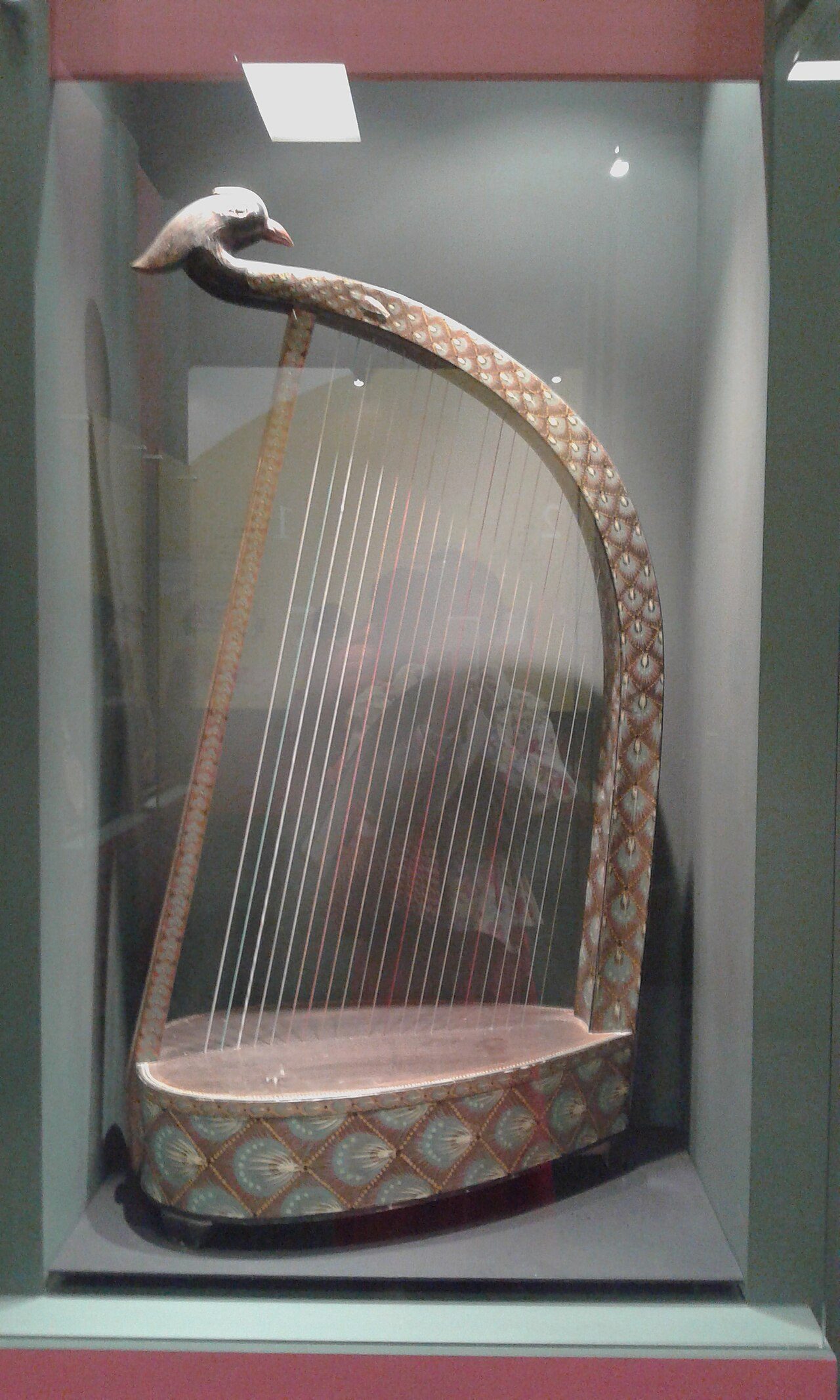
3 min read · 2 sourcesThe konghou (Chinese: 箜篌; pinyin: kōnghóu) is a Chinese plucked string instrument. In ancient China, the term konghou came to refer to three different musical instruments: a zither and two different types of harp. Today, konghou usually refers the modern konghou concert harp, which was invented in the last century. Shu-konghou refers to an extinct vertical angular harp, and feng shou konghou to an extinct arched harp. During the Tang dynasty it was also used as a general term for string instruments from other countries that played in the Chinese court. It may not have meant a specific type of instrument at that time. In the Song dynasty, because the konghou was increasingly associated with lower-status courtesans and singing girls, its music was considered licentious and dangerous, earning it the nickname "the Marquis (hou) of the Empty (kong) State" (kongguo zhi hou 空國之候). 1
History
There were three types of variations of the konghou name, and scholars have been working to match them to musical instruments. The variations are wo konghou, shu konghou and feng shou konghou. 1
Wo konghou
With the wo-konghou (卧箜篌; 'horizontal konghou'), there have been two lines of thought; neither has been proven. One use of wo konghou could have been applied to a fretted bridge zither whose strings were plucked with a slender bamboo stick). The other possibility for the wo-konghou is as an angular harp turned on its side to function as a horizontal harp. 1
Zither
The zither form was first mentioned in written texts in the Spring and Autumn period (770–476 BC). It is one of the oldest Chinese musical instruments, similar to the Korean geomungo. The wo-konghou was used to play yayue (court music) in the Kingdom of Chu. During the Han dynasty (206 BC – 220 AD) the konghou was used in the qingshangyue genre. This instrument seems to have been no longer used, but recently China has been reviving the wo-konghou and bringing it into the traditional orchestra. 1
Horizontal harp
In 1996, horizontal angular harps from the 5th century BC were found in Zagunluq village, Qiemo county, Xinjiang autonomous region, China. The harps bear close resemblance to harps from Pazyryk, Assyria and Olbia. Archeological finds show details of construction; for instance, the soundboxes were carved from diversiform-leaved poplar. The finds are evidence of contact between Xinjiang and Altai, Assyria and the Black Sea region. The finds show a pre-Han dynasty konghou, that may date as far back as 1000 BC: that date is speculative and needs more evidence. 1
Shu konghou
The shu-konghou or vertical konghou first appeared in the Eastern Han dynasty (25–220 AD). It can be divided into big and small varieties. The playing of the shu-konghou was most prevalent in the Sui and Tang dynasties. It was generally played in rites and ceremonies and gradually increased in popularity among the ordinary people. It is also the most common type of konghou in Chinese cultural relics, murals and poetry. The Chinese harp refers to this kind of konghou. 1
The text above is adapted from the Wikipedia article “Konghou”, available under the Creative Commons Attribution-ShareAlike 4.0 licence. 1
konghou is ancient Chinese harp, according to the structured record cited below. This entry was generated automatically from that record and has not yet been reviewed by a person familiar with the tradition. 2
The source record links this tradition to 6 external registers, which can be verified through the citation. 2