The tradition & historical record
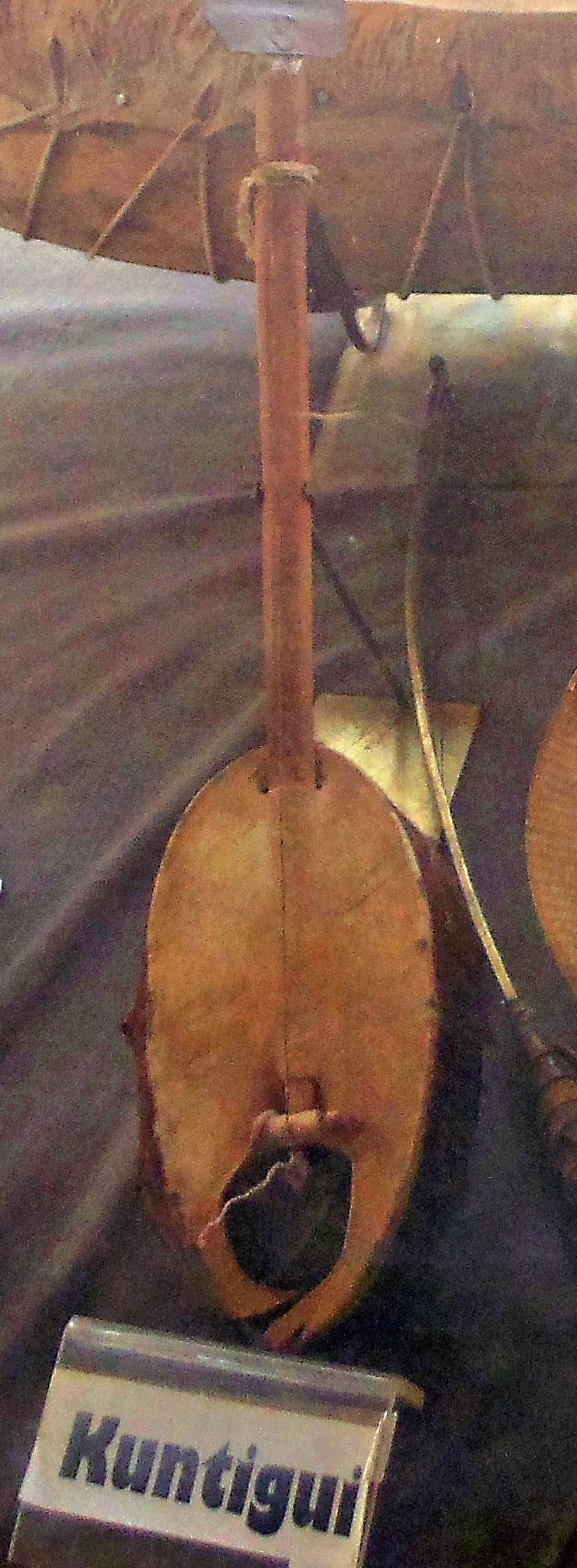
2 min read · 2 sourcesA kontigi or kuntigi is a one-stringed African lute played by the Hausa, Songhai, and Djerma. A 3-string version teharden is used among the Tamashek. The instrument is used in Hausa music, primarily in northern Nigeria and Niger, and among Hausa minorities in Benin, Ghana, Burkina Faso , and Cameroon. It is also found among Islamized peoples throughout West Africa (see Xalam). The best-known player of the Kontigi is Dan Maraya. 1
Characteristics
The instrument uses a calabash gourd as its body, covered with skin, with a stick for a neck. Modern instruments have had the gourd replaced by a can, such as a large sardine can. The neck on the Kontigi has "a metal disk surrounded by small rings," which makes noise as the instrument is moved or played. The tone is high-pitched. 1
Performance
The instrument is used to perform "praise songs" by professional musicians or by Griots in Nigeria. A well-known musician who used the instrument was Dan Maraya, who recorded albums. The instrument is used in Niger by children and men who perform solo. 1
Sample recordings
Kidan Kashewa by Dan Maraya Jos Wakar Keren Mota III by Dan Maraya Jos 1
The text above is adapted from the Wikipedia article “Kontigi”, available under the Creative Commons Attribution-ShareAlike 4.0 licence. 1
kontigi is The Kontigi is fundamentally a lute, a stringed instrument characterized by a neck and a resonating body., according to the structured record cited below. This entry was generated automatically from that record and has not yet been reviewed by a person familiar with the tradition. 2