The tradition & historical record
4 min read · 2 sourcesKorean painting (Korean: 한국화) includes paintings made in Korea or by overseas Koreans on all surfaces. The earliest surviving Korean paintings are murals in the Goguryeo tombs; considerable numbers of these survive, the oldest from some 2,000 years ago (mostly now in North Korea), with scenes including dancers, hunting, and spirits. The Takamatsuzuka Tomb in Japan, from the 7th-century end of the Goguryeo period, has paintings hypothesized to have Goguryeo influence, done either by Goguryeo artists or by a Japanese artist with Goguryeo training. Painting in the Goryeo period (918–1392) was dominated by Buddhist scroll paintings, adapting Chinese styles; about 160 survive from the period. In this period the royal artist's school or academy, the Dohwaseo, was established, run by bureaucrats of the court and with examinations for artists. 1
Genre subjects
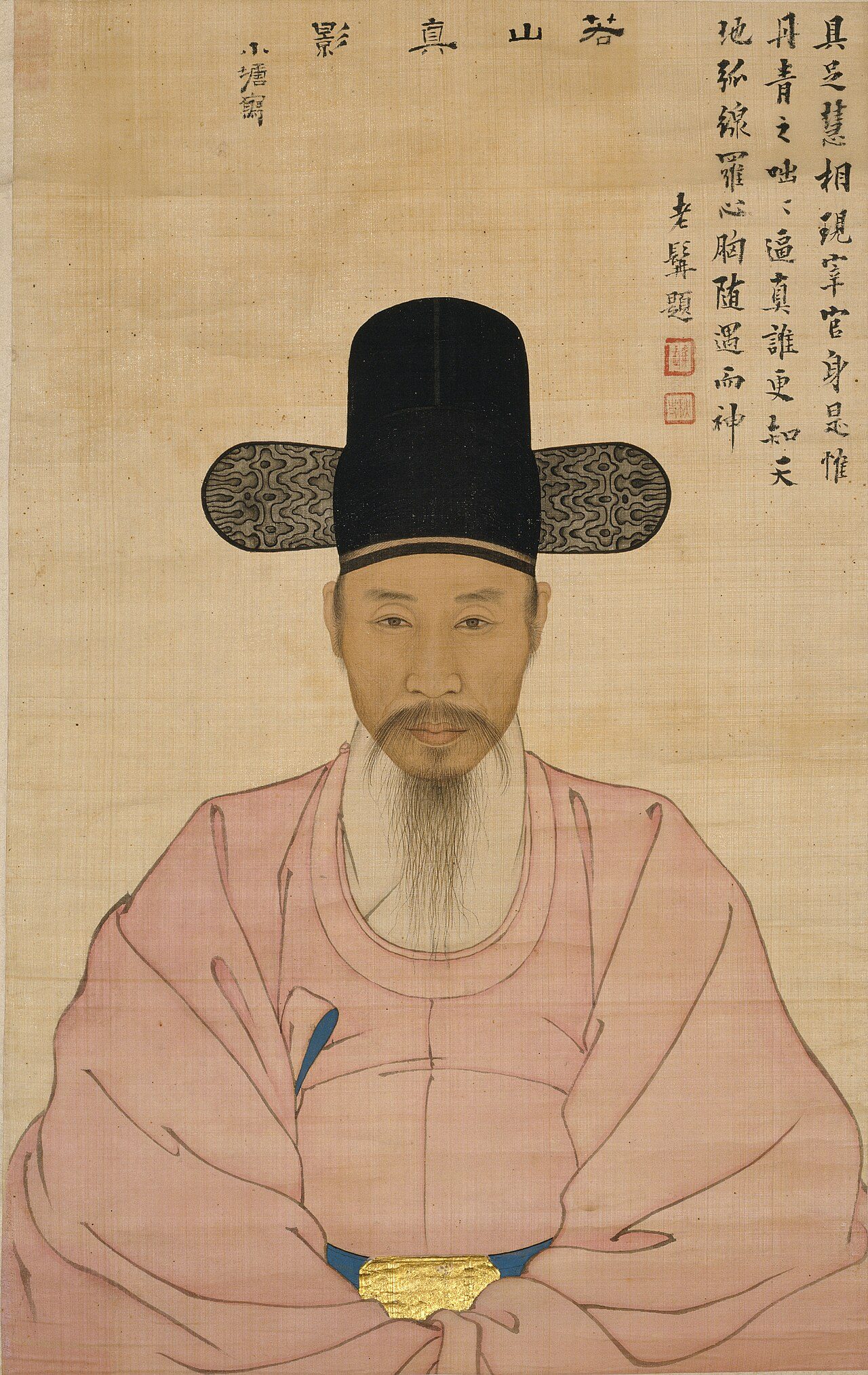
The expected genres of Buddhist art showing the Buddha or Buddhist monks, and Confucian art of scholars in repose or studying in quiet, often mountainous surroundings follow general East Asian art trends. Nimbus colours are not necessarily gold, and may be suggested by lighter colours. Faces tend to realism and show humanity and age. Drapery is done with some to great care. The face is generally two-dimensional, the drapery three-dimensional. As in medieval and renaissance western art, drapery and faces are done often by two or three artists who specialize in one particular painterly skill. Iconography follows Buddhist iconography. Scholars tend to have the traditional stove-pipe hats, or other rank hats, and scholar's monochromatic robes. Typically, they are at rest in teahouses near mountains or at mountain lodges, or will be pictured with their teachers or mentors. Hunting scenes, familiar worldwide, are often seen in Korean courtly art and are reminiscent of Mongolian and Persian hunting scenes. Wild boar, deer, stags, and Siberian tigers were hunted. Particularly lethal spears and spear-handled maces were used by horsemen within hunting grounds after ground archers acted as beaters and led the initial provocation of the animals. Buddhas tend to have Korean facial features and are in easy resting positions. 1
Daoist Paintings
Longevity symbols: Pictures of the ten longevity symbols figure most prominently among folk paintings of this category. The ten longevity symbols (Shipjangsaengdo), including the sun, clouds, mountains, water, bamboo, pine, crane, deer, turtle, and the mushroom of immortality are the often presented all together in a single picture. 1
Tiger: The tiger was among the most popular motifs in Korea folk painting. Likely originating from the mythical "white tiger" guardian spirit of the east, the tiger in Korean folk traditions is seldom portrayed as a ferocious beast but rather as a friendly and sometimes even funny and stupid animal. The mountain spirit and dragon king: The popular mountain spirit and dragon king motifs have their origins in two famous Korean historical figures, Dangun and Munmu. Dangun is the legendary progenitor of the Korean people and is said to have turned into a mountain spirit. The dragon king is usually depicted as a mighty animal flying amidst the clouds over a sea of high waves. The Naewat-dang shamanic paintings are among the oldest shamanic paintings known in Korea. 1
Buddhist Paintings
Buddhist temples and hermitages across the country are rich archives of folk paintings, ranging from large icon images for ritual use to illustrations for sutras and anecdotes about famous monks and their portraits. These temple painting are noted for simple compositions and bright colors. 1
Confucian Paintings
Folk paintings in this category include character designs of the popular themes of loyalty and filial piety, pictures depicting the life stories of renowned scholars, and depictions of a carp jumping up from the river to transform into a dragon symbolizing the aspiration for distinguished academic achievement and a successful career in officialdom. 1
Decorative Painting
The vast majority of ancient folk paintings were used for decorative purposes. These paintings generally repeat popular motifs with relatively poor techniques, but attest to the nation's religious tradition harmonizing various faiths such as shamanism, Taoism, Buddhism, and Confucianism. 1
The text above is adapted from the Wikipedia article “Korean painting”, available under the Creative Commons Attribution-ShareAlike 4.0 licence. 1
Korean painting is art of painting in Korea, according to the structured record cited below. This entry was generated automatically from that record and has not yet been reviewed by a person familiar with the tradition. 2
The source record links this tradition to 8 external registers, which can be verified through the citation. 2