The tradition & historical record
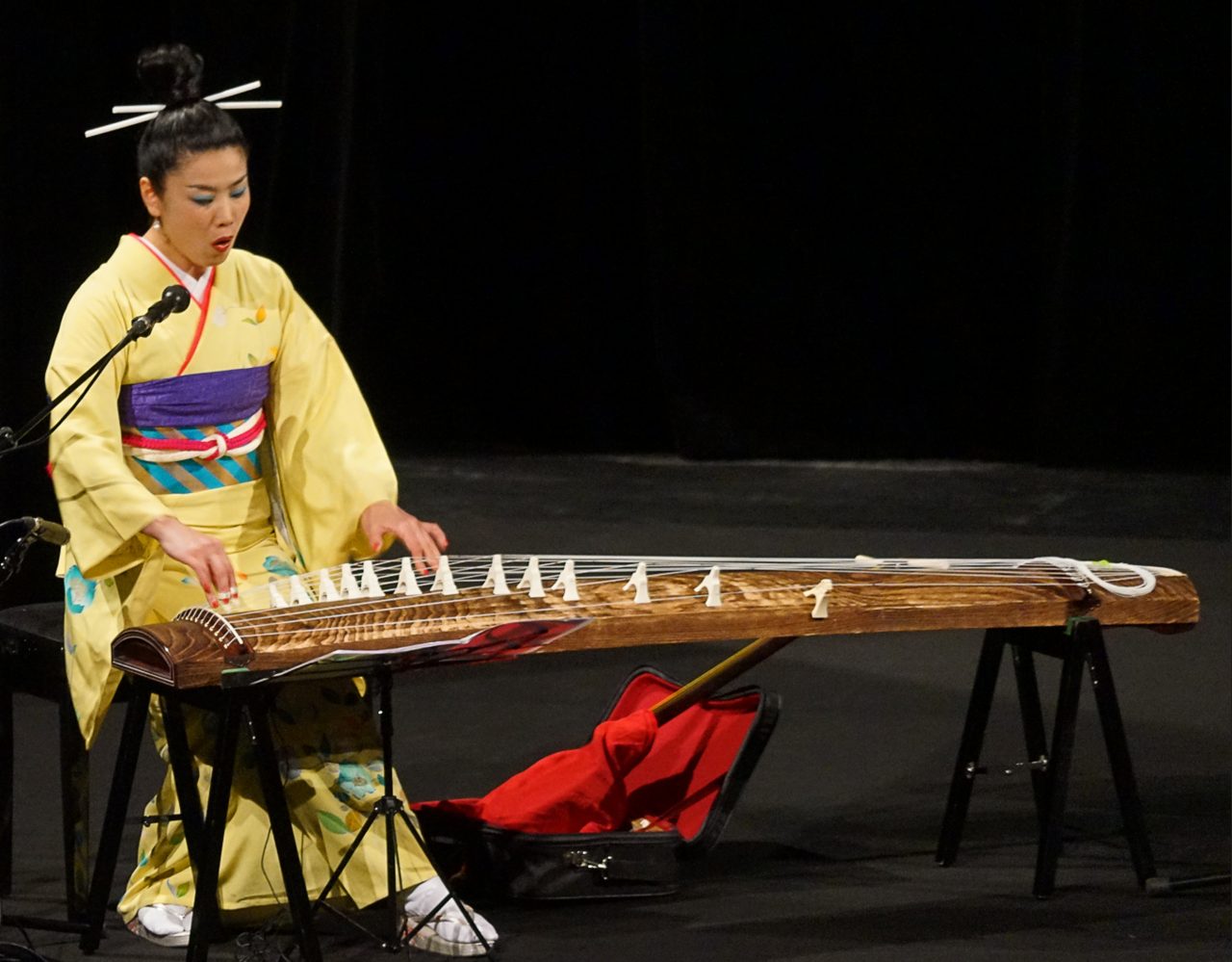
5 min read · 2 sourcesThe koto (箏 or 琴) is a Japanese plucked half-tube zither instrument, and the national instrument of Japan. It is derived from the Chinese zheng and se, and similar to the Mongolian yatga, the Korean gayageum and ajaeng, the Vietnamese đàn tranh, the Sundanese kacapi and the Kazakh jetigen. Koto are roughly 180 centimetres (6 ft) in length, and made from Paulownia wood (Paulownia tomentosa, known as kiri). The most common type uses 13 strings strung over movable bridges used for tuning, different pieces possibly requiring different tuning. Seventeen-string koto are also common, and act as bass in ensembles. Koto strings are generally plucked using three fingerpicks (tsume), worn on the first three fingers of the right hand. 1
Names and types
The character for koto is 箏, although 琴 is often used. However, 琴 (koto) is the general term for all string instruments in the Japanese language, including instruments such as the kin no koto, sō no koto, yamato-goto, wagon, nanagen-kin, and so on. When read as kin, it indicates the Chinese instrument guqin. The term is used today in the same way. The term koto appears in the Kojiki in reference to an ancient string instrument in this usage. Variations of the instrument were eventually created, and eventually a few of them would become the standard variations for modern day koto. The four types of koto (gakuso, chikuso, zokuso, tagenso) were all created by different subcultures, but also adapted to change the playing style. One regional style of the koto is the Tategoto (竪琴) from the Amami Islands. Unlike other varieties of the koto, it is held upright on the lap and played with one hand, may have more strings, is shorter, and is typically strung with steel strings. 1
History
The ancestor of the koto was the Chinese guzheng. It was first introduced to Japan from China in the 7th and 8th centuries. The first known version had five strings, which eventually increased to seven strings. The Japanese koto belongs to the Asian zither family that also comprises the Chinese zheng (ancestral to the other zithers in the family), the Korean gayageum, and the Vietnamese đàn tranh. This variety of instrument came in two basic forms, a zither that had bridges and a zither without bridges. When the koto was first imported to Japan, the native word koto was a generic term for any and all Japanese stringed instruments. As the number of different stringed instruments in Japan grew, the once-basic definition of koto could not describe the wide variety of these instruments and so the meanings changed. The azumagoto or yamatogoto was called the wagon, the kin no koto was called the kin, and the sau no koto (sau being an older pronunciation of 箏) was called the sō or koto. The modern koto originates from the gakusō used in Japanese court music (gagaku). It was a popular instrument among the wealthy; the instrument was considered a romantic one. Some literary and historical records indicate that solo pieces for koto existed centuries before sōkyoku, the music of the solo koto genre, was established. According to Japanese literature, the koto was used as imagery and other extra music significance. In one part of The Tale of Genji, the titular character falls deeply in love with a mysterious woman whom he has never seen before, after hearing her playing the koto from a distance. The koto of the chikuso was made for the Tsukushigato tradition, originally intended only for blind men. 1
Construction
A koto is typically made of Paulownia wood (known as kiri), although treatment of the wood varies tremendously between artisans. A koto may or may not be adorned. Adornments include inlays of ivory and ebony, tortoise shell, metal figures, etc. The wood is also cut into two patterns, itame (also called mokume), which has a swirling pattern, or straight-lined masame. The straight lined pattern is easier to manufacture, so the swirl raises the cost of production, and is therefore reserved for decorative and elegant models. The body of a traditional koto is made of Paulownia wood. Every piece of the instrument comes with cultural significance, especially since the koto is the national instrument. The wood is dried and cut into precise measurements. The size of the soundboard on a standard modern koto has remained approximately 182 centimetres (72 in), where in the past it ranged from 152 to 194 centimetres (60 to 76 in). The bridges (ji) used to be made of ivory, but nowadays are typically made of plastic, and occasionally made of wood. One can alter the pitch of a string by manipulating or moving the bridge. For some very low notes, there are small bridges made, as well as specialty bridges with three different heights, depending on the need of the tuning. When a small bridge is unavailable for some very low notes, some players may, as an emergency measure, use a bridge upside down, though this is unstable and not ideal. Bridges have been known to break during playing, and with some older instruments which have the surface where the bridges rest being worn due to much use, the bridges may fall during playing, especially when pressing strings. 1
Recordings
Silenziosa Luna (沈黙の月, Chinmoku no Tsuki) / ALM Records ALCD-76 (2008) 1
The text above is adapted from the Wikipedia article “Koto (instrument)”, available under the Creative Commons Attribution-ShareAlike 4.0 licence. 1
koto is traditional Japanese stringed musical instrument, according to the structured record cited below. This entry was generated automatically from that record and has not yet been reviewed by a person familiar with the tradition. 2
The source record links this tradition to 25 external registers, which can be verified through the citation. 2