The tradition & historical record
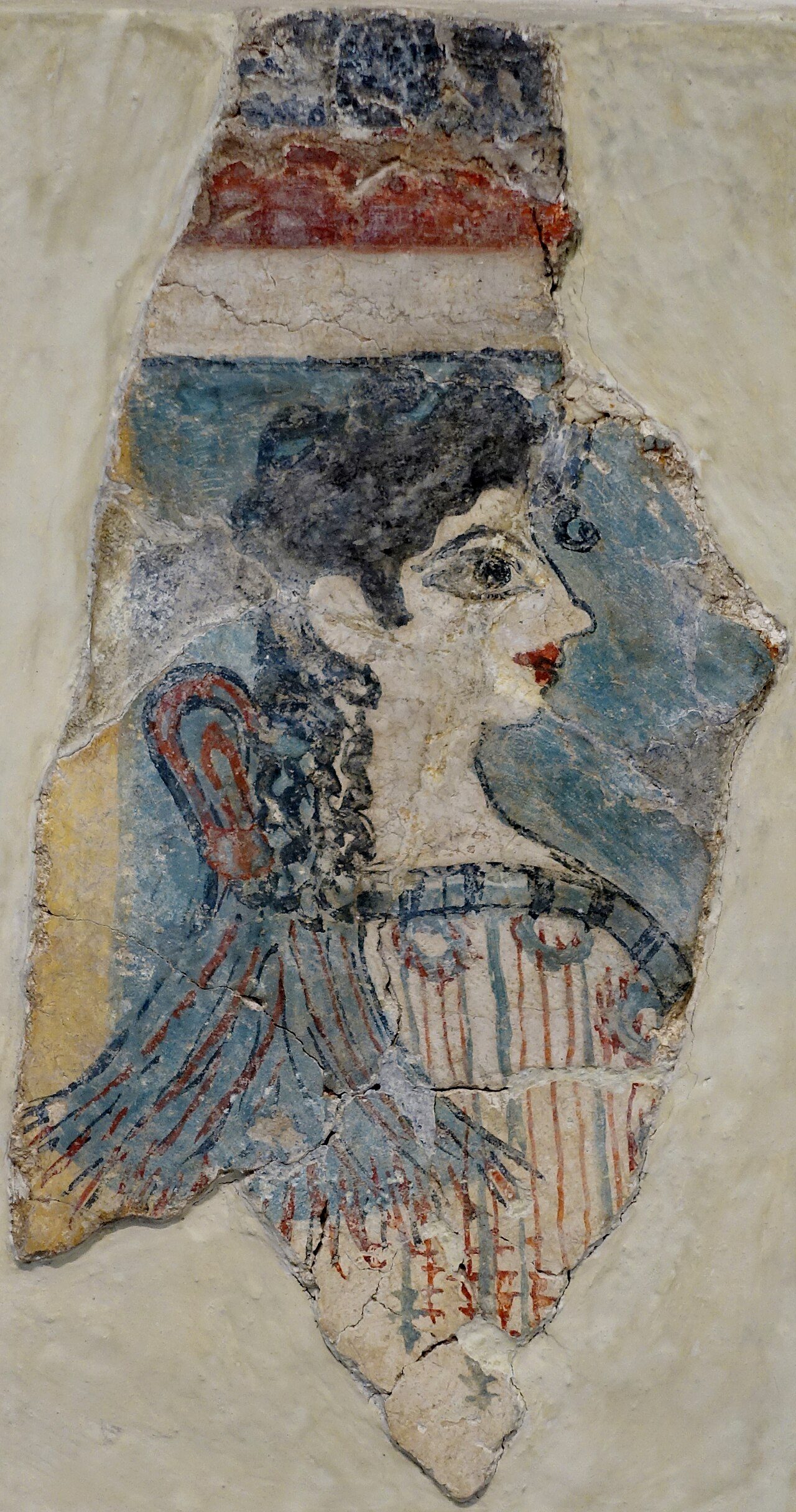
2 min read · 2 sourcesThe Minoan fresco fragment known as La Parisienne, or sometimes the Minoan Lady, is part of the Camp Stool Fresco, which was probably painted on the wall of the Sanctuary Hall on the room sometimes called the piano nobile at the palace of Knossos on Crete. It dates to the Final Palatial Period, c. 1450–1350/1300 BC, and is now in the Heraklion Archaeological Museum. The female figure is depicted in profile with a sacral knot worn at the back of the neck,this as well as size of the figure in comparison with the other figures on the Camp Stool fresco seems to indicate that the depicted woman is a person of importance, such as priestess or even a goddess. The presence of a twin figure (of which only a fragment is preserved) of the same size seems to show two goddesses presiding over religious rites. It has been described as a ceremonial banquet with libations being offered. The fragment was excavated in 1901 by the British archaeologist Arthur Evans. Evans employed the services of Emile Gillieron to restore some of the excavated frescoes (including La Parisienne). 1
The text above is adapted from the Wikipedia article “La Parisienne (fresco)”, available under the Creative Commons Attribution-ShareAlike 4.0 licence. 1
La Parisienne is Minoan fresco from Knossos, Crete, according to the structured record cited below. This entry was generated automatically from that record and has not yet been reviewed by a person familiar with the tradition. 2
The source record links this tradition to 1 external register, which can be verified through the citation. 2