The tradition & historical record
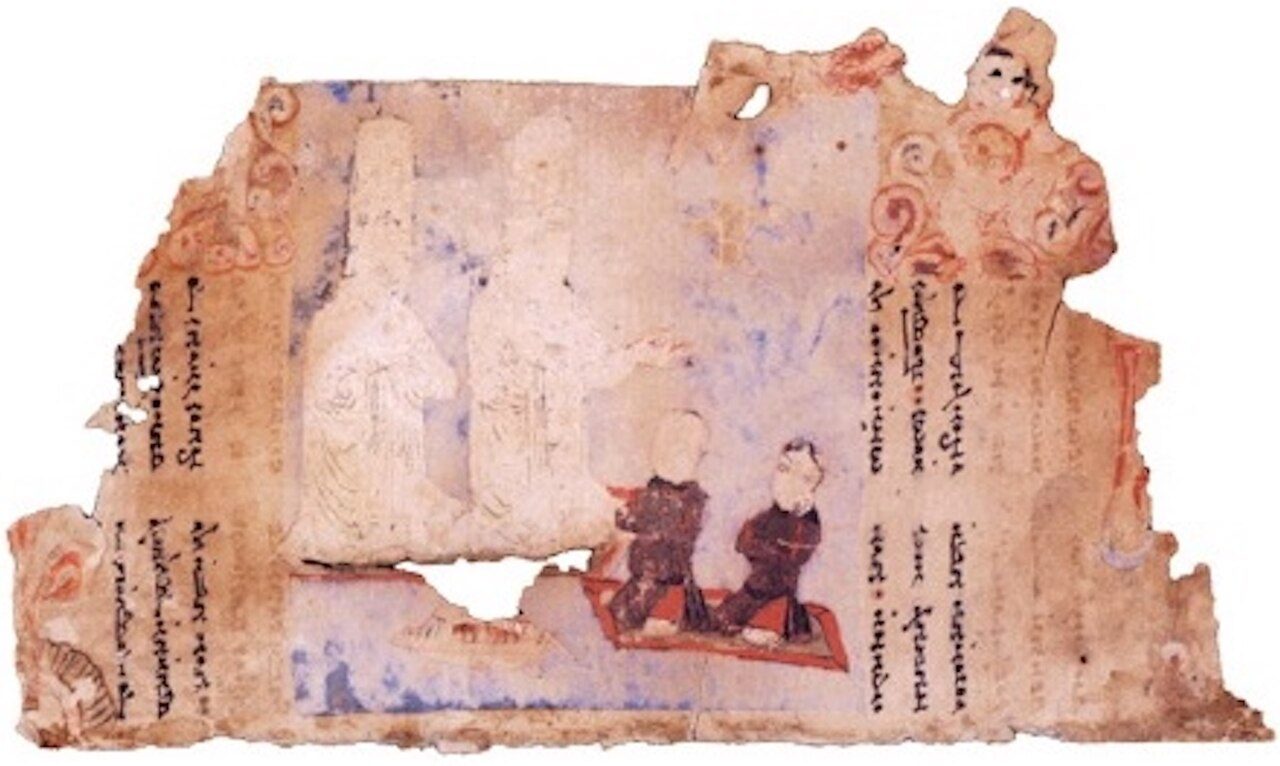
3 min read · 2 sourcesLeaf from a Manichaean book MIK III 4974 is a fragment of Manichaean manuscripts collected in Germany Berlin Asian Art Museum, drawn in the 10th century, 20 At the beginning of the century, it was discovered by German Turpan expedition team in Xinjiang Gaochang Ancient City. The remaining page is 7.9 cm long and 15.5 cm wide, with an illuminated manuscript illustration drawn in the center of the front. The upper part of the book is written with Middle Persian Benediction The scriptures indicate that this fragment originally belonged to a Manichae Liturgical book. 1
Image analysis
There is no decorative pattern on the back of the torn page, only two columns of verses are written vertically in black. On the left and right sides of the front, there are two columns with a total of 12 lines of scripture written in black. The four corners of the page are decorated with human figures and patterns. The most conspicuous middle position is occupied by a large illustration. Hungary Asian religious art historian Aurel Stein named the illustrations "The Fruit of the Religion" (Work of the Religion) and "Light Redemption with the Hand of God" (Salvation of the Light with God's Hand), because this picture illustrates the core of Manichaeism Soteirology-saving the light body from the dark matter that imprisons it. In the picture, two laymen (listeners) can be seen kneeling on the red-edged green carpet, embracing the gold-encrusted classics. A three-foot gold plate placed in front of them was filled with fresh fruits and vegetables, which was a vegetarian diet offered by lay believers for the elect (priests). The two large kneeling figures on the left side of the screen are the voters of Manichaeism. They wear white crowns and white robes. These are typical Manichae costumes. Because Manichaeism believes that plants contain more light factors than animals, believers only choose vegetarian food such as fruit and pastries. After eating melons and fruits, the electorate's body will release the light, which means that the light factor can be freed again. Accompanied by the singing of hymns and chants, the light factor released from the electors embarked on a journey back to the kingdom of light. 1
See
Fragment of Manichae Manuscript Sgd Manichean Letters 1
The text above is adapted from the Wikipedia article “Leaf from a Manichaean book MIK III 4974”, available under the Creative Commons Attribution-ShareAlike 4.0 licence. 1
Leaf from a Manichaean book MIK III 4974 is Manichaean manuscript fragment, according to the structured record cited below. This entry was generated automatically from that record and has not yet been reviewed by a person familiar with the tradition. 2
The source record links this tradition to 1 external register, which can be verified through the citation. 2