The tradition & historical record
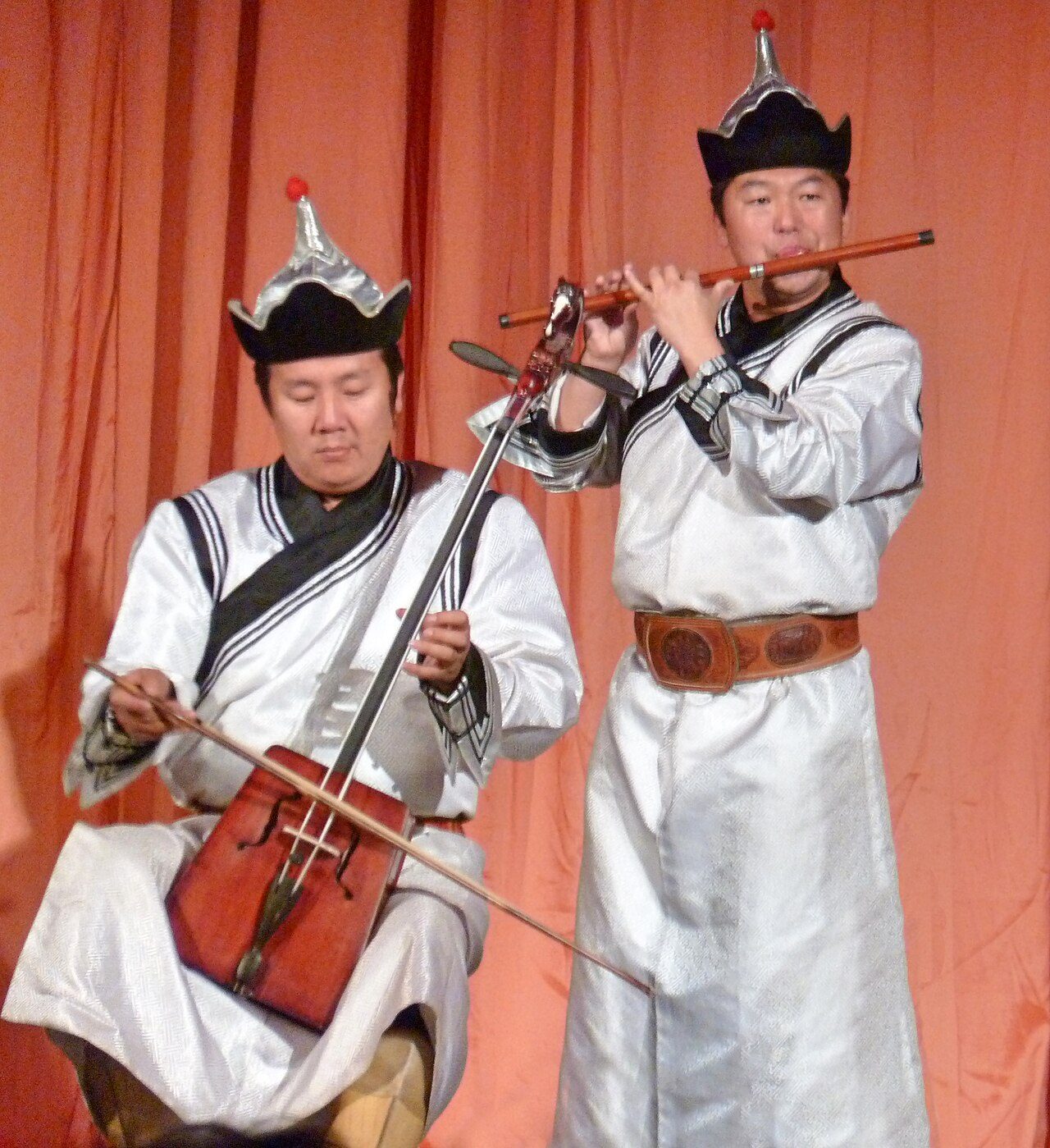
5 min read · 2 sourcesThe limbe (Mongolian: лимбэ,ᠯᠢᠩᠪᠦ) is a transverse flute with six finger holes from Mongolian folk music, which belongs to the nomadic pastoral culture and is usually played with circular breathing by experienced players. The continuous playing of the flute to accompany "long songs" (urtin duu) lasting up to 25 minutes was added to the UNESCO Intangible Cultural Heritage Lists in urgent need of preservation in 2011. Like most other Mongolian musical instruments, the limbe is traditionally only allowed to be played by men. The origin of the East Asian flutes such as the limbe and the related dizi in China could be traced back to the 1st millennium BC. 1
Origin and distribution
The earliest flutes found in China include one that dates back to the Neolithic period around 6000 BC. A bone flute with seven finger holes from Wuyang County dated to the 5th millennium BC and other bone flutes with finger holes from the 5th millennium BC. BC, which probably served as an animal call. They were probably collectively called guan ("tube") in Chinese. Since the 1st millennium, guan has also referred to reed instruments. According to pictographs from the late Shang dynasty (around 1200 BC), yue stood for a panpipe. Clay vessel flutes from the 5th millennium BC. 500 BC, now known as xun, were excavated in Banpo, Shaanxi. Transverse flutes from this early period (up to around 2000 BC) are only known from written Chinese sources. Its old name is chi. According to these sources, the chi was a ritually used transverse flute with a large inner diameter. Two bamboo flutes, probably corresponding to the chi, with five finger holes, a blowing opening offset by 90 degrees and about 30 centimeters long were discovered in the Tomb of Marquis Yi of Zeng (after 433 BC). These are the oldest finds of transverse flutes. After all, they refute the popular view that the transverse flute was only brought from Central Asia to China during the Han dynasty (207 BC - 220 AD). During this period, the transverse flute was known in China as hengchui ("cross-blown") and was used by military orchestras for outdoor music. In the transverse flute of the Han dynasty, which was probably imported, the blowing hole and finger holes were in one line - as is usual with today's transverse flutes. 1
Design
The limbe is made of bamboo or brass, the modern one is often made of plastic. It has twelve holes: the first for blowing, the second - covered with a membrane - amplifies the sound, the next six are opened or closed with the player's fingers, the remaining four holes: two in the upper part and two in the lower part, when they remain covered, give the instrument a lower sound. Eastern Khalkhas distinguish two forms of limbe, the female limbe which is narrower, and the male limbe, which is thicker and shorter. 1
Playing style and techniques
Individual ethnic groups maintain different identities with their own musical expressions. In general, instrumental music is secondary to the various forms of unaccompanied vocal music. The limbe is a musical instrument well suited for nomads because it is small and can be easily transported when slipped into the belt. Traditionally, the limbe is played by shepherds in the pasture. The transverse flute has a special meaning when it is used as an alternative to the morin khuur in a ritual that is intended to get a mother camel to accept her own rejected or another's young. Camels usually give birth to a foal every two years. Due to the harsh climatic conditions, it can happen that the mother or the young do not survive the birth and the orphaned foal has to be adopted by another mother without offspring. In this case, the Mongolians practice a ritual at dawn or dusk in which they tie the mother and foal together and a singer begins to call "chuus, chuus, chuus…". Those present dressed in their best clothes to reflect the significance of the ritual. Accompanied by a musician with a horse-head violin or transverse flute, the shepherdess and singer (or a professional singer hired for this purpose) standing close to the camel performs a melody with excerpts from poetic verses that imitate the camel's stride and its cries. During the ritual, which lasts several hours, the melody is adapted to the changing behavior of the mother animal. This “camel appeasement ritual” was added to the list of intangible cultural heritage in urgent need of preservation by UNESCO in 2015. The successful ritual ensures the survival of the foal and provides camel milk during the nursing period, which nomads living in the Gobi Desert need for their nutrition. 1
The text above is adapted from the Wikipedia article “Limbe (instrument)”, available under the Creative Commons Attribution-ShareAlike 4.0 licence. 1
limbe is type of flute, according to the structured record cited below. This entry was generated automatically from that record and has not yet been reviewed by a person familiar with the tradition. 2
The source record links this tradition to 1 external register, which can be verified through the citation. 2