The tradition & historical record
2 min read · 2 sourcesLüftlmalerei (also spelt Lüftelmalerei) is a form of mural art that is native to villages and towns of southern Germany and Austria, especially in Upper Bavaria (Werdenfelser Land) and in the Tyrol. 1
Style
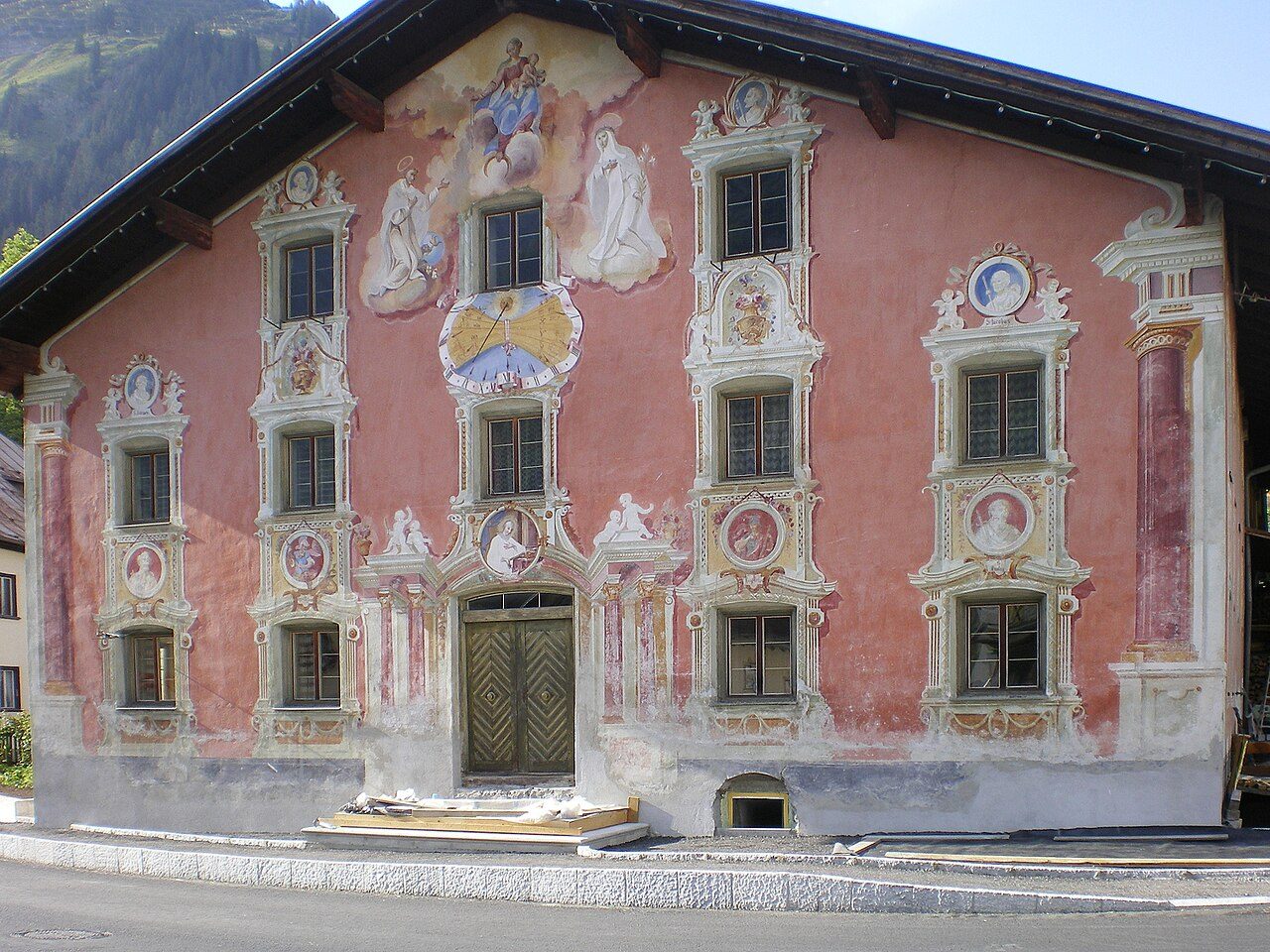
The origin of the term is disputed but may have come from the name of the home of the façade artist, Franz Seraph Zwinck (1748–1792) of Oberammergau, Zum Lüftl. Lüftlmalerei is a popular, folk-oriented variation of trompe-l'œil from the Baroque and imitates architectural elements. As in 'high architecture' it also embeds pictorial cartouches, mirrors and fields. Its subject matter ranges from the patron saints of houses or house emblems to representations of Biblical stories and the classical motifs of peasant art from everyday rural life to hunting. Banners with mottoes are common and the sundial is also a popular element. The paintings are applied to the fresh lime plaster using a fresco technique, whereby the colours silicify with the plaster in a chemical reaction and the paintings are thus able to survive for a long time. Today, other weatherproof painting materials are also used. 1
Literature
ISBN 3929229927 1
The text above is adapted from the Wikipedia article “Lüftlmalerei”, available under the Creative Commons Attribution-ShareAlike 4.0 licence. 1
Lüftlmalerei is Bavarian or Tyrolean trompe-l'œil facade painting, according to the structured record cited below. This entry was generated automatically from that record and has not yet been reviewed by a person familiar with the tradition. 2
The source record links this tradition to 1 external register, which can be verified through the citation. 2