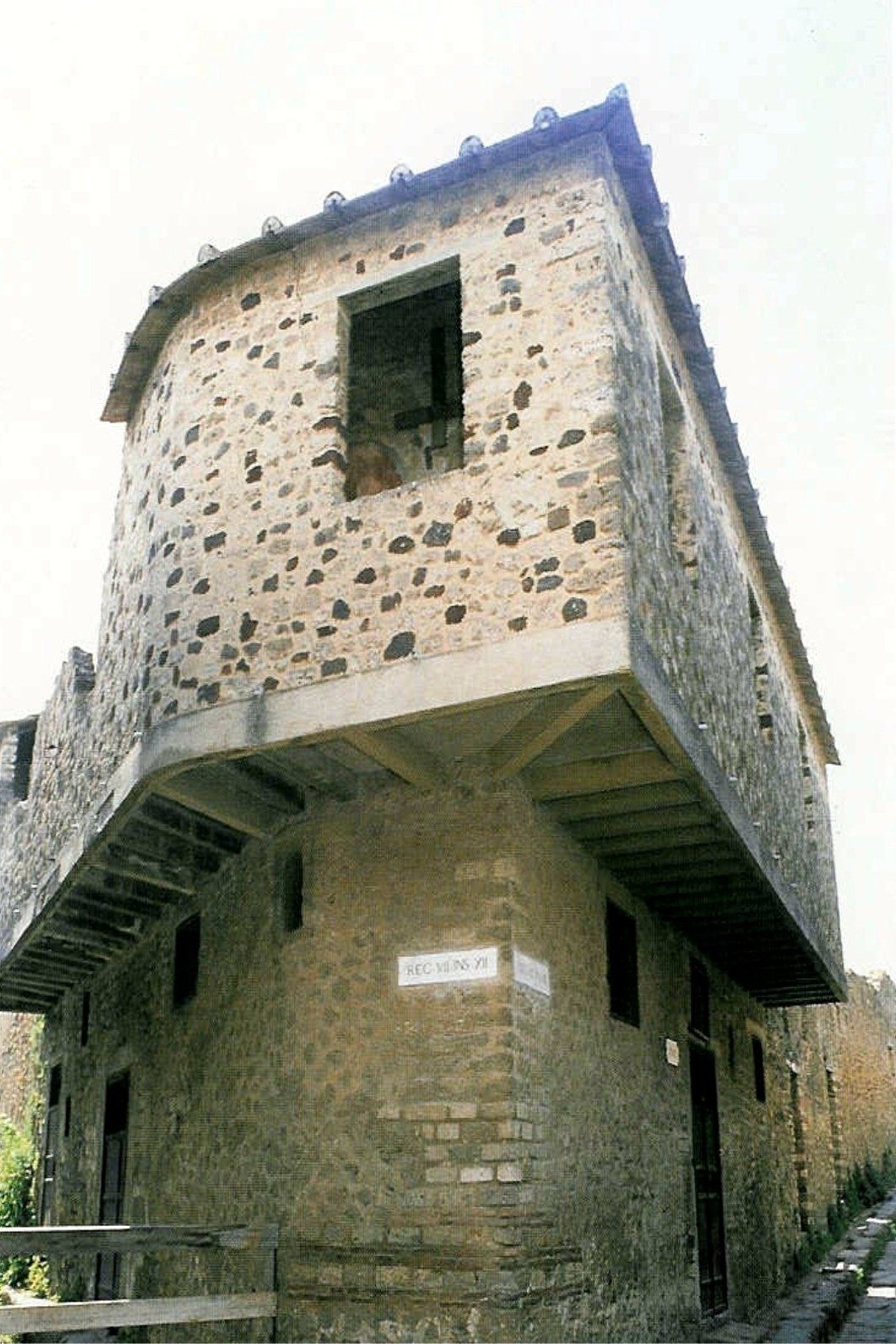
The tradition & historical record
6 min read · 2 sourcesThe Lupanar (Latin for "brothel") is the ruined building of an ancient Roman brothel in the city of Pompeii. It is of particular interest for the erotic paintings on its walls, and is also known as the Lupanare Grande or the "Purpose-Built Brothel" in the Roman colony. Pompeii was closely associated with Venus, the ancient Roman goddess of love, sex, and fertility, and therefore a mythological figure closely tied to prostitution. 1
Location
The Lupanar (VII, 12, 18–20) is located approximately two blocks east of the forum and near the Stabian Baths at the intersection of Vico del Lupanare and Vico del Balcone Pensile. This specific location was considered a popular social hub or a "piazza" based on graffiti that included sports tournament advertisements, political propaganda, and other more colloquial messages. Scholars have discovered there to be a great deal of foot traffic around the outside of the brothel. 1
Treatment as site
19th century guides and historians often refused to examine or discuss the brothels due to their own moral agendas. Although historians were initially hesitant to provide insight into ancient brothels to the public, the Lupanar is now a widely visited tourist attraction within Pompeii. Late 19th-century historian Wolfgang Helbig made the statement that "an analysis of individual paintings [from the brothel] is unnecessary and inadmissible." It was not until the 20th century that scholars began taking excavations of ancient brothels seriously. Ancient erotic art became a popular mode of study to offer insight into Greco-Roman sexuality, partnership, and power dynamics. The reception of the brothel by patrons and visitors exemplified the class disparities within the brothel. Upper-class visitors were known to skew the representation of the brothel deriving from their own classism. Although they often described the space as filthy or unappealing, scholars have declared such recollections to be biased and untrustworthy. 1
Brothels
The Roman word for brothel was lupanar, meaning a wolf den, and a prostitute was called a lupa ("she-wolf"). Early Pompeian excavators, guided by the strict modesty of the time period, quickly classified any building containing erotic paintings as brothels. Using this metric, Pompeii had 35 lupanares. Given a population of ten thousand in Pompeii during the first century CE, this leaves one brothel per 286 people or 71 adult males. Using stricter and more thorough criteria for identifying brothels brings the number to a more realistic figure of nine single-room establishments and the Lupanar at VII, 12, 18–20. Brothels during this period were typically small with only a few rooms. Prostitutes worked out of small, individual rooms. There were no doors or indications of curtain rods for privacy, with only a small barred window high up on the wall for light. The prostitute's individual price was often listed next to the door, as determined by their pimps. The Lupanar was the largest of the brothels found in Pompeii with 10 rooms. Like other brothels, rooms in the Lupanar were plainly furnished. A mattress on a brick platform served as a bed. 1
Erotic frescoes
The most well-known feature of the brothel are the erotic frescoes that are found lining the hallways above the door lintels. There are eight notable frescoes in total, although only seven are still in surviving condition. Of the frescoes still intact, five of them depict different sex positions between a male and female. Frescoes illustrate the positions of woman on top, missionary position, doggy style, 69 position and anal sex. The sixth fresco shows a seated male accompanied by a standing woman; the male gestures towards what scholars believe to be a smaller sex image. The seventh fresco features a prominent deity, Priapus, a male god of fertility known for his permanent and pronounced erection, surrounded by two stylized erections. The eighth fresco is in extremely poor condition but is believed to depict yet another sexual engagement. The frescoes were originally discovered during an excavation in 1862. They can be dated back to 72 CE. This is because there is an impression of a coin within the walls' plaster that can be traced back to this date. 1
The frescoes were intentionally placed above eye level to establish symbolic distance between the viewer (the client) and the sexual journey they were to embark on. The arrangement of the frescoes lead outwards from doorway 18. Frescoes also helped create a sense of luxury, as they depicted large rooms with fancy bedding and wealth, customers could look at these pictures and imagine that they were having a similar lavish experience. Other non-sexual images can be found along the brothel walls including depictions of animals and other decorative patterning. 1
Business operation
The Lupanar of Pompeii was not exclusively a place for prostitution but also a place of leisure for local men. Although upper-class individuals were given elevated treatment within the brothels, laborers and slaves alike were known to frequent the institution for relaxation, socializing, and sexual gratification. The brothel was a highly profitable business model that involved a specialized investment system that went through groups of pimps and the leasing of slave women. Pimps often determined prices, especially if the prostitute was a slave. Even an inexpensive prostitute made two or three times as much as an unskilled male laborer, making lupanars profitable for masters, pimps, and landlords. Much of the brothel's profits were made in activities beyond sex acts. The Lupanar also acted as a bar as prostitutes would make and sell drinks to visitors and clients. It has also been noted that the prostitutes themselves were known to drink in order to withstand the violence they so often faced. Prostitutes were also recorded to have offered bodily and personal care to clients. Remaining bronze, wide-brimmed vessels were found in the remains of the brothel. Such vessels were most typically found alongside personal care items or toiletries which led scholars to believe these vessels were likely used for bathing and cleaning clients. Another evidence of bodily care practices was the raschiatoio or "scrapers" found near the water basins. This also led scholars to believe that prostitutes would shave the facial and body hair of clients while inside the brothel. 1
The text above is adapted from the Wikipedia article “Lupanar”, available under the Creative Commons Attribution-ShareAlike 4.0 licence. 1
Lupanar is ruined brothel in Pompeii, according to the structured record cited below. This entry was generated automatically from that record and has not yet been reviewed by a person familiar with the tradition. 2
The source record links this tradition to 4 external registers, which can be verified through the citation. 2