The tradition & historical record
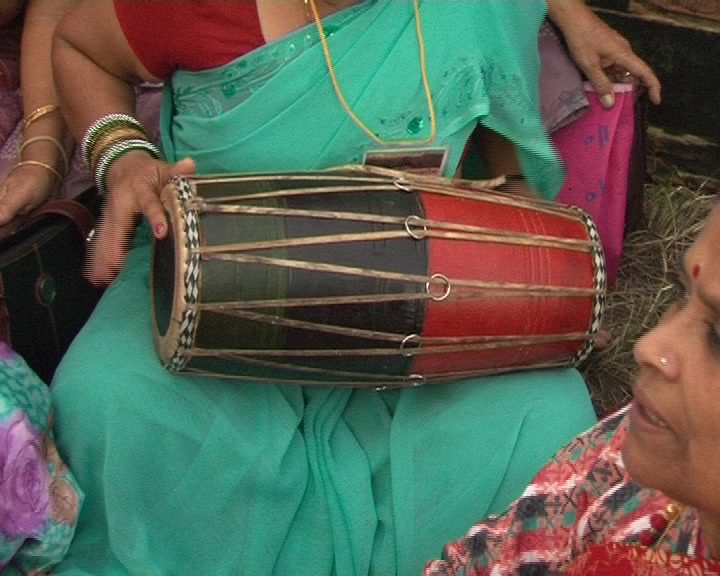
3 min read · 2 sourcesThe madal (Nepali: मादल) or maadal is a Nepalese folk musical instrument. The madal is used mainly for rhythm-keeping in Nepalese folk music. It is very popular and widely used as a hand drum in Nepal. The madal has a cylindrical body with a slight bulge at its center and heads at both ends, one head larger than the other. It is usually played horizontally in a seated position, with both heads played simultaneously. The madal is the national instrument of Nepal and is the backbone of most Nepali folk music. The well-known Nepali musician Ranjit Gazmer introduced this instrument to Bollywood music when he started working with Rahul Dev Burman, and has used it in numerous Bollywood songs such as Hum Dono Do Premi and Kanchi Re Kanchi Re. A madal drum is also used by certain Adivasi groups. 1
Two distinct drums
The Madal/Kham is made up of two unique drums, which are commonly called the "male" and the "female." When these drums are played together, complex melodies and rhythms are produced. Usually larger and with a deeper resonance, the male drum produces higher-pitched sounds than the female drum, which is smaller. 1
Wooden body
The bodies of the drums, male and female, are made of wood. Carefully chosen wood is used to create the body, ensuring both sound quality and longevity. Woods that are frequently used include hardwoods like teak and sal. The instrument's overall tone is greatly influenced by the thickness, character, and resonance of the wood. 1
Animal skin heads
Traditional Madal/Kham drumheads are made of goat or buffalo hide. The animal hide is draped over the top of the hardwood bodies of each drum. The instrument's sound quality is greatly affected by the selection of the hide. While thinner hides create brighter, sharper sounds, thicker skins produce deeper tones. 1
Tuning system
The Madal/Kham drums are quite versatile because of their distinctive shape and design. The tension of the drumheads is changed to tune the drums, usually using a system of leather straps or ropes. Each drum's pitch can be precisely adjusted by tightening or relaxing these straps. To get the right harmonies and tones for a certain piece of music, musicians might tune the Madal/Kham. 1
Shape and design
It has a unique design, the female drum is smaller and similarly cylindrical, but the male drum is usually larger and more cylindrical in shape. The drums' bodies may be embellished with elaborate carvings, paintings, or other ornamental features that speak to the instrument's local and cultural influences. 1
The text above is adapted from the Wikipedia article “Madal”, available under the Creative Commons Attribution-ShareAlike 4.0 licence. 1
madal is folk instrument from Nepal and India, according to the structured record cited below. This entry was generated automatically from that record and has not yet been reviewed by a person familiar with the tradition. 2
The source record links this tradition to 5 external registers, which can be verified through the citation. 2