The tradition & historical record
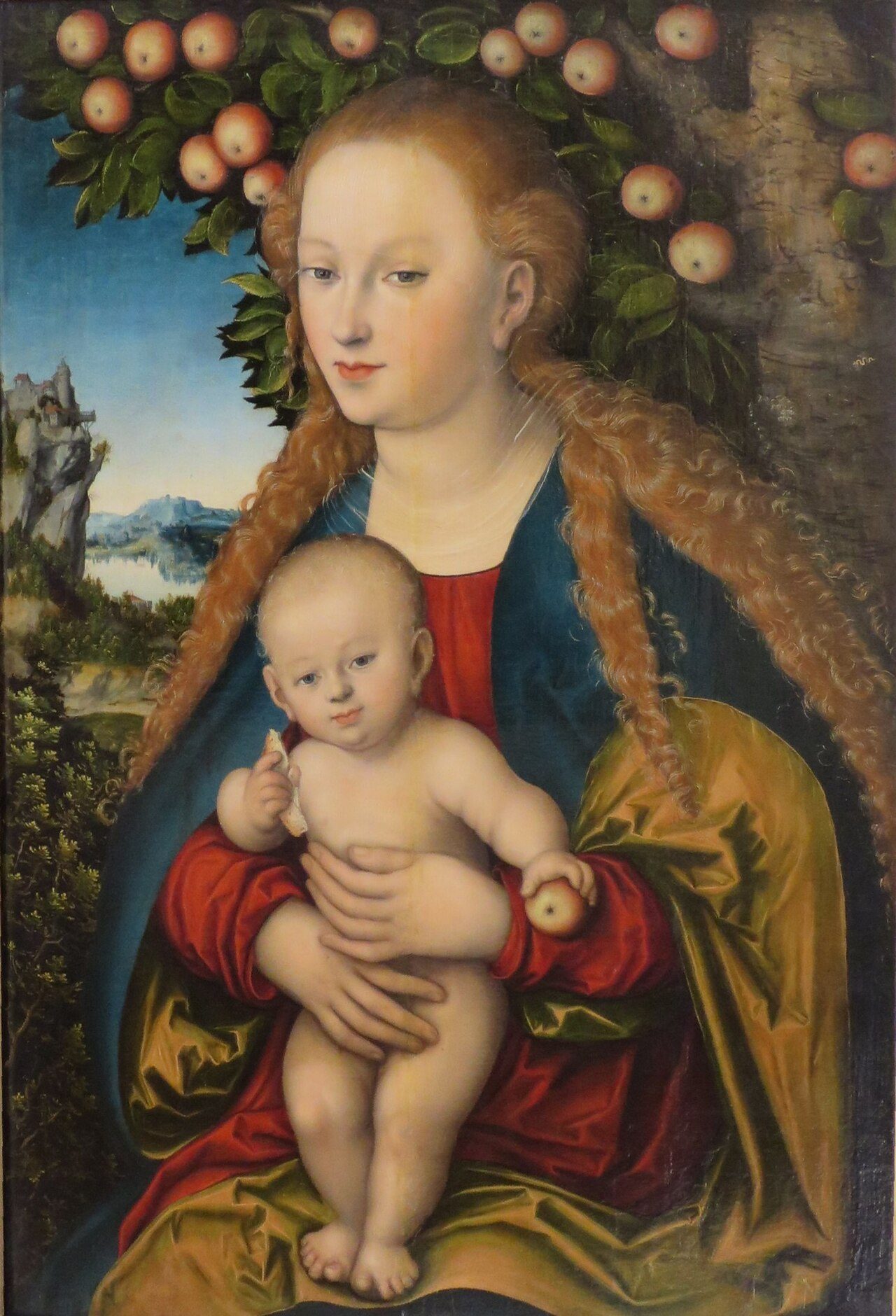
6 min read · 2 sourcesIn Christian art, a Madonna (Italian: [maˈdɔnna]) is a religious depiction of the Blessed Virgin Mary in a singular form or sometimes accompanied by the Child Jesus. These images are central icons for both the Catholic and Orthodox churches, and are found within a number of Evangelical-Lutheran churches as well. The word is from Italian ma donna 'my lady' (archaic). The Madonna and Child type is very prevalent in Christian iconography, divided into many traditional subtypes especially in Eastern Orthodox iconography, often known after the location of a notable icon of the type, such as the Theotokos of Vladimir, Agiosoritissa, Blachernitissa, etc., or descriptive of the depicted posture, as in Hodegetria, Eleusa, etc. The term Madonna in the sense of "picture or statue of the Virgin Mary" enters English usage in the 17th century, primarily in reference to works of the Italian Renaissance. In an Eastern Orthodox context, such images are typically known as Theotokos. "Madonna" may be generally used of representations of Mary, with or without the infant Jesus, where she is the focus and central figure of the image, possibly flanked or surrounded by angels or saints. Other types of Marian imagery that have a narrative context, depicting scenes from the Life of the Virgin, e.g. 1
Terminology
Liturgy depicting Mary as powerful intercessor (such as the Akathist) was brought from Greek into Latin tradition in the 8th century. The Greek title of Δεσποινα (Despoina) was adopted as Latin Domina "Lady". The medieval Italian Ma Donna pronounced [maˈdɔnna] ("My Lady") reflects Mea Domina, while Nostra Domina (δεσποινίς ἡμῶν) was adopted in French, as Nostre Dame "Our Lady". These names signal both the increased importance of the cult of the virgin and the prominence of art in service to Marian devotion during the late medieval period. During the 13th century, especially, with the increasing influence of chivalry and aristocratic culture on poetry, song and the visual arts, the Madonna is represented as the queen of Heaven, often enthroned, such as the Ognissanti Madonna. Madonna was meant more to remind people of the theological concept which is placing such a high value on purity or virginity. This is also represented by the color of her clothing. The color blue symbolized purity, virginity, and royalty. Ultramarine was usually reserved for only the most important commissions, such as the blue robes of the Virgin Mary in Gerard David's Virgin and Child with Female Saints. While the Italian term Madonna paralleled English Our Lady in late medieval Marian devotion, it was imported as an art historical term into English usage in the 1640s, designating specifically the Marian art of the Italian Renaissance. In this sense, "a Madonna", or "a Madonna with Child" is used of specific works of art, historically mostly of Italian works. A "Madonna" may alternatively be called "Virgin" or "Our Lady", but "Madonna" is not typically applied to eastern works; e.g. 1
Modes of representation
There are several distinct types of representation of the Madonna. 1
One type of Madonna shows Mary alone (without the child Jesus), and standing, generally glorified and with a gesture of prayer, benediction or prophesy. This type of image occurs in a number of ancient apsidal mosaics. Full-length standing images of the Madonna more frequently include the infant Jesus, who turns towards the viewer or raises his hand in benediction. The most famous Byzantine image, the Hodegetria was originally of this type, though most copies are at half-length. This type of image occurs frequently in sculpture and may be found in fragile ivory carvings, in limestone on the central door posts of many cathedrals, and in polychrome wooden or plaster casts in almost every Catholic Church. There are a number of famous paintings that depict the Madonna in this manner, notably the Sistine Madonna by Raphael. The "Madonna enthroned" is a type of image that dates from the Byzantine period and was used widely in Medieval and Renaissance times. These representations of the Madonna and Child often take the form of large altarpieces. They also occur as frescoes and apsidal mosaics. In Medieval examples the Madonna is often accompanied by angels who support the throne, or by rows of saints. In Renaissance painting, particularly High Renaissance painting, the saints may be grouped informally in a type of composition known as a Sacra conversazione. The Madonna of humility refers to portrayals in which the Madonna is sitting on the ground, or sitting upon a low cushion. She may be holding the Child Jesus in her lap. This style was a product of Franciscan piety, and perhaps due to Simone Martini. It spread quickly through Italy and by 1375 examples began to appear in Spain, France and Germany. 1
History
The earliest depictions of Mary date to Early Christian art of the (2nd to 3rd centuries, found in the Catacombs of Rome. These are in a narrative context. The earliest representation may be the wall painting in the Catacomb of Priscilla (2nd century), in which the seated Madonna suckles the Child, who turns his head to gaze at the spectator. The earliest consistent representations of Mother and Child were developed in the Byzantine Empire, where despite an iconoclastic strain in culture that rejected physical representations, considering it as idolatry, respected a narrow range of highly conventionalized religious image types or icons (from the Greek eikōn (εἰκών) meaning "image," "likeness," or "portrait"). This tradition of the Eastern Christian Church was so important that during a visit to Constantinople in 536, Pope Agapetus I was accused of being opposed to the veneration of the theotokos and to the portrayal of her image in churches. Eastern Christian Church depictions show the Madonna enthroned, even wearing the closed Byzantine pearl-encrusted crown with pendants, with the Christ Child on her lap. In the West, the formalized Byzantine depictions of the Virgin and Child were closely followed during the Early Middle Ages. Starting in the 15th century, Florentine painters started to humanize her and making her look more real. representation of the Virgin, and the Child may be fully aware, raising his hand to offer his blessing. With the increased importance of the cult of the Virgin in the 12th and 13th centuries, a wide variety of types developed to satisfy a flood of more intensely personal forms of piety. In the usual Gothic and Renaissance formulas the Virgin Mary sits with the Infant Jesus on her lap, or enfolded in her arms. 1
Early images
There was a great expansion of the cult of Mary after the Council of Ephesus in 431, when her status as Theotokos ("God-bearer") was confirmed; this had been a subject of some controversy until then, though mainly for reasons to do with arguments over the nature of Christ. 1
Byzantine influence on the West
Very few early images of the Virgin Mary survive, though the depiction of the Madonna has roots in ancient pictorial and sculptural traditions that informed the earliest Christian communities t… 1
The text above is adapted from the Wikipedia article “Madonna (art)”, available under the Creative Commons Attribution-ShareAlike 4.0 licence. 1
Madonna is artistic representation of Mary, either alone or with her child Jesus, according to the structured record cited below. This entry was generated automatically from that record and has not yet been reviewed by a person familiar with the tradition. 2
The source record links this tradition to 12 external registers, which can be verified through the citation. 2