The tradition & historical record
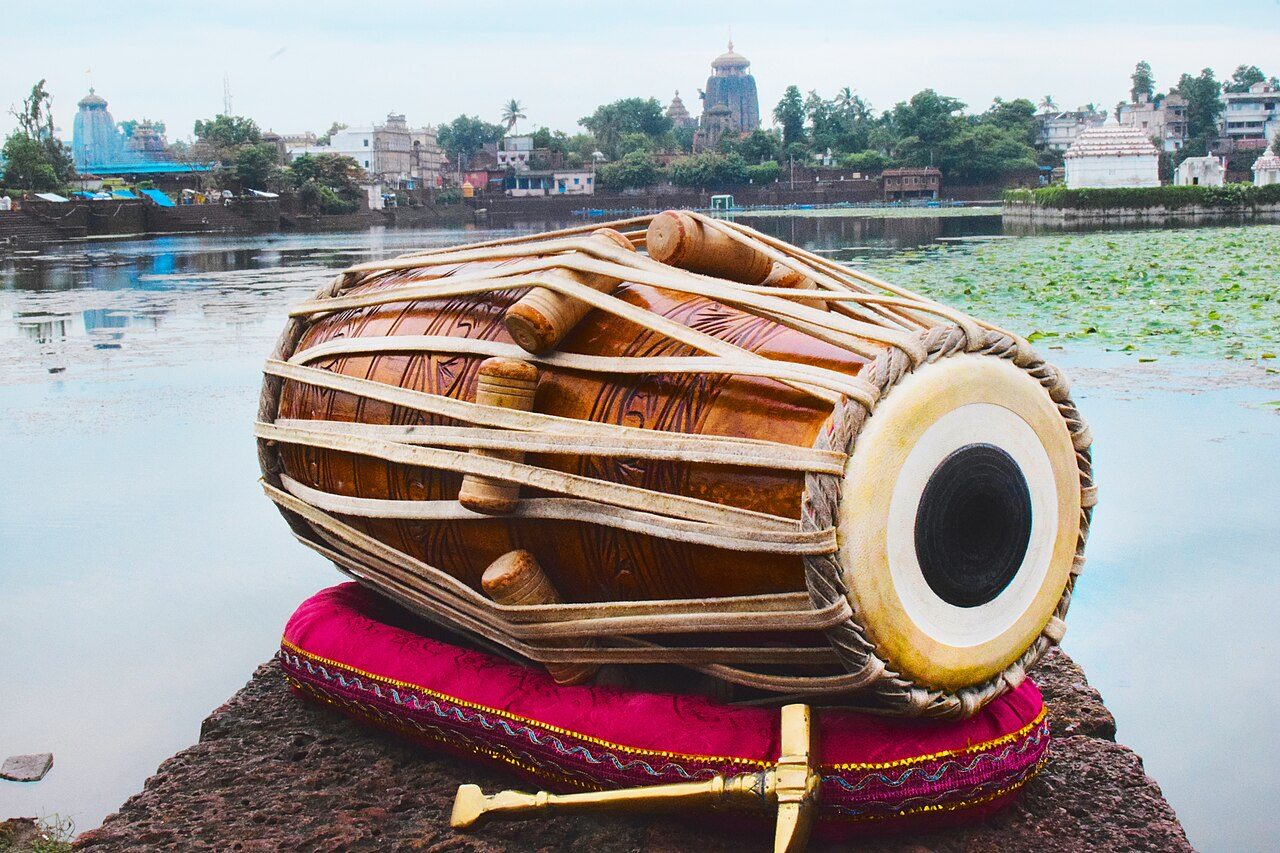
5 min read · 2 sourcesMardala (Odia: ମର୍ଦ୍ଦଳ, romanized: Mardaḷa, Odia: [mɔrd̪d̪ɔl̪ɔ] ) is a classical percussive instrument native to the east Indian state of Odisha, traditionally used as the primary accompaniment in Odissi classical music. The instrument is slightly different from other instruments (like Madal, Mridangam, etc.) that might have similar names in the Indian subcontinent due to its unique construction, acoustic features and traditional playing technique. The Mardala is used in a wide range of traditional art forms of Odisha, including Gotipua, Mahari, Odissi dance, Bhagabata Tungi, Sakhi Nata, Prahallada Nataka, Ramalila, Krusnalila, Rama Nataka, Sahi Jata, Medha Nacha, Bharata Lila, Bhutakeli Nata, Odisi Kirtana and more. 1
History
Odishan musicologists in ancient treatises have mentioned four distinct kinds of instruments or vadyas : tat or stringed instruments, susira or wind instruments, anaddha or leather instruments / drums & finally ghana or metallic instruments. Out of these four, the Mardala falls under the category of anaddha vadyas or drums. Raghunatha Ratha, an ancient musicologist of Odisha extols the Mardala in his treatise, the Natya Manorama as: 1
The Jagannatha temple of Puri has for centuries had a Mardala servitor. This was known as the 'Madeli Seba' and the percussionist was ritually initiated into the temple by the Gajapati ruler. The Mardala used to be the accompanying instrument to the Mahari dance, the ancestor of present-day Odissi dance, one of the major classical dance forms of India. In hundreds of Kalingan temples across the state of Odisha, including famous shrines such as Mukteswara and Konarka, the Mardala features prominently, usually in a niche of an alasakanya playing the instrument. There is a pose by the name mardalika replicating the same stance in Odissi dance. 1
Wood
All woods are not suitable for constructing the Mardala. According to treatises, the ideal Mardala is made of khadira (khaira) or the wood of Acacia catechu. The wood of raktachandana is also spoken of highly owing to its deep resonance. Other woods such as nimba, mahalimba and gambhari are also used. An instrument fashioned from the aforesaid woods is considered uttama, whereas an instrument made from the wood of jackfruit is considered adhama. 1
Measurements
Natya Manorama ordains the Mardala to be about one and a half cubits long. The left face must be between twelve and thirteen angulas and the right face half or one angula less than the left face. 1
Making
The process of making a Mardala is described in detail in the Natya Manorama. The Mardala is thicker at the middle than its ends. A paste called kharali is applied on the playing face of the Mardala in a round shape. The preparation of kharali is a time-consuming and delicate process, requiring the ingredients of paunsa (ash), geru (red chalk), bhata (boiled rice), chuda (flattened rice), harida (fruit of black myrobalan tree) and sour gruel. This is applied to the right face of the Mardala. The purika is applied on the left face to produce a pleasant sound. The preparation of the purika uses bhata (boiled rice), lia (blown rice) or paunsa (ash). Once done, the instrument is sun-dried. Once dried, the paste is reapplied and again sundried, and this process is repeated for at least twelve times before adjudging the shruti (tone) of the instrument. Then the instrument is tied strongly with pata-suta or leather strips and ready to be played. 1
Repertoire and technique
The playing of the Mardala is based on the tala-paddhati or rhythmic system of Odissi music. A tala is a rhythmic structure in Indian music. The talas in use in Odissi music are distinctive, and are not found in other systems of Indian music. The playing of the instrument follows a strict classical grammar. Traditionally, there are ten vital features of tala that are taken care of: 1
kāla or beats mārga or inter-beat transitions kriyā or hand movements anga graha jāti kalā laya jati prastāra The kriyas are either nisabda, that is without-sound or sasabda, with sound. The nisabda or soundless kriyas are demonstrated by four types of motions; there is no stroke. The sasabda or sounded kriyas are created by striking a membrane. Apart from these, there are eight desi-kriyas. The regional terminology used in the Mardala's context are kalā, ansā, māna, aḍasā, bhaunri, bhaunri aḍasā, tāli, khāli, phānka, bāṇi, ukuṭa, pāṭa, chhanda, bhangi, etc. The sabda-swara pata, a traditional component based on the Mardala's beats was integrated into Odissi dance by Guru Deba Prasad Das. Though several hundred talas are defined in treatises, some are more common : ekatāli, khemaṭā or jhulā, rūpaka, tripaṭā, jhampā, āḍatāli, jati, āditala, maṭhā. Other talas that are also used are sarimāna, nihsāri, kuḍuka, aḍḍa, duāḍamāna, upāḍḍa, panchutāla (nabapanchu tala), paḍitāla, pahapaṭa, aṭṭatāla, āṭhatāli and jagannātha tāla. The talas have a characteristic swing that is typical of and universally found in Odissi music. The details of some major talas are listed below. 1
The text above is adapted from the Wikipedia article “Mardala”, available under the Creative Commons Attribution-ShareAlike 4.0 licence. 1
Mardala is Primary traditional percussion instrument of Odissi classical music, according to the structured record cited below. This entry was generated automatically from that record and has not yet been reviewed by a person familiar with the tradition. 2
The source record links this tradition to 1 external register, which can be verified through the citation. 2