The tradition & historical record
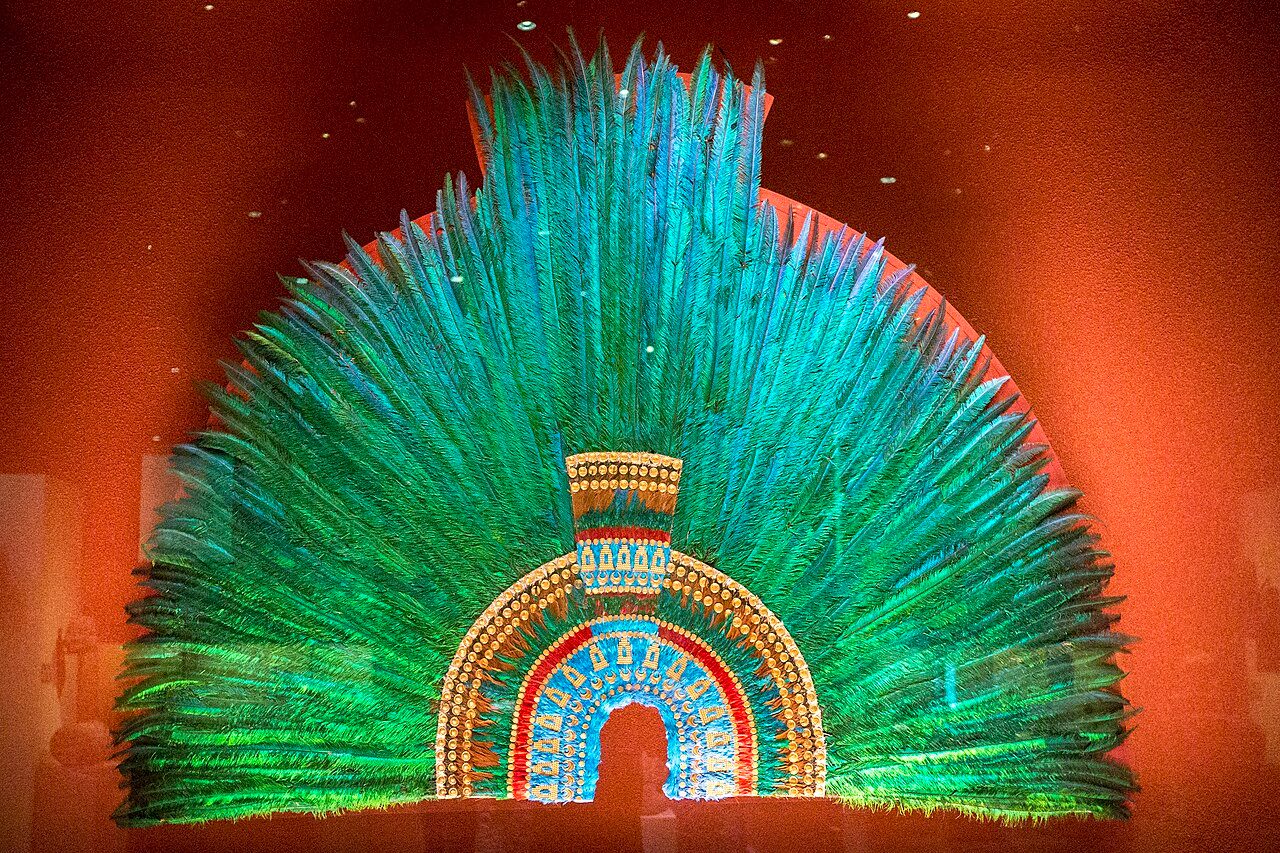
6 min read · 2 sourcesMexican featherwork, also called "plumería", was an important artistic and decorative technique in the pre-Hispanic and colonial periods in what is now Mexico. Although feathers have been prized and feather works created in other parts of the world, those done by the amanteca or feather work specialists impressed Spanish conquerors, leading to a creative exchange with Europe. Featherwork pieces took on European motifs in Mexico. Feathers and feather works became prized in Europe. The "golden age" for this technique as an art form was from just before the Spanish conquest to about a century afterwards. At the beginning of the 17th century, it began a decline due to the death of the old masters, the disappearance of the birds that provide fine feathers and the depreciation of indigenous handiwork. Feather work, especially the creation of "mosaics" or "paintings" principally of religious images remained noted by Europeans until the 19th century, but by the 20th century, the little that remained had become a handcraft, despite efforts to revive it. Today, the most common feather objects are those made for traditional dance costumes, although mosaics are made in the state of Michoacán, and feather trimmed huipils are made in the state of Chiapas. 1
Mesoamerican featherwork
The use of feather for decorative purposes has been documented in many parts of the world in the past. In the New World, it is known to have had ceremonial use and ranking purposes, especially in attire in what are now Brazil and Peru. In Mesoamerica, their use became highly developed with some of the most intricate examples coming from what is now central Mexico. One reason for this was their symbolic and religious use. Much of this symbolism arose with the spread of the worship of the Toltec god/king Quetzalcoatl, depicted as a serpent covered in quetzal feathers. Quetzalcoatl was said to have discovered gold, silver and precious stones. When he fled Tula, he released all kind of birds he was breeding. The Aztec main god, Huitzilopochtli, is associated with the hummingbird. His origin is from ball of fine feathers that fell on his mother, Coatlicue, and impregnated her. He was born fully armed with an eagle feather shield, fine plumage in his head and on his left sandal. Feathers were valued similarly to jade and turquoise in Mesoamerica. They were considered to have magical properties as symbols of fertility, abundance, riches and power and those who used them were associated with divine powers. Evidence of use goes back at least as far as the Mayas, with depictions of them on the murals at Bonampak. The Mayans also raised birds in part for feathers. Toltec groups were making feathered items from black and white feathers of local origin. The most developed use of feathers in Mesoamerica was among the Aztecs, Tlaxcaltecs and Purepecha. 1
European discovery of featherwork
When the Spanish arrived to Mexico, they were impressed with the bird species of the land and the use of feather, with Hernán Cortés receiving among his gifts feathers from Moctezuma. As early as 1519, Cortés sent feathered shields, head adornments, and fans to Spain. In 1524, Diego de Soto returned to Spain from the New World. Among the gifts for King Charles V was artwork, including that made with feathers, such as shields with scenes of sacrifice, serpents, butterflies, birds and crests. In 1527, Cortés sent thirty eight pieces of what are identified as feather work to Asia. After the Conquest, the art of working with feathers survived, but on a lesser scale and its uses changed. pagan ritual use ended with Christian evangelization, with some surviving works conveying Christian religious themes. Featherwork's use in war also remained. One type of feather work to remains strong was the creation of mosaics, many of which were created and sent to Europe, Guatemala and Peru. They were even sent as far as Asia as gifts but little is known of this trade. Exotic feathers themselves were exported to Europe and used to adorn hats, horses and clothing. The importance of feather work and the impression it made on the Spanish is documented by Spaniards such as Hernán Cortés, Francisco de Aguilar, Bartolomé de las Casas, Bernal Díaz del Castillo, Gonzalo Fernández de Oviedo y Valdés, Francisco López de Gómara, Peter Martyr, Fray Bernardino de Sahagún and Andres de Tapia. Feathers add chromatic and luminous feathers difficult to create with paints, although oil painting at the time had well developed techniques to play with light. Mexican expertise was valued as well. 1
Featherwork with Christian themes
Feather work and the conquest led to a creative exchange from the conquest to about 1800. Evangelism added Christian themes to feather work, including the making of ritual items. Amantecas were creating Christian religious images within months after the arrival of the conquistadors, destined for Europe as well as Asia. The first known Christian-inspired pictures in feather work were made for banners, on a cotton cloth with an imprimatur, on which the design was made. They had a backing of very fine palm or rush mats bound with twine or vegetable lianas. The Huejotzingo Codex depicts the making of a feather and gold banner, the first indication of feather work with Christian images. At first, feather work was suppressed by the Spanish as part of their efforts to eradicate the old religion. However, they soon changed tactics and employed the feather workers to create Christian images. These new works are called "feather mosaics" because of the small pieces of feathers used, and most are in the Baroque style then favored, as the artists copied images brought from Spain. After the Conquest, hummingbird feathers were used to adorn images of Christ in Michoacan, such as agave yarn sandals in hummingbird feathers made in Tzintzuntzan. Indian craftsmen made and offered crosses and candlesticks adorned with green feathers called quezalli. Small scale feather images and pendants serving as protective amulets were also made. 1
The 16th-century mosaics were made with different sized feathers combined with paper strips. Over the years, the feathers became smaller, the compositions more harmonious and the designs more subtle with the additions of gold leaf, gold foil and colored brushwork. The basic imagery was European but the edging shows traces of pre Hispanic designs. 1
Featherwork 1600–1900
The "golden age" of Mexican feather work lasted until the very beginning of the 17th century, when it declined because the old masters disappeared. At this time, demand for the work declined as well, because the Spanish began to disdain indigenous handcrafts and oil painting became preferred for the production of religious images. In the 17th-century, imagery done in feather work became more varied, including the Virgin of Guadalupe and those from European mythology, especially on fans for ladies. Techniques changed to include a profusion of paper strips on mosaics, replacing the earlier use of gold trimmings. One image of the Virgin of Guadalupe is completely of feathers. 1
Featherwork 1900–2000
By the 20th-century, feat… 1
The text above is adapted from the Wikipedia article “Mexican featherwork”, available under the Creative Commons Attribution-ShareAlike 4.0 licence. 1
Mexican feather work is pre-Hispanic artistic and decorative technique, according to the structured record cited below. This entry was generated automatically from that record and has not yet been reviewed by a person familiar with the tradition. 2
The source record links this tradition to 1 external register, which can be verified through the citation. 2