The tradition & historical record
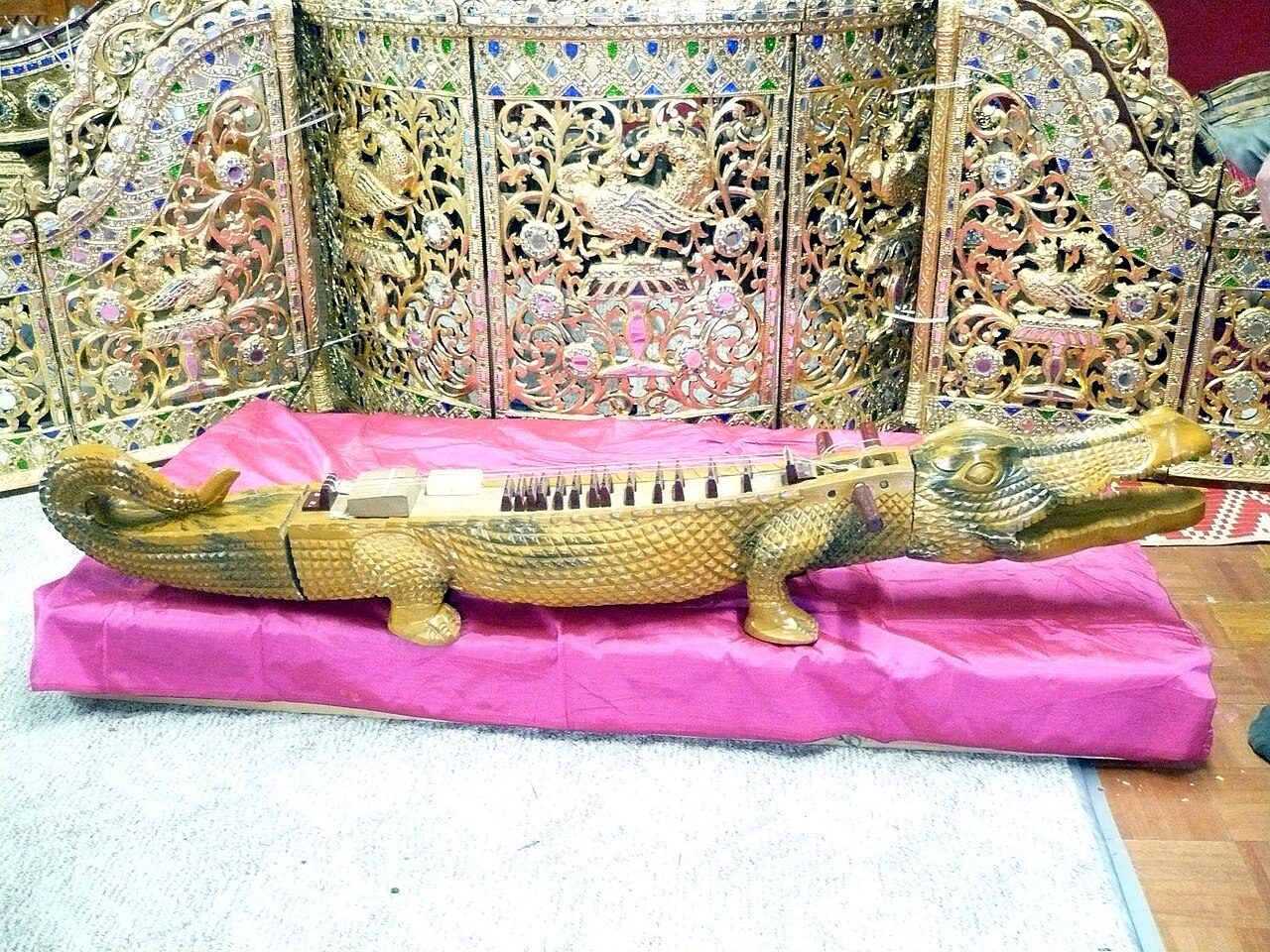
2 min read · 2 sourcesThe mi gyaung (Burmese: မိကျောင်း [mḭ dʑáʊɰ̃]) or kyam (Mon: ကျာံ, [cam] ; pronounced "chyam") is a crocodile-shaped fretted, plucked zither with three strings that is used as a traditional instrument in Burma. It is associated with the Mon people. Both Burmese and Mon names also mean 'crocodile.' Tube zither of Myanmar, carved of wood in the shape of a crocodile with extended head and tail. It has three metal strings which pass over eight to ten raised movable frets on the flat top of the instrument and fasten to tuning pegs near the tail. This zither is related to similar instruments distributed widely in Southeast Asia. While the crocodile shape is not always found elsewhere, the reptilian name remains in variants such as the Thai čhakchē (‘alligator’, wooden tube zither) and the Indonesian and Philippine kacapi (box zither). In southern Myanmar the mí-gyaùng is associated with the Mon (who know it as kyam), an ethnic people linguistically related to the Mon-Khmer of Thailand and Cambodia. The instrument's body is made of wood that is carved out on the underside like a dugout canoe. It has approximately 13 raised wooden frets that are diatonically rather than equidistantly or chromatically spaced. It has a carved crocodile's head and tail, as well as four legs. Its strings are tuned (from low to high) FCF. The lowest string is made of brass and the two higher strings are made from nylon. 1
Listening
Kyam (mi gyaung) audio samples (track 6) 1
The text above is adapted from the Wikipedia article “Mi gyaung”, available under the Creative Commons Attribution-ShareAlike 4.0 licence. 1
mi gyaung is crocodile-shaped, fretted, plucked zither with three strings from Burma, according to the structured record cited below. This entry was generated automatically from that record and has not yet been reviewed by a person familiar with the tradition. 2
The source record links this tradition to 3 external registers, which can be verified through the citation. 2