The tradition & historical record
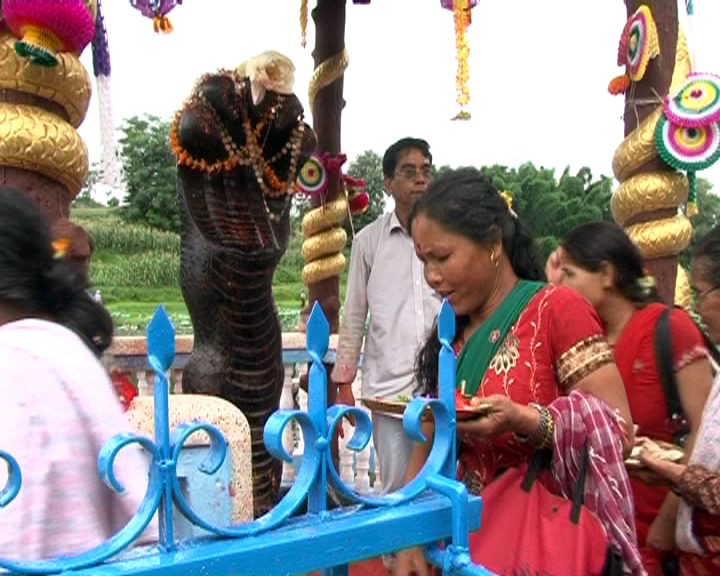
6 min read · 2 sourcesNaga Panchami (Sanskrit: नागपञ्चमी, IAST: Nāgapañcamī; lit. 'Fifth Day of the Serpents') is a day of traditional worship of nagas (or najas or nags) or snakes (which are associated with the mythical Nāga beings) observed by Hindus, Jains, and Buddhists throughout Nepal and some parts of India, and other countries where Hindu, Jain, and Buddhist adherents live. The worship is offered on the fifth day of bright half of lunar month of Shravana (July/August), according to the Hindu calendar. Some Indian states, such as Rajasthan, Bihar and Gujarat, celebrate Naga Panchami on the dark half (Krishna Paksha) of the same month. As part of the festivities, a Naga or serpent deity made of silver, stone, wood, or a painting is given a reverential bath with milk and their blessings are sought for the welfare of the family. Live snakes, especially cobras, are also worshipped on this day, especially with offerings of milk and generally with the assistance of a snake charmer. In the Mahabharata epic, the sage Astika stops King Janamejaya from sacrificing and eventually decimating the serpent race (Sarpa Satra). This sacrifice was performed by Janamejaya to avenge the death of his father Parikshita, who was killed by Takshaka, the king of the snakes. The day that the sacrifice was stopped was on the Shukla Paksha Panchami day in the month of Shravana. During this sacrifice, the Mahabharata as a whole was first narrated by the sage, Vaisampayana. 1
Etymology
Panchami is the fifth day among the fifteen days of the moon's waxing and/or waning. This special day of the serpent worship always falls on the fifth day of the moon's waning in the Lunar Hindu month of Shrāvana July/August. Hence this is called Naga Panchami (Naga: cobra; or simply, serpent). 1
Legends
There are many legends in Hinduism and folklore narrated to the importance of worship of snakes. According to Hindu Puranas and the Mahabharata, Kashyapa, grandson of the universal creator Lord Brahma, married two daughters of Prajapati Daksha, Kadru and Vinata. Kadru then gave birth to the race of Naga, while Vinata gave birth to Aruna, who became the charioteer of the sun god, Surya, and also gave birth to the great eagle Garuda, who became the carrier of Vishnu. Naga Panchami is also a day when akharas, traditional Indian wrestling gyms, hold special celebrations to honor the mystical symbolism of the snake as a symbol of virility and kundalini energy. 1
History
Indian scriptures such as Agni Purana, Skanda Purana, Narada Purana and the Mahabharata give details of history of snakes extolling worship of snakes. In the Mahabharata epic, Janamejaya, the son of King Parikshita of the Kuru dynasty was performing a snake sacrifice known as Sarpa Satra, to avenge for the death of his father from a snake bite by the snake king called Takshaka. 1
A sacrificial fireplace had been specially erected and the fire sacrifice to kill all snakes in the world was started by a galaxy of learned Brahmin sages. The sacrifice performed in the presence of Janamejaya was so powerful that it caused all snakes to fall into the Yagna kunda (sacrificial fire pit). When the priests found that only Takshaka who had bitten and killed Parikshita's father and had escaped to the nether world of Indra seeking his protection, the sages increased the tempo of reciting the mantras (spells) to drag Takshaka and also Indra to the sacrificial fire. Takshaka had coiled himself around Indra's cot but the force of the sacrificial yagna was so powerful that even Indra along with Takshaka were dragged towards the fire. This scared the gods who then appealed to Goddess Manasa, the queen of the snakes, to intervene and resolve the crisis. She then requested her son Astika to go to the site of the yagna and appeal to Janamejaya to stop the Sarpa Satra yagna. Astika impressed Janamejaya with his knowledge of all the Shāstras (scriptures) who granted him to seek a boon. It was then that Astika requested Janamejeya to stop the Sarpa Satra. Since the king was never known to refuse a boon given to a Brahmin, he relented, despite protests by the rishis performing the yagna. The yagna was then stopped and thus the lives of Indra and Takshaka and his other serpent race were spared. 1
Gregorian Calendar Dates
Dates in the Gregorian calendar: Last 5 Year's Nag Panchami Date's and Day : 2021: 13 August, Friday. [1] 2022: 2 August, Tuesday. [2] 2023: 21 August, Monday. [3] 2024: 9 August, Friday. [4] 2025: 29 July, Tuesday. [5] 2026: 17 August, Monday( This Year's Nag Panchami ). [6] Next 5 Year's Nag Panchmi dates : 2027: 6 August, Friday. [7] 2028: 26 July, Wednesday. [8] 2029: 14 August, Tuesday. [9] 2030: 4 August, Sunday. [10] 2031: 24 July, Thursday. [11] 1
Worship
On the day of Naga Panchami, Naga, cobras, and snakes are worshipped with milk, sweets, flowers, lamps, and even sacrifices. Naga or serpent deities made of silver, stone, wood, or paintings on the wall are first bathed with water and milk and then worshipped with the reciting of the following mantras. 1
Fasting is observed on this day and Brahmins are fed. The piety observed on this day is considered a sure protection against the fear of snake bite. At many places, real snakes are worshipped and fairs held. On this day digging the earth is taboo as it could kill or harm snakes which reside in the earth. 1
In some regions of the country milk is offered along with crystallized sugar, rice pudding. A special feature is of offering a lotus flower which is placed in a silver bowl. In front of this bowl, a rangoli (coloured design pattern) of snake is created on the floor with a brush made of wood or clay or silver or gold with sandalwood or turmeric paste as the paint. The design pattern will resemble a five hooded snake. Devotees then offer worship to this image on the floor. In villages, the anthills where the snakes are thought to reside, are searched. Incense is offered to the anthill as prayer along with milk (a myth of folk lore to feed milk to the snakes) to ensnare snakes to come out of the anthill. After this, milk is poured into the hole in the anthill as a libation to the snake god. On this occasion doorways and walls outside the house are painted with pictures of snakes, auspicious mantras (spells) are also written on them. 1
The text above is adapted from the Wikipedia article “Naga Panchami”, available under the Creative Commons Attribution-ShareAlike 4.0 licence. 1
Naga Panchami is Hindu Festival honouring serpents, according to the structured record cited below. This entry was generated automatically from that record and has not yet been reviewed by a person familiar with the tradition. 2
The source record links this tradition to 2 external registers, which can be verified through the citation. 2