The tradition & historical record
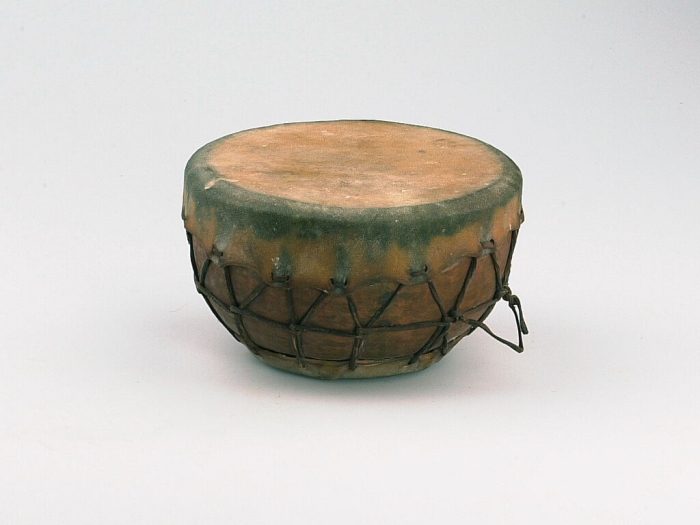
4 min read · 2 sourcesThe naqareh, naqqāra, nagara or nagada is a Middle Eastern drum with a rounded back and a hide head, usually played in pairs. It is thus a membranophone of the kettle drum variety. The term naqqāra (نقاره), also نقارات naqqarat, naqqarah, naqqåre, nakkare, nagora comes from the Urdu verb naqr- that means "to strike, beat". The instrument was also adopted in Europe following the Crusades, and known as the naccaire or naker. 1
Construction
The rounded section of a naqqara is made of baked clay, while the flat side consists of treated skin fastened around the rim with string which is tightened over the back of the bowl. 1
Playing
This percussion instrument is often played in pairs, where one naqqara will produce low pitch beats called nar and the other for the high pitch beats. The instruments are beaten with short wooden sticks bent outward at the upper ends called damka. 1
Iraq and the other Arab countries
Naqqārāt is the name of kettledrums in Arabic countries. Naqqārāt, hemispherical with the skin stretched over the top, come in pairs. Naqqarat is one of the percussion instruments used in Maqam al-Iraqi chalghi ensembles. Under the late Abbasids and the Fatimid Caliphate, kettledrums were beaten before the five daily prayers; small ones form part of present-day orchestral ensembles. 1
Iran
Naqqåre can be found in different sizes in different regions of Iran: 1
Naqåre-ye Shomal "northern naqqåre": played in northern Iran. Its native name in Mazandaran Province is desarkutan. Desarkutan is in fact a pair of small drums whose bodies are made of clay. Their structure is like that of a bowl. One is larger than the other; the larger is called bam and the smaller one is called zil. which respectively mean "bass" and "treble". The diameter of the bam is about 22 cm and the diameter of the zil is about 16 cm. Two drums are covered by cowhide, though in the past boarhide was used. The skin is tightened on the drums by bands made of cow tendon. Desarkutan: played with two wooden drumsticks. The length of the drumsticks is 25–27 cm. The thicker drumstick is used to play on the larger drum. The diameter of the drumsticks is 1-1.5 cm. Serna, the Mazandarani oboe, (Dari Persian sorna) is accompanied by one or two sets of desarkutan. These instruments are played in festive ceremonies such as wedding ceremonies, sport ceremonies and so on. Desarkutan is not used as a solo instrument. Fars naqqåre: played in the Fars province of Iran is a little larger than ordinary naqqåre. Sanandaji naqqåre: played in the Sanandaj city of Kurdistan province of Iran is a little larger than ordinary naqqåre. Naqqårekhån: Khåne literally means "house, home, room, place" and in Iran, there were different kinds of naqqårekhåne and there were places for announcing important news by playing on the kettledrums such as rising and setting of the sun, victory, mourning, birth of a male baby etc. These were also called Kuskhåne or, in Indian languages, naubat-khāna. 1
Indian subcontinent
Naqqara are also found in India, where the word is pronounced nagara or nagada. They are paired kettledrums traditionally used in the naubat "Nine Things", a traditional ensemble of nine instruments. Nagara are also played with sticks. Today, this instrument is usually used to accompany the shehnai or "Indian oboe", an indispensable component of any North Indian wedding. It was also used during Guru Gobind Singh Ji’s time as a war drum (first mentioned in the Battle of Banghani). This was to infuse pride into the Sikh armies while charging. It can be seen now usually at a Sikh martial art display (Gatka display) playing in the background. Rebecca Stewart's unpublished thesis, The Tabla in Perspective (UCLA, 1974) has suggested tabla was most likely a hybrid resulting from experiments with existing drums such as pakhawaj, dholak, and naqqara. 1
The text above is adapted from the Wikipedia article “Naqareh”, available under the Creative Commons Attribution-ShareAlike 4.0 licence. 1
Naqareh is Middle Eastern drum with a rounded back and a hide head, according to the structured record cited below. This entry was generated automatically from that record and has not yet been reviewed by a person familiar with the tradition. 2
The source record links this tradition to 5 external registers, which can be verified through the citation. 2