The tradition & historical record
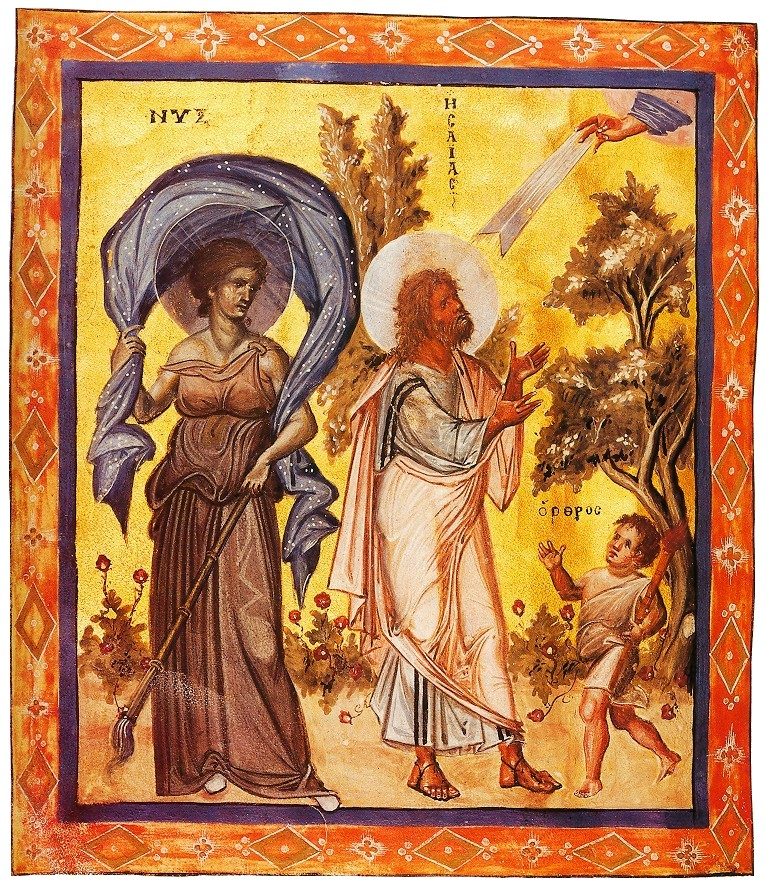
6 min read · 2 sourcesThe Paris Psalter (Paris, Bibliothèque Nationale, MS. gr. 139) is a Byzantine illuminated manuscript, 38 x 26.5 cm in size, containing 449 folios and 14 full-page miniatures. The Paris Psalter is considered a key monument of the so-called Macedonian Renaissance, a 10th-century renewal of interest in classical art closely identified with the emperor Constantine VII Porphyrogenitus (909–959) and his immediate successors. 1
In the classification of Greek biblical manuscripts, it is designated by siglum 1133 (Rahlfs). 1
Description
The Paris Psalter is a copy of the 150 Psalms of David, translated from Hebrew into demotic Greek. The psalter is followed by the Canticles of the Old Testament, a further series of prayers. Both these texts were particularly well-suited for use by members of the laity in private devotional exercises. The popularity of this use of the psalter is reflected in the numerous extant luxury copies, often lavishly illuminated, made for royal and aristocratic patrons. The Paris Psalter is the pre-eminent Byzantine example of this genre. The Paris Psalter includes not only the biblical texts, but an extensive interpretive gloss of the entire cycle of prayers. This commentary, which comprises quotations and paraphrases of patristic exegetical works, surrounds the verses. Even though it is written in a smaller pitch than the primary text, the gloss occupies far more of each page than the psalms, which are reduced to a few verses per page. The length of the gloss causes the longer psalms to occupy up to 8 pages. Glossed biblical texts were usually commissioned by monastic libraries, clerics and theologians. The classical and royal iconography and sumptuousness of the Paris Psalter, however, strongly point to an imperial patron; while the gloss implies a reader with serious intellectual and spiritual inclinations, such as Constantine VII. 1
The manuscript is written in a minusucule bouletée hand, which closely resembles that of several other Byzantine manuscripts of the same period, including an illuminated gospel book, (Parisinus graecus 70); a Gospel Book (London, British Library Add MS 11 300); a Gospel Book (Venice, Biblioteca Marciana Marcianus graecus I 18); the Acts and Epistles (Oxford, Bodleian Library MS. Canon. Gr. 110); and Basil of Caesarea (Oxford, Corpus Christi 26). 1
History
The full-blown classicism of the painting style and iconographic parallels with Roman wall painting led 19th-century scholars to date the manuscript to the early 6th century. In the early 20th century, however, Hugo Buchthal and Kurt Weitzmann, took issue with the Late Antique dating, conclusively demonstrating that the fully realized, confident classicism and illusionism of the miniatures were the product of the 10th century, thereby extending the persistence of classical art in Byzantium well into the Middle Ages. The majority of the full-page illuminations depict key scenes from the life of King David. The iconography of the miniatures alludes to David's authorship of the psalms, but scenes like Samuel anointing David and the Coronation of David by Saul emphasize the former's status as a divinely-appointed ruler. The emphasis on biblical kingship and the studied classicism of the miniatures has led scholars to propose the scholar emperor Constantine VII Porphyrogenitus (905–959) as the patron and/or owner of the manuscript, which would locate its production in the imperial scriptorium. Known not only for his interest in classical texts, but for his artistic abilities as well, Constantine VII may have directly supervised the team of artists. 1
Illustrations
(Excluding those illustrated above) 1
David Composing the Psalms miniature, fol. 1v
David Composing the Psalms (or David the Harpist) miniature depicts David sitting beside a personification of Melody as he composes the Psalms. To the right of David, the nymph Echo watches him play his harp from behind a stele. In the bottom right corner of the painting a semi-nude personification of Mount Bethlehem reclines while wearing a wreath of laurels. David is surrounded by sheep, goats, and a shepherding dog, referencing the myth of Orpheus, who was able to charm animals with his music. The scene is located in a natural, classical, landscape. There are multiple types of vegetation present in the miniature, including trees, various bushes, and tall reeds. The illustration also has various natural features such as mountains, ravines, and a stream. This setting is potentially alluding to an older Roman mosaic from Tarsus in Cilicia that depicts Orpheus charming animals in a mountainous setting. However, David has the addition of a depiction of the city of Bethlehem in the upper left corner, which contrasts with the rest of the naturalistic setting. The coupling of Melody and David within the painting is also highly reminiscent of classical art. The two figures continue an established trend of depicting linked and loving couples but repurposes the imagery to depict a Christian story. The David the Harpist miniature functions as an artwork with a dual political and religious meaning. The illustration conveys a religious story, in which David is depicted as a Christ-like figure. Additionally, a more secular interpretation is that within the artwork David is depicted as a model for an ideal king or political leader. 1
David and Goliath miniature, fol. 4v
The David and Goliath miniature, fol. 4v, depicts the final battle between the young David and Goliath, with David defeating Goliath. The painting also represents an encomium, or the praise of a person or thing, in relation to the rulers of Macedonia. The spiritual context, however, builds on the concept of imperial organization being sanctioned by God. The painting can also be viewed as an allusion to Christ's triumph over Satan (spiritual) or the victory of a ruler over an adversary (secular). The Paris Psalter is very famous within ancient Byzantine art, and although there are other psalters, this is the most famous out of the seventy five illuminated Byzantine psalters. A common theme in the Paris Psalter is the portrayal of ideal rulers, this portrayal is meant to signify their importance in their era and to glorify them. The story of David and Goliath begins in the valley of Elah, where the Philistine army and Saul's army met in battle. Goliath was a Philistine giant who repeated appeared on a hill to challenge the Saul army, a challenge to which none of Saul's army accepted. David's three older brothers were members of Saul's army, while due to David's young age he stayed at home. Whilst delivering supplies to his brothers on the battlefield, David's pride made him determined to defeat this giant for the sake of his people. With the permission of King Saul, David set out on his mission to defeat Goliath, and the conflicts between them began. Although the identity of the artist of the Paris Psalter and David and Goliath within it remains unknown, this history of conflict between David and Goliath was the inspiration for the depiction of David's victory over Goliath. 1
The text above is adapted from the Wikipedia article “Paris Psalter”, available under the Creative Commons Attribution-ShareAlike 4.0 licence. 1
Paris Psalter is illuminated manuscript of the Book of Psalms, according to the structured record cited below. This entry was generated automatically from that record and has not yet been reviewed by a person familiar with the tradition. 2
The source record links this tradition to 9 external registers, which can be verified through the citation. 2