The tradition & historical record
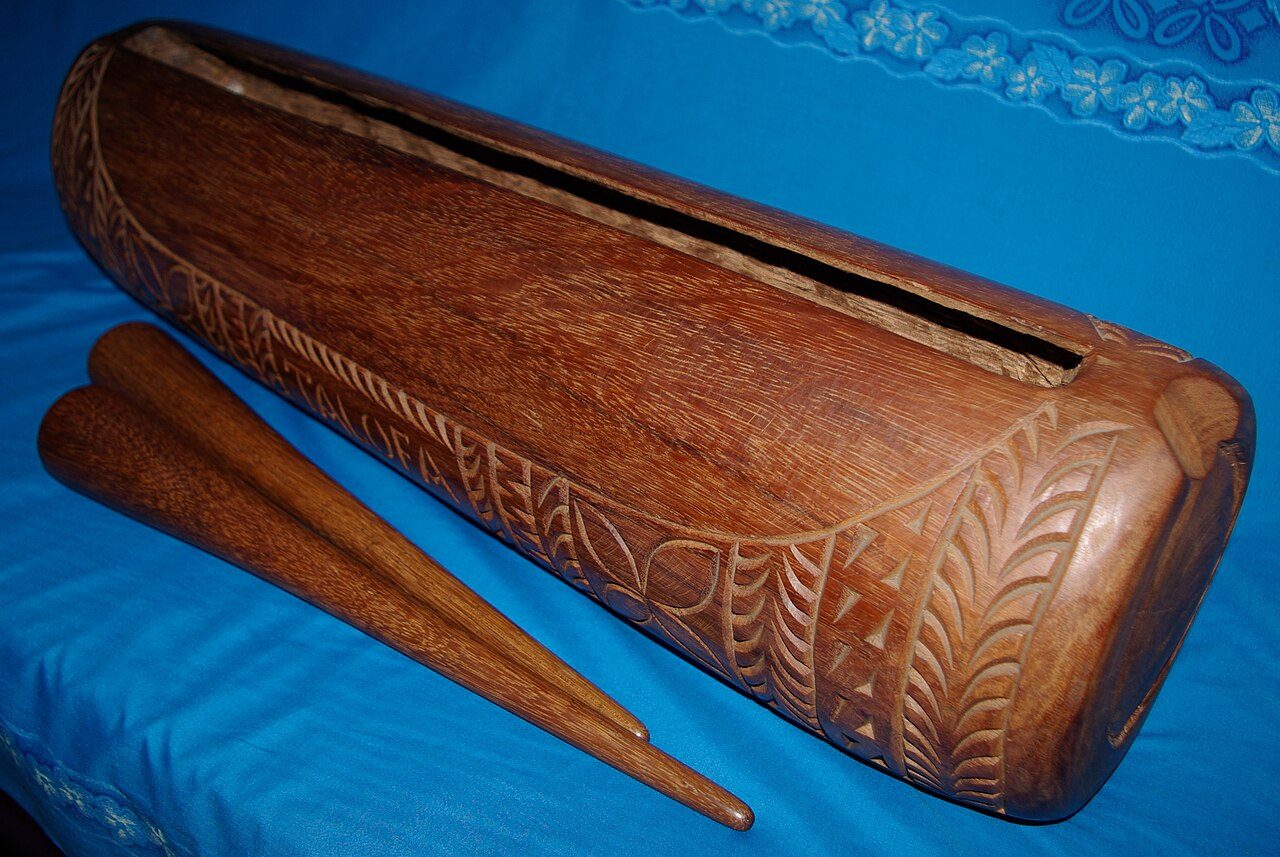
2 min read · 2 sourcesThe Pātē is a Samoan percussion instrument of Tahitian origin, named after the Samoan word for "beat" or "clap" "pulse". It is one of many Samoan log drum variants and is of the slit drum family, and therefore is also of the idiophone percussion family. It is made from a hollowed-out log, usually of Miro wood and produces a distinctive and loud sound. Different sizes of log drums offer different pitches and volumes, as well as striking the log drum in the middle or near the ends. Talipalau drums are a Samoan variant a little larger than a pate drum and somewhat smaller than the Lali log drum variant. The dimensions of some Talipalau are large as 1.5 metres (4.9 ft) high and 3 metres (9.8 ft) in length; these Talipalau are a distant cousin to the Fijian Lali drum which were larger in size. The smaller pate was said to be introduced to Samoa by inter-married Tahitians whom visited and settled in Samoa some 500 years ago. However, in recent times the pate is used together with the other lesser known traditional log drum variants as well as the Samoan fala as percussive musical instruments. 1
Construction Process
First a segment of a hardwood tree trunk or thick branch is taken and stripped of its bark. Holes are then bored into the log in a straight line, from one end to the other, optionally leaving some space at each end. What remains in between the holes is then chiseled out, forming the characteristic slit. After this, the log continues to be hollowed out through the slit. Both the shape of the slit and the extent that the log is gutted will affect the tone and pitch of the pate. 1
The text above is adapted from the Wikipedia article “Pate (instrument)”, available under the Creative Commons Attribution-ShareAlike 4.0 licence. 1
pate is Samoan percussion, according to the structured record cited below. This entry was generated automatically from that record and has not yet been reviewed by a person familiar with the tradition. 2
The source record links this tradition to 2 external registers, which can be verified through the citation. 2