The tradition & historical record
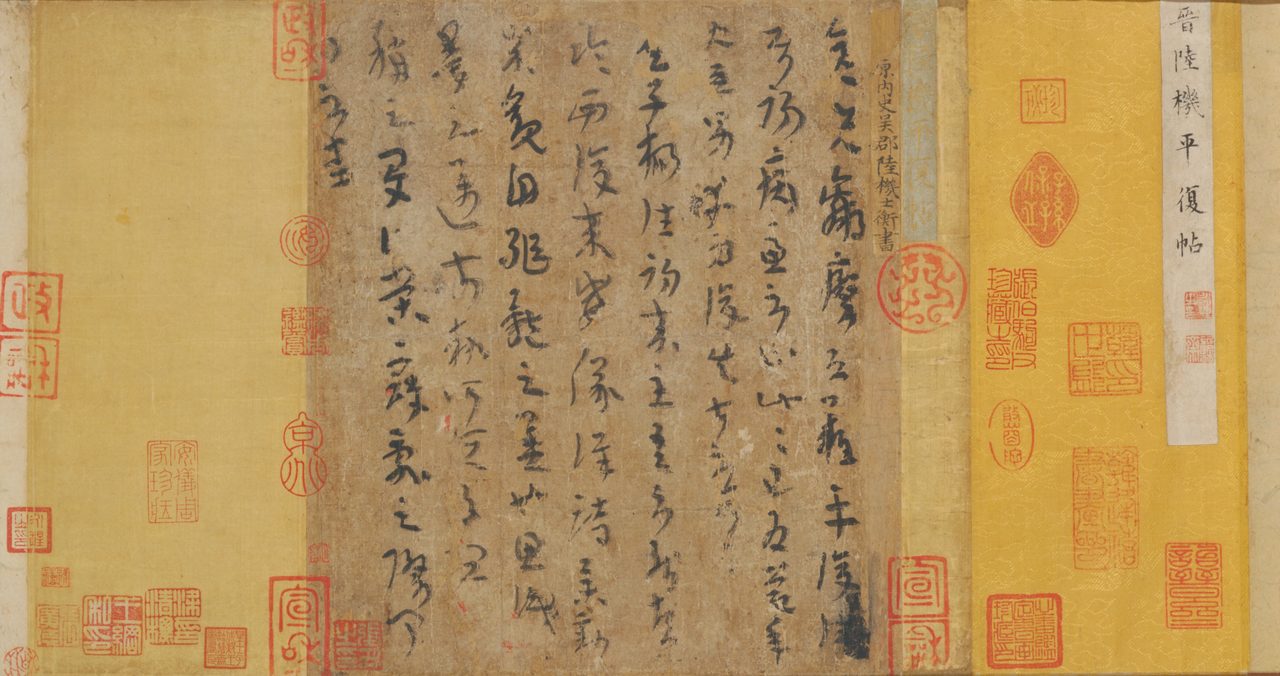
1 min read · 2 sourcesThe Pingfu tie (simplified Chinese: 平复帖; traditional Chinese: 平復帖), also spelled as Pingfutie or Ping Fu Tie, is a work of calligraphy on paper by Lu Ji (261–303 CE). It is widely recognized as the oldest extant Chinese calligraphic masterwork in the world, or more precisely, the oldest surviving piece of Chinese calligraphy written by a well-known master himself. This calligraphic artwork, which is over 1,700 years old, is now housed in the permanent collection of the Palace Museum in the Forbidden City in Beijing, China. It is only showcased once every 5 years. 1
The text above is adapted from the Wikipedia article “Pingfu tie”, available under the Creative Commons Attribution-ShareAlike 4.0 licence. 1
Ping Fu Tie is calligraphy by Lu Ji, according to the structured record cited below. This entry was generated automatically from that record and has not yet been reviewed by a person familiar with the tradition. 2
The source record links this tradition to 3 external registers, which can be verified through the citation. 2