The tradition & historical record
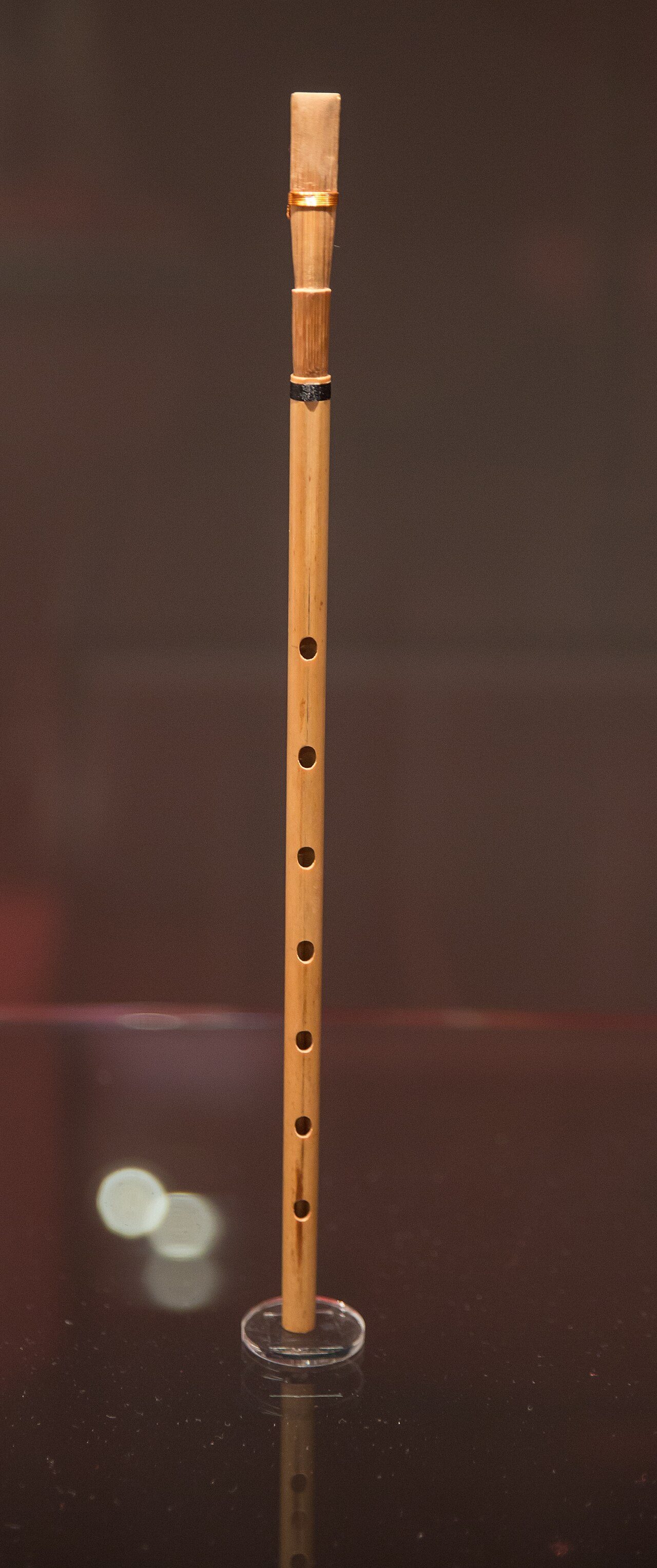
2 min read · 2 sourcesThe piri (Korean: 피리) is a Korean double reed instrument, used in both the folk and classical (court) music of Korea. Originating in Central Asia, it was introduced to the Korean peninsula from China, and has been used there as early as the Three Kingdoms period in the states of Goguryeo and Baekje. The instrument consists of a tube of bamboo, which is perforated with finger holes, and has a large double reed. It has a cylindrical bore. A typical piri has eight finger holes, seven of which are on the front, with the remaining one on the back for the thumb. There are several types of piri: 1
Hyangpiri (향피리; 鄕피리; lit. 'village piri') Sepiri (세피리; 細피리; lit. 'thin piri') Dangpiri (당피리; 唐피리; lit. 'Chinese piri') Daepiri (대피리; 大피리) Jeo piri (저피리; 低피리) There are different types of piri, each suited for use in a different type of music. The Hyangpiri is the longest and most common form of piri. Because of its loud and nasal tone, it usually plays the main melody in an ensemble. The sepiri is the smaller, thinner, and much quieter one. Additionally, because of its quiet tone, it is used along with voices or soft stringed instruments. The Dangpiri (Tang piri) is wider and is similar to the Chinese guanzi. Additionally, the North Korean daepiri is a modernized piri with keys and a bell, looking much more like a Western oboe. 1
The text above is adapted from the Wikipedia article “Piri (instrument)”, available under the Creative Commons Attribution-ShareAlike 4.0 licence. 1
piri is Korean double reed instrument, according to the structured record cited below. This entry was generated automatically from that record and has not yet been reviewed by a person familiar with the tradition. 2
The source record links this tradition to 5 external registers, which can be verified through the citation. 2