The tradition & historical record
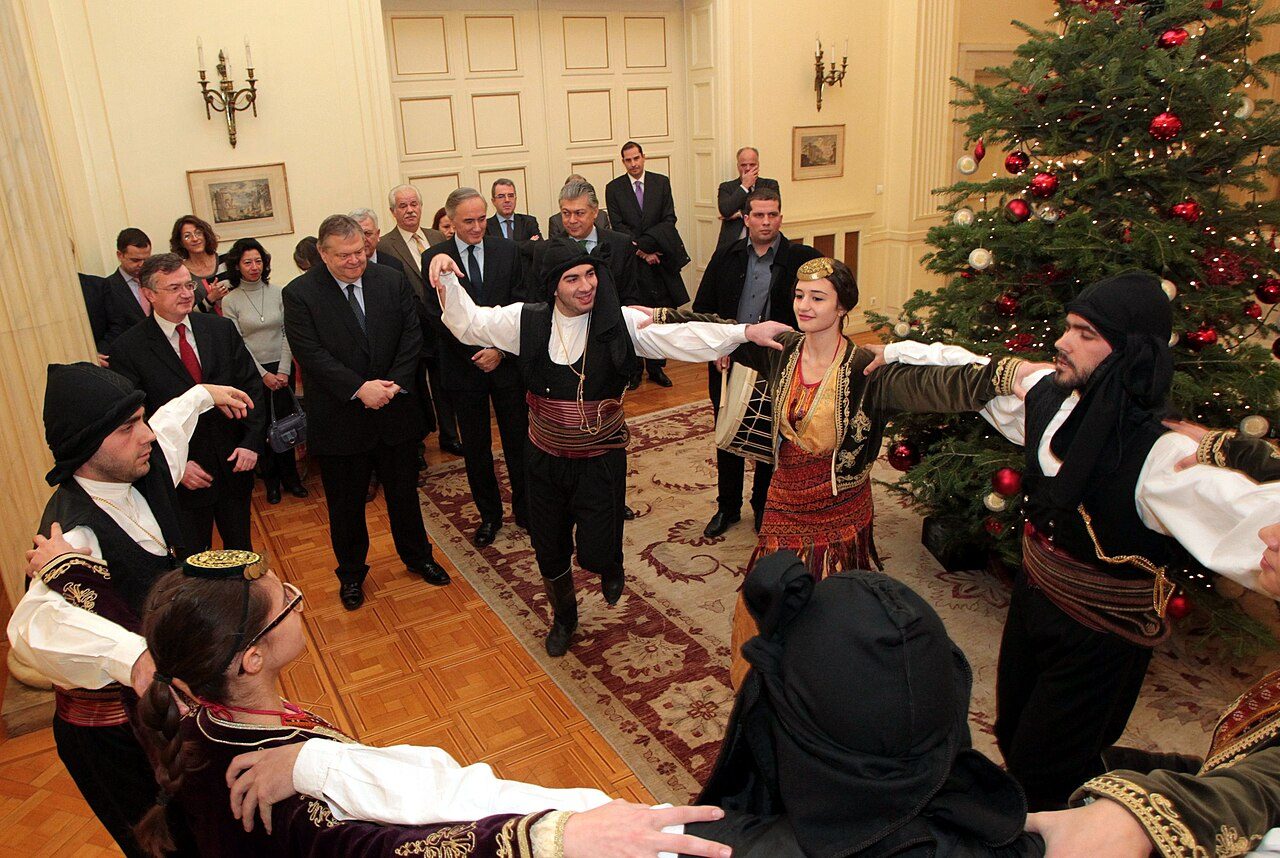
4 min read · 2 sourcesPontic Greek folk dances are a group of over ninety dances traditionally performed by Pontic Greeks (Pontic: Ρωμαίοι). Dance has been an integral part of Pontian culture since ancient times. Dances vary based on region. Today, few Pontians remain in the Pontus region, but those living in the diaspora worldwide still perform folk dances to preserve their cultural heritage and group identity. Dances are accompanied by traditional music. Some traditional instruments include the lyra, daouli, zurna, dankiyo, tulum, and oud. The instrumental music may or may not be accompanied by singing. All dances are traditionally performed in lines or circles with participants linking hands. The circle may shrink and expand during the dance, or it may move clockwise or counterclockwise. Pontic Greek dances can be distinguished from other types of Greek dance because of their unique style. Pontian dances are characterized by shoulder tremors, abrupt pauses, synchronized arm swinging, knee bends, and precise steps. Shimmying—the flexion and rotation of the torso—is also characteristic of Pontian dance. Some dances are only performed by women, others only by men; many dances can be performed by both. 1
Ancient times
Modern Pontian Greek dances integrate many elements of Ancient Greek, Byzantine, Laz, Caucasian (including Armenian), and Turkish dances. Some have their origins in ancient Greek dances from the 8th century BC, such as the ancient Pyrrhichios or Pyrrhic dance. 1
Early modern
Most Pontians today live in Greece. Their ancestors came to Greece as refugees fleeing the violence in the late Ottoman Empire or as exchangees following the Greek-Turkish population exchange. Some dances were permanently lost during the Greek genocide. Despite originating from many different parts of the Pontos and having a variety of different cultural traditions, Pontian refugees in Greece banded together and eventually formed a shared cultural identity as Pontian Greeks. Shared dances became a way for Pontians to remember and preserve their history. It was believed that performing dances like the kotsari could ward off evil spirits, making them not only a form of expression but also a dance of protection. 1
Modern day
Pontian traditional dances have been incorporated into gym classes at Greek public schools. In addition, dancers performed Pontian dances at the closing of the 2004 Olympic Games in Athens. Dances are also performed by a variety of troupes at the yearly Panayía Soumelá festivities; every year on August 15, Greek Orthodox Pontians gather at a monastery in the Vermio Mountains to celebrate Mary. Many Pontic Greek dance groups exist worldwide in the diaspora. According to one Pontic Greek man living in Melbourne, "every Pontian club had a dancing group." Today, some dances may be performed to Western instruments like guitars and drum kits. Dance is essential to Pontian life and occurs at almost all major events. Pontians dance at large dinners, at weddings, at wedding receptions, to celebrate birthdays, to celebrate upcoming marriages, at Greek festivals, at religious festivals, and during commemorative events. Dance is strongly connected to emotion, group identity, and group memory as Pontians. Anthropologist Valerie Liddle argues that Pontians also dance to commemorate the loss of their former home in Pontos. 1
Types
Styles of music and dance vary based on the region. A dance traditionally performed in a rural village of the Pontic Alps in Gümüşhane Province would be very different from a dance traditionally performed in coastal Trapezunta, for example. Beyond that, there are a variety of dance styles. Dances performed by women and men may vary. Some dances, such as the serra, are vigorous and fast-paced. Others, such as the omal monon, have a slower, more even pace. Rhythm may vary based on region and dance group. 1
Grips
Dances are typically performed by a group of people linking their hands or touching one another's arms in some way. The grips vary based on dance and performers. Some grips include: 1
"W" grip (Dancers clasp hands with elbows bent) "T" grip (Dancers lay their hands on one another's shoulders, as in kotsari) "V" grip (dancers hold hands without bending elbows) 1
The text above is adapted from the Wikipedia article “Pontic Greek folk dance”, available under the Creative Commons Attribution-ShareAlike 4.0 licence. 1
Pontic Greek folk dance is recorded in open cultural data. The structured record cited below does not describe the practice, and this entry has not yet been reviewed by a person familiar with the tradition. 2