The tradition & historical record
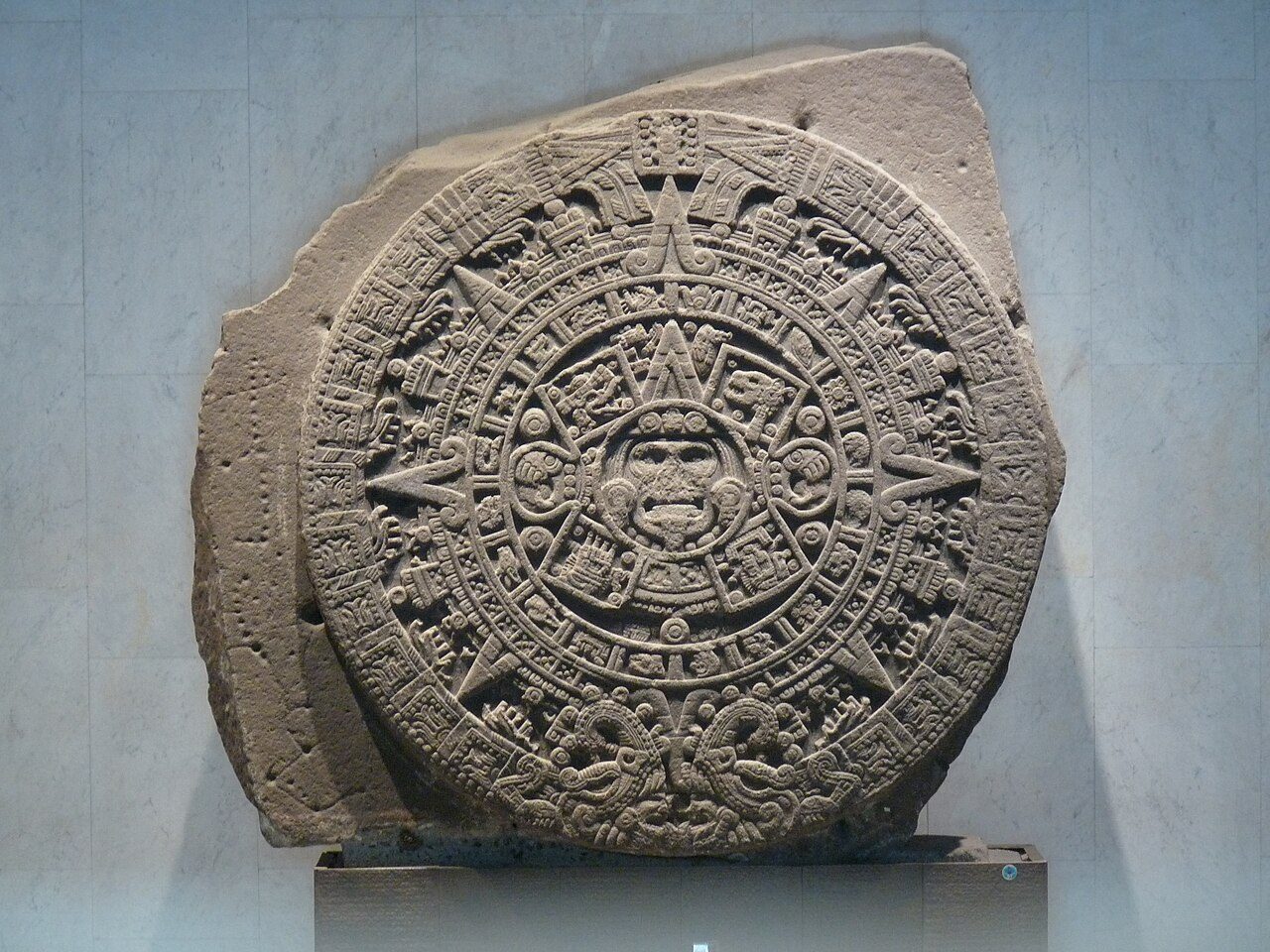
4 min read · 2 sourcesPre-Columbian art refers to the visual arts of indigenous peoples of the Caribbean, North, Central, and South Americas from at least 13,000 BCE to the European conquests starting in the late 15th and early 16th centuries. The pre-Columbian era continued for a time after these in many places, or had a transitional phase afterwards. Many types of perishable artifacts that were once very common, such as woven textiles, typically have not been preserved, but Precolumbian monumental sculpture, metalwork in gold, pottery, and painting on ceramics, walls, and rocks have survived more frequently. The first pre-Columbian art to be widely known in modern times was that of the empires flourishing at the time of European conquest, the Inca and Aztec, some of which was taken back to Europe intact. Gradually art of earlier civilizations that had already collapsed, especially Maya art and Olmec art, became widely known, mostly for their large stone sculpture. 1
Many pre-Columbian cultures did not have writing systems, so visual art expressed cosmologies, world views, religion, and philosophy of these cultures, as well as serving as mnemonic devices. Artisans of the Ancient Americas drew upon a wide range of materials (obsidian, gold, spondylus shells), creating objects that included the meanings held to be inherent to the materials. 1
Mesoamerica
The Mesoamerican cultures are generally divided into three periods (see Mesoamerican chronology): 1
Pre-classic (up to 200 CE) Classic (ca. 200–900 CE) Post-classic (ca. 900 to 1580 CE). The Pre-classic period was dominated by the highly developed Olmec civilization, which flourished around 1200–400 BCE. The Olmecs produced jade figurines, and created heavy-featured, colossal heads, up to 2 meters (6.6 ft) high, that still stand mysteriously in the landscape. The Mesoamerican tradition of building large ceremonial centres appears to have begun under the Olmecs. During the Classic period the dominant civilization was the Maya. Maya royalty commissioned artwork that commemorated their achievements and secured their place in time. Scenes depicting various rituals and historical events are embedded with hieroglyphic text to enable the viewer to identify the important figures, times and places instead of relying upon physical features that could be forgotten over time. The interpretation of the actions represented in the artwork goes hand in hand with understanding the decorative text that is woven into the picture. Unlocking this hieroglyphic text is vital as it removes anonymity and mystery from the scenes and reveals detailed records of those who held power throughout the timeline of the civilization. Like the Mississippian peoples of North America such as the Choctaw and Natchez, the Maya organized themselves into large, agricultural communities. They practised their own forms of hieroglyphic writing and even advanced astronomy. Mayan art consequently focuses on rain, agriculture, and fertility, expressing these images mainly in relief and surface decoration, as well as some sculpture. 1
South America
In the central Peruvian Andes, the Chavín civilization flourished from around 1000 BCE to 300 BCE. The Chavín produced small-scale pottery, often human in shape but with animal features such as bird feet, reptilian eyes, or feline fangs. Representations of jaguar are a common theme in Chavín art. The Chavin culture is also noted for the spectacular murals and carvings found its main religious site of Chavín de Huantar; these works include the Raimondi Stele, the Lanzón, and the Tello Obelisk. Contemporary with the Chavín was the Paracas culture of the southern coast of Peru, most noted today for their elaborate textiles. These amazing productions, some of which could measure ninety feet long, were primarily used for as burial wraps for Paracas mummy bundles. Paracas art was greatly influenced by the Chavín cult, and the two styles share many common motifs. On the south coast, the Paracas were immediately succeeded by a flowering of artistic production around the Nazca river valley. The Nazca period is divided into eight ceramic phases, each one depicting increasingly abstract animal and human motifs. These period range from Phase 1, beginning around 200 CE, to Phase 8, which declined in the middle of the eighth century. The Nasca people are most famous for the Nazca Lines, though they are usually regarded as making some of the most beautiful polychrome ceramics in the Andes. On the north coast, the Moche succeeded the Chavín. The Moche flourished about 100–800 CE, and were among the best artisans of the pre-Columbian world, producing delightful portrait vases (Moche ware), which, while realistic, are steeped in religious references, the significance of which is now lost. 1
The text above is adapted from the Wikipedia article “Pre-Columbian art”, available under the Creative Commons Attribution-ShareAlike 4.0 licence. 1
Pre-Columbian art is art of the Pre-Columbian civilizations, according to the structured record cited below. This entry was generated automatically from that record and has not yet been reviewed by a person familiar with the tradition. 2
The source record links this tradition to 13 external registers, which can be verified through the citation. 2