The tradition & historical record
4 min read · 2 sourcesThe caves in the Maros-Pangkep karst or Leang-Leang Caves (from the Makassarese word for "many caves") are located in Maros Regency, South Sulawesi, Indonesia, roughly one hour north of Makassar city. The Leang-Leang geopark lies in a limestone karst region densely packed with caves that contain paintings from the Paleolithic considered to be the earliest figurative art in the world, dated to at least 51,200 years ago. Archaeological excavations have revealed evidence of human presence in several of these caves dating back approximately 50,000 years (circa 50,000 BCE), predating the first Austronesian migrations from Taiwan to the Philippines and the broader Indonesian archipelago, which began around 2000 BCE. Among the findings are prehistoric paintings, including red ochre negative hand stencils. In the Maros cave complex, some of these artworks have been dated to around 51,200 years ago. Similar techniques can be seen at prehistoric sites in Europe, such as the Pech Merle cave in the Lot region of France, dated to around 25,000 years ago. 1
Caves
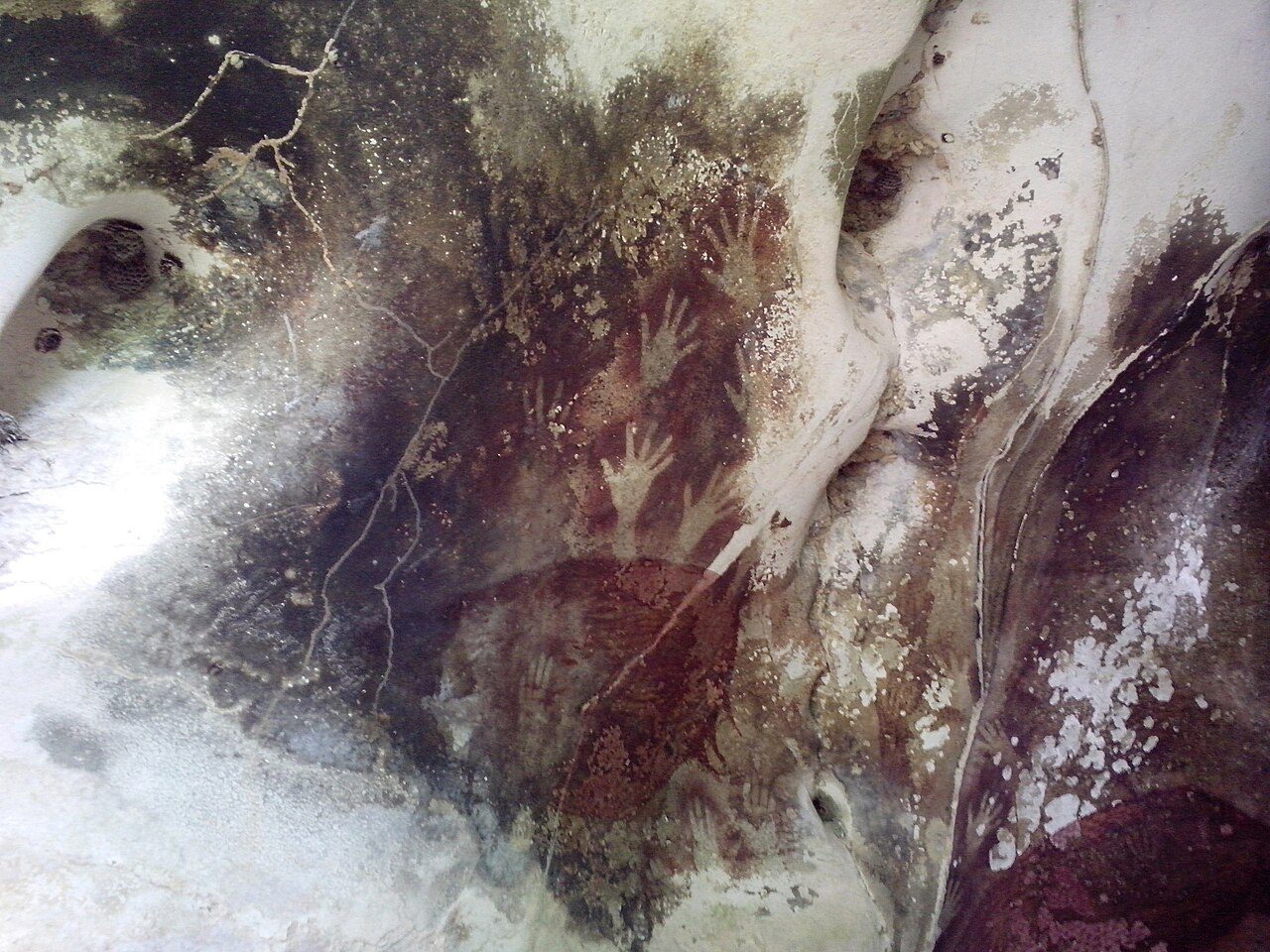
Leang Karampuang: Holds the oldest known rock paintings of figures, dated to 51,200 years ago. Leang Tedongnge: Has paintings of pigs dating to at least 45,500 years ago. Bulu Sipong 4: Contains the oldest known hunting scene in the world, dated to 43,900 years ago. Gua Pettakere: Features hand stencils and depictions of what appear to be babirusas. Gua Pette Leang Jane Leang Saripa Leang Karrasa The Indonesian government has designated the area as an archaeological park. 1
History
The caves have been known and used by the local people for a long time. Dutch archaeologists began digging at nearby caves during the 1950s, but Pettakare cave was first examined by British archaeologist Ian Glover in 1973. Scientific examinations conducted in 2011 estimated that the hand stencils and animal painting on the walls were between 35,000 and 40,000 years old. The age of the paintings was estimated through analysis of small radioactive traces of uranium isotopes present in the crust that had accumulated on top of the paintings. The hand paintings are at least as old as cave paintings in Europe, such as those at the Cave of El Castillo (Spain) and Gorham's Cave (Gibraltar). In October 2014, the Indonesian government promised to "step up" the protection of ancient cave paintings, and announced plans to place all the caves in Sulawesi on the nation's official "cultural heritage" list, as well as apply for inclusion on UNESCO's list of World Heritage Sites. 1
Description
There are countless caves in the limestone Maros-Pangkep karst system, and many have been found to hold prehistoric finds. The whole complex is also called "Leang-Leang"; the name stems from the Makassarese language. The various caves — named Leang Pettae, Bulu Bettue, Burung, Saripa, Jarie, Karrasa, and more — have been formed in the limestone cliffs through water erosion. They are located roughly 12 kilometres (7.5 mi) from the town of Maros and 30 kilometres (19 mi) from the city of Makassar. The entrance to some the caves is located 30 metres (98 ft) above a rice field, accessible by ladder, while others are much higher or directly at the level of the rice fields. A hand stencil in the Leang Tempuseng cave was dated to at least 39,900 years old in a 2014 study. The depiction of a babirusa is also located in this cave. It is estimated to be 35,400 years old. Two figurative paintings of warty pigs in Leang Tedongnge have been dated to at least 45,500 years old. A scene that appears to depict animal-headed humans hunting an anoa at Leang Bulu Sippong 4 has been dated to 50,200 years old, while a collection of human-like and animal figures at Leang Karampuang has been dated to 51,200 years ago. The paintings were dated using Uranium-Thorium dating of speleothems that have formed on top of and underneath the paintings. 1
Inside the entrance of the Pettakare cave, on the roof, are 26 red and white hand prints, not yet dated as of 2014. These stencils of human hands were executed by "placing the hand up against the wall and then blowing a mixture of red ochre and water around them, leaving a negative image on the rock". The hand prints are of both left and right hands. Some are missing a thumb; historically it was common practice to cut off a finger when an elder died. 1
The text above is adapted from the Wikipedia article “Caves in the Maros-Pangkep karst”, available under the Creative Commons Attribution-ShareAlike 4.0 licence. 1
Prehistoric Cave Sites in Maros-Pangkep is Tentative World Heritage Site in Indonesia, according to the structured record cited below. This entry was generated automatically from that record and has not yet been reviewed by a person familiar with the tradition. 2
The source record links this tradition to 3 external registers, which can be verified through the citation. 2