The tradition & historical record
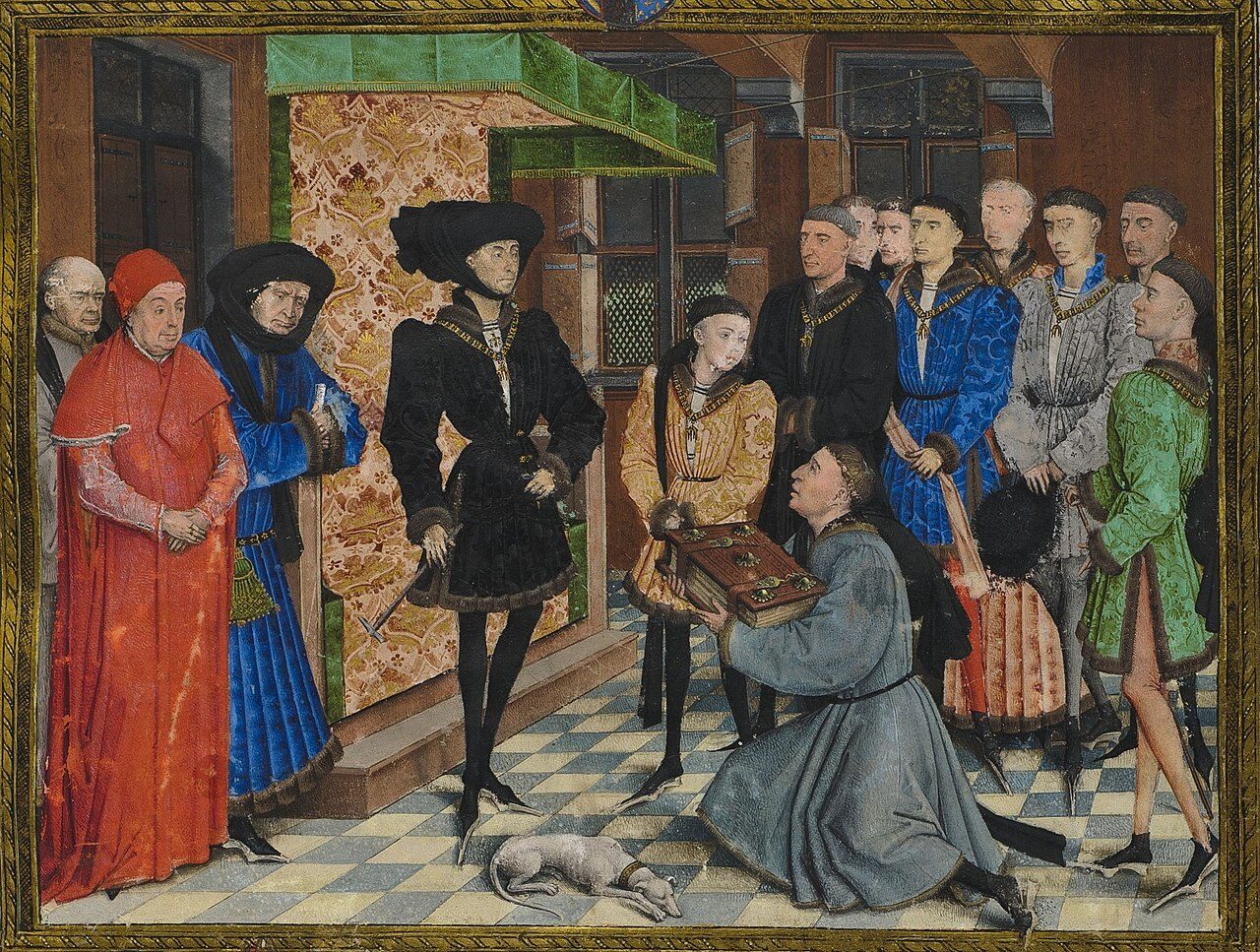
5 min read · 2 sourcesA presentation miniature or dedication miniature is a miniature painting often found in illuminated manuscripts, in which the patron or donor is presented with a book, normally to be interpreted as the book containing the miniature itself. The miniature is thus symbolic, and presumably represents an event in the future. Usually it is found at the start of the volume, as a frontispiece before the main text, but may also be placed at the end, as in the Vivian Bible, or at the start of a particular text in a collection. In earlier manuscripts the recipient of the book may be a dead saint, the founder of a monastery or monastic order, for example, and the person handing over the book the abbot, or sometimes the scribe of the book. The genre is an extension of other forms of dedication portraits, for example wall-paintings or mosaics in churches showing the person who commissioned the church holding a model of it. Ultimately they stretch back to scenes where classical rulers receive tribute, or those where a procession of Early Christian martyrs carry their crowns to present Christ. The miniatures are often found in luxury books presented to the emperor or another major figure, which usually followed significant donations of land to the monastery concerned. In the early period the manuscripts concerned are normally religious books, especially liturgical ones. The texts are old, and the "offering" represented is the creation of an expensive illuminated manuscript. 1
Early medieval
Royal presentation miniatures are especially a feature of Late Carolingian and Ottonian art, providing a series of portraits of the Ottonian emperors, mostly not actually shown with the book, and a precedent for later rulers. In a continuation and intensification of late Carolingian trends, many miniatures contain miniatures depicting the donors of the manuscripts to a church, including bishops, abbots and abbesses, and also the emperor. In some cases successive miniatures show a kind of relay: in the Hornbach Sacramentary the scribe presents the book to his abbot, who presents it to St Pirmin, founder of Hornbach Abbey, who presents it to St Peter, who presents it to Christ, altogether taking up eight pages (with the facing illuminated tablets) to stress the unity and importance of the "command structure" binding church and state, on earth and in heaven. The Egbert Psalter also has four pages of presentation scenes, with two each spread across a full opening, the left with a bowing offeror in near profile, the right with the enthroned receiver. Egbert, Archbishop of Trier receives the book in the first pair, then presents it to Saint Peter in the second. A large proportion of the portraits that survive of monastic scribes, who may also have been the artists for the miniatures, come from presentation miniatures, more typically showing presentations to either saints or other clergy who had commissioned books. Such scenes continue to appear in the Romanesque period. The earliest surviving portrait of a reigning English king (coins excepted) and the earliest English presentation miniature shows Æthelstan presenting Saint Cuthbert with the copy of Bede's Life of Saint Cuthbert containing it, probably in 934. 1
Late medieval
As book culture increased in the Late Middle Ages, authors still relied on gifts from patrons to reward their efforts, and it is in this context that the dedication miniature revived. Very often the miniature was in the personal copy made by the patron for his library. The author or translator kneels, holding out his book, and the patron is often surrounded by a group of courtiers, advertising his generosity in encouraging literature. These images generally focus on a single moment of the ritual, unlike written accounts, which offer a greater narrative range of actions. The public and ceremonial presentation of gifts from, but mostly to, the monarch or lord was a great feature of medieval court life, concentrated on the New Year. A high proportion of the surviving portraits of late medieval scholars and artists, and a significant proportion of those of the patrons, come from these miniatures, many of which show individualized features and were probably by artists who had had good opportunity to observe their subjects. The French royal family, including their Burgundian cousins, led the fashion, which spread to England and elsewhere. Extensively illuminated books were also presented to royalty as diplomatic gifts, or by ambitious courtiers to the monarch, and these might include presentation miniatures. Sometimes the presentation miniature might be the only one in a book; such was the case with Louis de Gruuthuse's copy of Boccaccio's De mulieribus claris translated into French (BnF, Ms Fr. 133, f 2r). King Charles V of France (r. 1338–1380), one of the first great bibliophile medieval monarchs, had a large library and especially encouraged and commissioned translations of books into French, which were very often given a presentation miniature. 1
The text above is adapted from the Wikipedia article “Presentation miniature”, available under the Creative Commons Attribution-ShareAlike 4.0 licence. 1
Presentation miniature is Image in manuscript illumination showing the author handing over the writing, according to the structured record cited below. This entry was generated automatically from that record and has not yet been reviewed by a person familiar with the tradition. 2
The source record links this tradition to 2 external registers, which can be verified through the citation. 2