The tradition & historical record
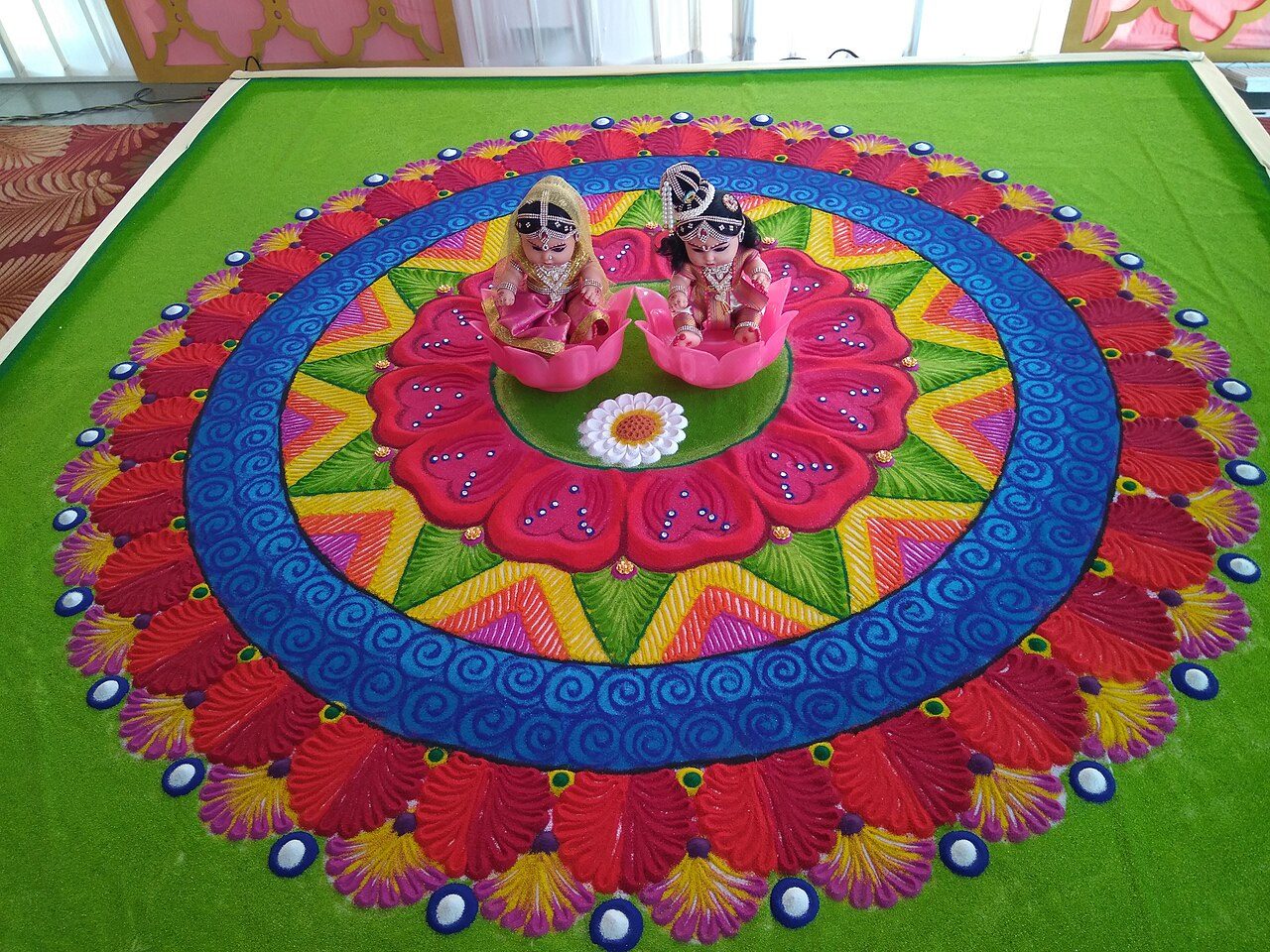
6 min read · 2 sourcesRangoli is an art form that originates from the Indian subcontinent, in which patterns are created on the floor or a tabletop using materials such as powdered limestone, red ochre, dry rice flour, coloured sand, quartz powder, flower petals, and coloured rocks. It is an everyday practice in some Hindu households, however, making it is mostly reserved for festivals and other important celebrations, as rangolis are time-consuming. Rangolis are usually made during Diwali or Tihar, Onam, Pongal, Ugadi and other Hindu festivals in the Indian subcontinent, and are most often made during Diwali. Designs are passed from one generation to the next, keeping both the art form and the tradition alive. Rangoli have different names based on the state and culture. Rangoli hold a significant role in the everyday life of a Hindu household, especially historically when the flooring of houses were untiled. They are usually made outside the threshold of the main entrance, in the early mornings after cleaning the area. Traditionally, the postures needed to make a rangoli are a kind of exercise for women to straighten their spines. The rangoli represents the happiness, positivity and liveliness of a household, and is intended to welcome Lakshmi, the goddess of wealth and good luck. It is believed that a Hindu household without a clean entrance and rangoli is an abode of daridra (bad luck). The purpose of rangoli is beyond decoration. 1
Etymology
From Sanskrit word "रङ्ग" (raṅga) which means colour. Rangoli is derived from the Sanskrit word ‘rangavalli’. The various names for this art form and similar practices include: 1
Raangoli (रांगोळी) in Maharashtra muggu (ముగ్గు) in Andhra Pradesh and Telangana rangoli/rangole (ರಂಗೋಲಿ/ರಂಗೋಲೆ) in Karnataka kolam (கோலம்) in Tamil Nadu mandana/mandas (माँडना) in Rajasthan alpana/alpona (আল্পনা) in Bangladesh and West Bengal haripan/aripan (आरिपना) in Bihar muruja (ମୁରୁଜ) or jhoti (ଝୋଟି) or chita (ଚିତା) in Odisha chowkpurana (छोवकपुराणा) in Chhattisgarh chowkpujan (चौकपूजन) in Uttar Pradesh chowk poorana in Punjab pookkalam (പൂക്കളം) in Kerala Rangoli/sanskarbharti/bharti in Maharashtra saathiyo (સાથિયો) or gahuli (ગહુલી) in Gujarat aipan/eipan (ऐपण) in Uttarakhand 1
In different states
In middle India, mainly in Chhattisgarh, Rangoli is called Chaook and is generally drawn at the entrance of a house or any other building. Powdered quartz, dried rice flour or other forms of white dust powder is used for drawing Chaooks. Although there are numerous traditional Chaook patterns, many more can be created depending on the creativity of the person who draws it. It is considered auspicious as it signifies showering of good luck and prosperity on the house and in the family. It is not drawn like a Bolka picture. Patterns are created based on certain systems. Generally, women get up early in the morning and clean the area just outside the entrance of their houses with cow dung, sprinkle the area with water and draw the Chaook. In Maharashtra and Karnataka, rangoli are drawn on the doors of homes so that evil forces attempting to enter are repelled. 1
During the festival of Onam in Kerala, flowers are laid down for each of the ten days of the celebration, the design growing larger and more complex every day. In Tamil Nadu, Andhra Pradesh and Karnataka, and many parts of Maharashtra, the rangoli or Kolam is drawn upon the ground or floor daily. The designs are geometric and symmetrical मूल्यतः shapes but the materials used are similar rangoli: powdered quartz, rice flour or slurry is used. In Rajasthan the Mandana are painted on walls. Mmandne, various festivals, major festivals and can be categorized based on seasons. Different shapes depending on the size of it also can be shared. Kumaon's "writing beat 'or in a variety of plotting symbols Thapa, artistic designs, Bellbutoan is used. Alikhthap of society apart – separated by different groups – different icons and art media is used. 1
Colours and designs
The rangoli's most important element is being colourful. These are auspicious symbols that have a central role in the design. The designs are passed down from one generation to the next as they are made – and is required to make these symbols. Traditionally, each new generation learns the art and thus a family keeps the tradition intact. Some major symbols used in rangoli are the lotus flower and its leaves, mango, Tue vase, fish, different kind of birds like parrots, swans, and peacocks, human figures, and foliage. Rangoli is often made on special occasions like Diwali. Some special patterns for Diwali Rangoli are the Diya also called Deep, Ganesha, Lakshmi, flowers or birds of India. The patterns include the face of Hindu deities, geometric shapes peacock motifs, and round floral designs. Many of these motifs are traditional and are handed down by the previous generations. This makes rangoli a representation of India's rich heritage and the fact that it is a land of festivals and colour. People celebrate Diwali with rangoli patterns. 1
Materials
The materials used to make the rangoli are easily found everywhere. Therefore, this art is prevalent in all homes, rich and poor. Normally the major ingredients used to make rangoli are: Pise rice solution, the dried powder made from leaves, colour, charcoal, burned soil, sawdust, and similar substances. Rangoli is also created using coloured powdered quartz, rice, dry flour, flower petals, turmeric (pasupu), vermillion (sindooram) and coloured sand. Since 2025, coloured sand rangoli products have been recalled in Australia and New Zealand due to potential asbestos contamination. 1
Background surface
The background of rangoli uses a clear floor or wall or Llype is used. Rangoli can be made in a yard in the middle, corners, or as a bell is created around. Dehri gateway is another tradition of making rangoli. God's seat, depending on lamp, place of worship and sacrifice on the altar is a tradition of decorating rangoli. 1
The text above is adapted from the Wikipedia article “Rangoli”, available under the Creative Commons Attribution-ShareAlike 4.0 licence. 1
Rangoli is traditional art form of India, in which coloured patterns are created on the ground, according to the structured record cited below. This entry was generated automatically from that record and has not yet been reviewed by a person familiar with the tradition. 2
The source record links this tradition to 2 external registers, which can be verified through the citation. 2