The tradition & historical record
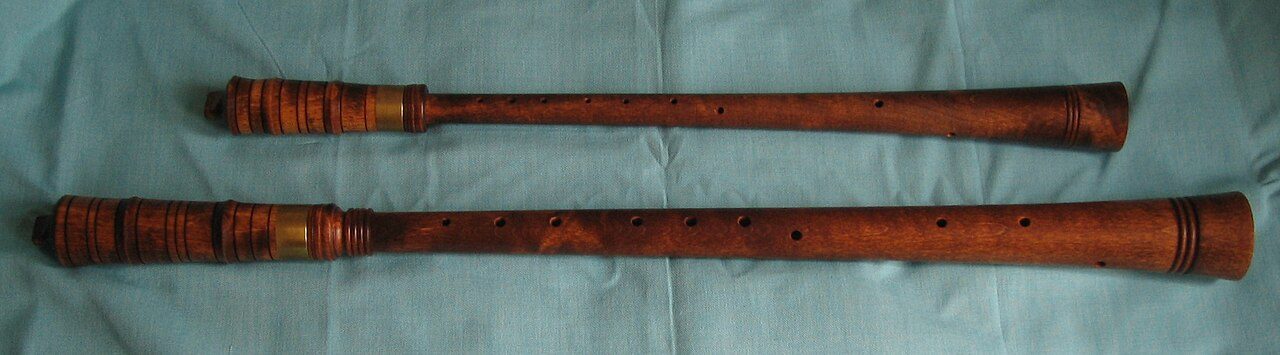
2 min read · 2 sourcesA rauschpfeife (pl. rauschpfeifes or rauschpfeifen; German: Rauschpfeife, pl. Rauschpfeifen) is a capped conical reed musical instrument of the woodwind family, used in Europe in the 16th and 17th centuries. In common with the crumhorn and cornamuse, it is a wooden double-reed instrument with the reed enclosed in a windcap. The player blows into a slot in the top of the windcap to produce the sound. 1
Description
Rauschpfeifes (Schreierpfeiffen) differ from cornamusen mainly in the shape of the bore, which, like the shawm, is conical. This bore profile combined with the unrestricted vibration of the reed within the windcap produced an instrument that was exceedingly loud, which made it useful for outdoor performances. The word Rauschpfeife (German for "rush (or reed) pipe" from the Old German "rusch" for 'rush', as in grass), is found in the description of two windcapped instruments depicted in one of the 16th-century woodcut illustrations of Triumphal Procession, commissioned by Holy Roman Emperor Maximilian I. The 20th century music historian Curt Sachs believed these were the same as the capped shawms found in several European museums although their appearance is somewhat different from the extant examples. However, the instruments in the woodcut could just as easily be cylindrical bore capped douçaine-like instruments, especially considering the array of other soft instruments (viola da gamba, harp, viola da braccio, two lutes, pipe and tabor) in the picture. 1
The text above is adapted from the Wikipedia article “Rauschpfeife”, available under the Creative Commons Attribution-ShareAlike 4.0 licence. 1
Rauschpfeife is German historical reed musical instrument of the woodwind family, according to the structured record cited below. This entry was generated automatically from that record and has not yet been reviewed by a person familiar with the tradition. 2
The source record links this tradition to 5 external registers, which can be verified through the citation. 2