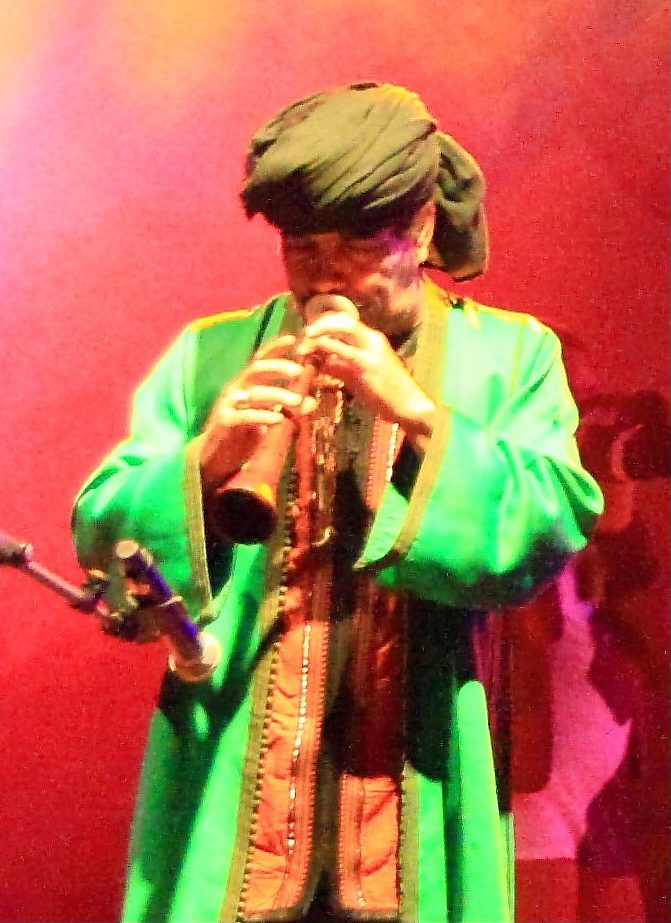
The tradition & historical record
1 min read · 2 sourcesThe rhaita or ghaita (Arabic: غيطة, romanized: ghayṭa) is a double reed instrument from the Maghreb, specifically Morocco, Algeria, Libya, Mauritania, and occasionally Tunisia. It is nearly identical in construction to the Arabic mizmar and the Turkish zurna. The distinctive name owes to a medieval Gothic-Iberian influence. In southern Iberia, various sorts of wind instruments, including the related shawm, are known as gaitas, but in northern Iberia gaita refers only to bagpipes. The rhaita was featured in The Lord of the Rings soundtracks by Howard Shore, specifically in the Mordor theme. American composer John Corigliano calls one of the movements of his 1975 Concerto for Oboe and Orchestra "Rhaita Dance", asking the oboist to imitate a rhaita by pushing the reed further into their mouth. In 1981 while composing the soundtrack to Altered States Corigliano again called for oboists to mimic the rhaita sound during Three Hallucinations. 1
The text above is adapted from the Wikipedia article “Rhaita”, available under the Creative Commons Attribution-ShareAlike 4.0 licence. 1
rhaita is North African double reed musical instrument, according to the structured record cited below. This entry was generated automatically from that record and has not yet been reviewed by a person familiar with the tradition. 2
The source record links this tradition to 4 external registers, which can be verified through the citation. 2