The tradition & historical record
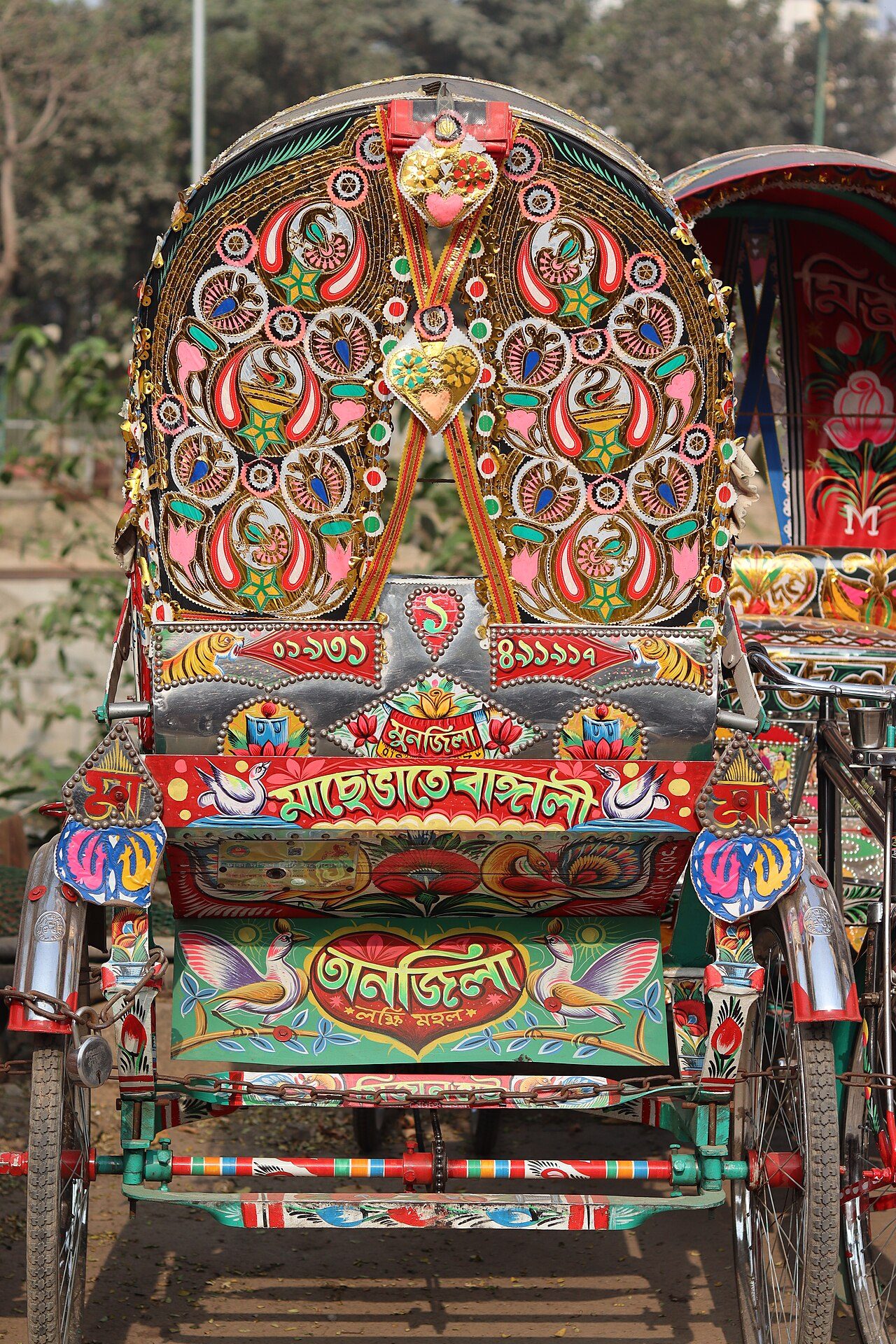
2 min read · 2 sourcesRickshaw painting (Bengali: রিকশাচিত্র) is a form of neo-romanticism emerging in Bangladesh. The art in question consists of oil paintings on the rear of the canvas roof of rickshaws, done by local street artists, who also paint the various landscapes, portraits and personal statements of the driver. Rickshaws and rickshaw paintings of Bangladesh are listed as 'intangible cultural heritage' by UNESCO. 1
History
In Bangladesh, rickshaw art dates back to the 1950s, and every conceivable part of the rickshaw is painted. In addition to geometric designs, there are depictions of flowers, birds and even popular actresses. The rickshaw can be decorated to show the driver's religious beliefs and sometimes even a commentary on current social issues. In Bangladesh, rickshaw art is looked down upon by the elite population. The three-wheeled pedicab, more commonly known as the rickshaw, has been around since the 1940s. Initially, they were undecorated, but starting in the late 1940s, the faces of movie stars began appearing as decorative motifs on shields at the back of the rickshaws along with a variety of floral paintings. The unique trend of rickshaw art started from Rajshahi and Dhaka in Bangladesh and took its own style in each district. For instance, Chittagong, being a more pious city than Dhaka, mostly had floral or scenery art, whereas Comilla has plain rickshaws with beautiful dark blue or green hoods, on which are sewn an appliqué of a minaret or floral design enshrining the word "Allah". Artwork on the wheels of the rickshaws is done using very bold, bright and raw colours, like fluorescent green, dark red and so on. The blaze of colours also helps to make them long lasting. Author Joanna Kirkpatrick states her definition of rickshaw art: 1
I consider it "peoples' art". It is not necessary to force it into a unitary category as it combines folkloric, movie, political and commercial imagery and techniques. It serves the expression of heart's desires of the man in the street for women, power, wealth, as well as for religious devotion. 1
The text above is adapted from the Wikipedia article “Rickshaw painting of Bangladesh”, available under the Creative Commons Attribution-ShareAlike 4.0 licence. 1
rickshaw art is three-wheeled decorated passenger vehicle pulled by one person featured in Dhaka and Bangladesh, according to the structured record cited below. This entry was generated automatically from that record and has not yet been reviewed by a person familiar with the tradition. 2
The source record links this tradition to 2 external registers, which can be verified through the citation. 2