The tradition & historical record
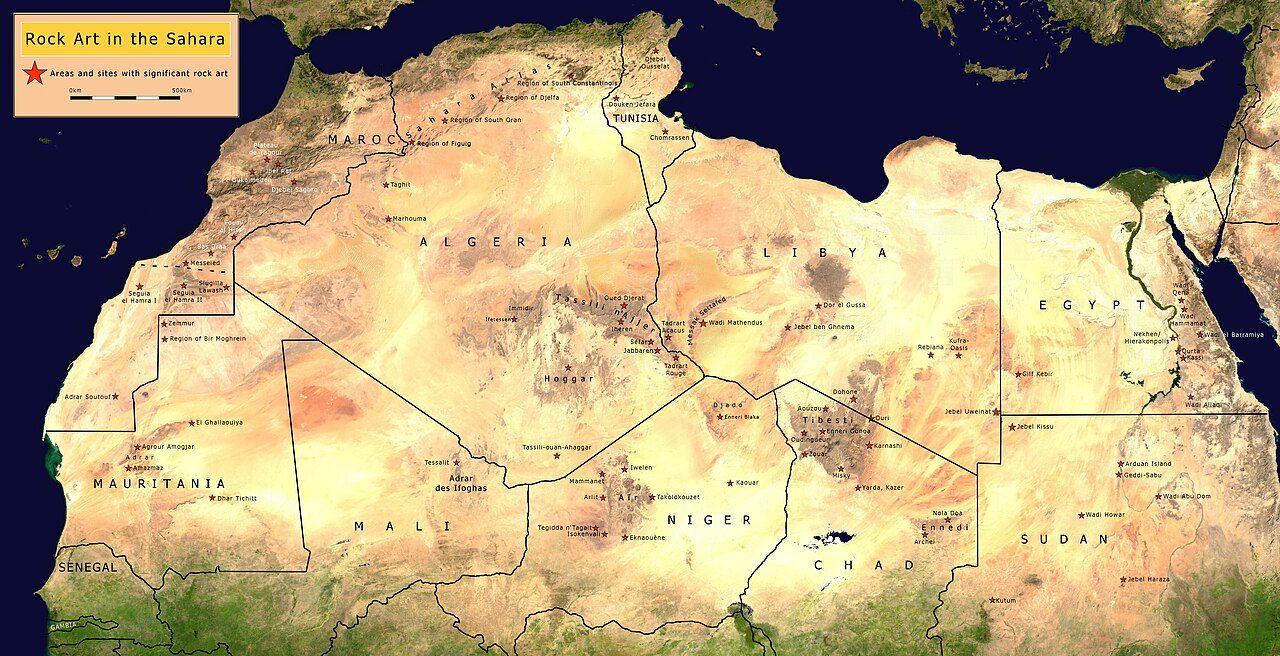
4 min read · 2 sourcesSaharan rock art is a significant area of archaeological study focusing on artwork carved or painted on the natural rocks of the central Sahara desert. The rock art dates from numerous periods starting c. 12,000 years ago. The paintings and carvings of the Sahara are endangered and vulnerable; much of the rock art on uncovered rock has already disappeared. This is due to time and how the area has changed, as well as the improper exploration of this sites in the past. Organizations such as the Trust for African Rock Art are researching and recording as much information about Saharan rock art as possible, while raising awareness of threats to the art itself. New discoveries and ongoing research of the Sahara's rock art include findings of ancient symbols, mysterious figures, and scenes depicting early African society's relationship with animals. However, progress is slow due to the need for proper archaeology and comparison. Many have tried to hypothesize what these carvings and paintings mean using iconography to compare similarities with other pieces of art. 1
Egypt
The rock art found in this region is often referred to as the ‘Wadi Sura style’, as scholars have identified stylistic and iconographic symbols (headless beasts, swimmers, and hand impressions) that appear to date to a similar time period. 1
Cave of Swimmers: Wadi Sura I is located in the Gilf Kebir. This section of caves was discovered in 1933. Its name is derived from the figures on the wall who appear to be lined up and floating as if swimming. Cave of Beasts: Wadi Sura II, commonly called the "cave of beasts," was discovered by accident in 2002. It is located on the Gilf Kebir plateau and contains figures of people and animals alike. The painting show a society of hunter-gatherers who lived between c. 6500 and 4400 BCE. 1
Chad
Rock art has been found in the Tibesti Mountains and Ennedi Plateau of Chad. 1
Tibesti: The rock art that exists in these mountains was created before dramatic climate change in the Saharan Desert caused the inhabitants to move towards the Nile Valley. Large animal engravings and other rock art dates to between 12,000 and 4,000 years ago. Ennedi: Much of the rock art in this area is from the Horse Period, made in the last 2,000 years. Pastoral period art is also found here. The period reflects the changes in societal practices and adaption to the environment. 1
Algeria
Tassili n'Ajjer, the cave paintings found at Tassili n'Ajjer north of Tamanrasset, Algeria and at other locations depict vivid scenes of everyday life in central North Africa between about 10,000 BP and 6,000 BP, in the Later Stone Age. There are over 15,000 individual pieces of artwork in Tassili n'Ajjer; this includes paintings and rock engravings that depict the culture of Africans up to 12,000 years ago. They were created by a hunting people in the Capsian period between 5,000 and 3,900 BP who lived in a savanna region teeming with giant buffalo, elephant, rhinoceros, and hippopotamus, animals that no longer exist in the now-desert area. The rock art low-relief "Crying Cows", also found in the Tassili n'Ajjer plateau, depicts teardrops rolling down the faces of horned cattle. They are thought to be dated around 7,000 to 8,000 years ago when the climate wasn’t nearly as dry. These depict the pastoral period in the Saharas and incorporate a local myth that describes a shepherd carving the piece after being unable to find drinking water for his herd. South Oran Djelfa Ahaggar 1
Libya
Mesak Settafet: Abundant rock art is found in this location, near a mountain chain in Libya. Art is made from engraving techniques such as grinding, pecking, and scratching. Outlines of animals are found in blackened sandstone. 1
Tadrart Acacus: Near the sand dune of Murzuk, bordering Tassili n'Ajjer, exists 12,000 year old prehistoric rock art. It appears to reflect much of the same culture as the Tassili n'Ajjer rock art. 1
Morocco
Draa River Rock art of Figuig 1
The text above is adapted from the Wikipedia article “Saharan rock art”, available under the Creative Commons Attribution-ShareAlike 4.0 licence. 1
Saharan rock art is prehistoric artwork carved or painted on natural rocks in the Saharan desert, according to the structured record cited below. This entry was generated automatically from that record and has not yet been reviewed by a person familiar with the tradition. 2
The source record links this tradition to 1 external register, which can be verified through the citation. 2