The tradition & historical record
3 min read · 2 sourcesThe seperewa, also known as seprewa or sanku, is a Ghanaian (specifically Akan) harp-lute, similar to the Dagaare/Sisaala koriduo, the Mandé kora, the Gere duu, and Baoule aloko. 1
Description
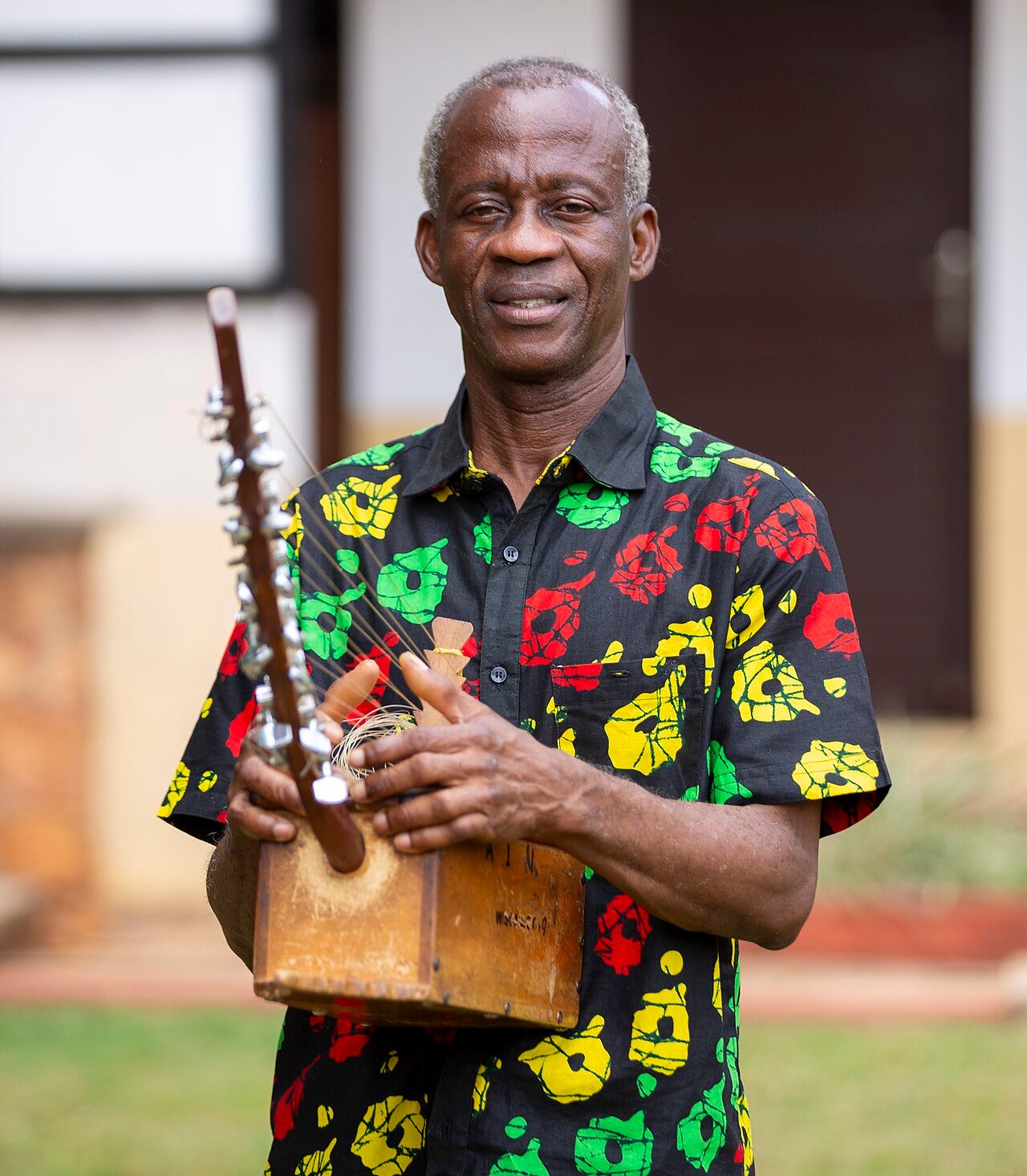
The seperewa belongs to a class of harp-lute chordophones typical in West Africa, with Ghana marking the easternmost area where harp-lutes are played in the region. The seperewa is one of two types of harp-lutes played in Ghana, the other being the koriduo. Modern seperewa typically have anywhere between 10 and 14 strings, set onto a standing bridge, and are connected to the neck of the instrument by winding them around it directly. They are recognisable by their square wooden box resonator, which differs from the calabash resonators of Manding harp-lutes like the kora or kamalengoni. They are either played with the thumbs, or rarely with the forefingers, or bow sanku, is attested to at least the 17th century, as the then newly established Ashanti Empire incorporated elements of its heavily Mande-influenced northern predecessor state Bonoman into its musical repertoire. Various harp-lutes similar to the sanku were once exclusively played in northern Ghana (which culturally was much more heavily influenced by the Mali Empire and today is still inhabited by several Manden groups; the Ligbi, Bissa, Dyula , and Wangara), eventually giving way to kologo and molo calabash-lute types instead. The harp-lute tradition since then was preserved predominantly among Akan groups in what became southern Ghana, with the only exception being the koriduo 6-string harp of the Dagari and Sisaala groups of northwestern Ghana. 1
King Osei Tutu, the founder of the Asante empire, was said to have loved the instrument so much that his successor, Opoku Ware caused a replica of it to be made in his memory. 1
Playing method
Seperewa can be played in different positions. The player can play while sitting down with the instrument resting on his lap, with the neck of the instrument standing upright. He may also play while standing, the instrument held firmly in the groin to gain enough support, the neck facing perpendicular in the same direction. 1
Strumming and plucking are the two basic techniques applied and these are done by the thumbs and forefingers with some occasional assistance from the middle fingers. The seperewa player can even dance while he is playing or make some dramatic movements. 1
The text above is adapted from the Wikipedia article “Seperewa”, available under the Creative Commons Attribution-ShareAlike 4.0 licence. 1
seperewa is Akan harp-lute chordophone from Ghana, according to the structured record cited below. This entry was generated automatically from that record and has not yet been reviewed by a person familiar with the tradition. 2
The source record links this tradition to 3 external registers, which can be verified through the citation. 2