The tradition & historical record
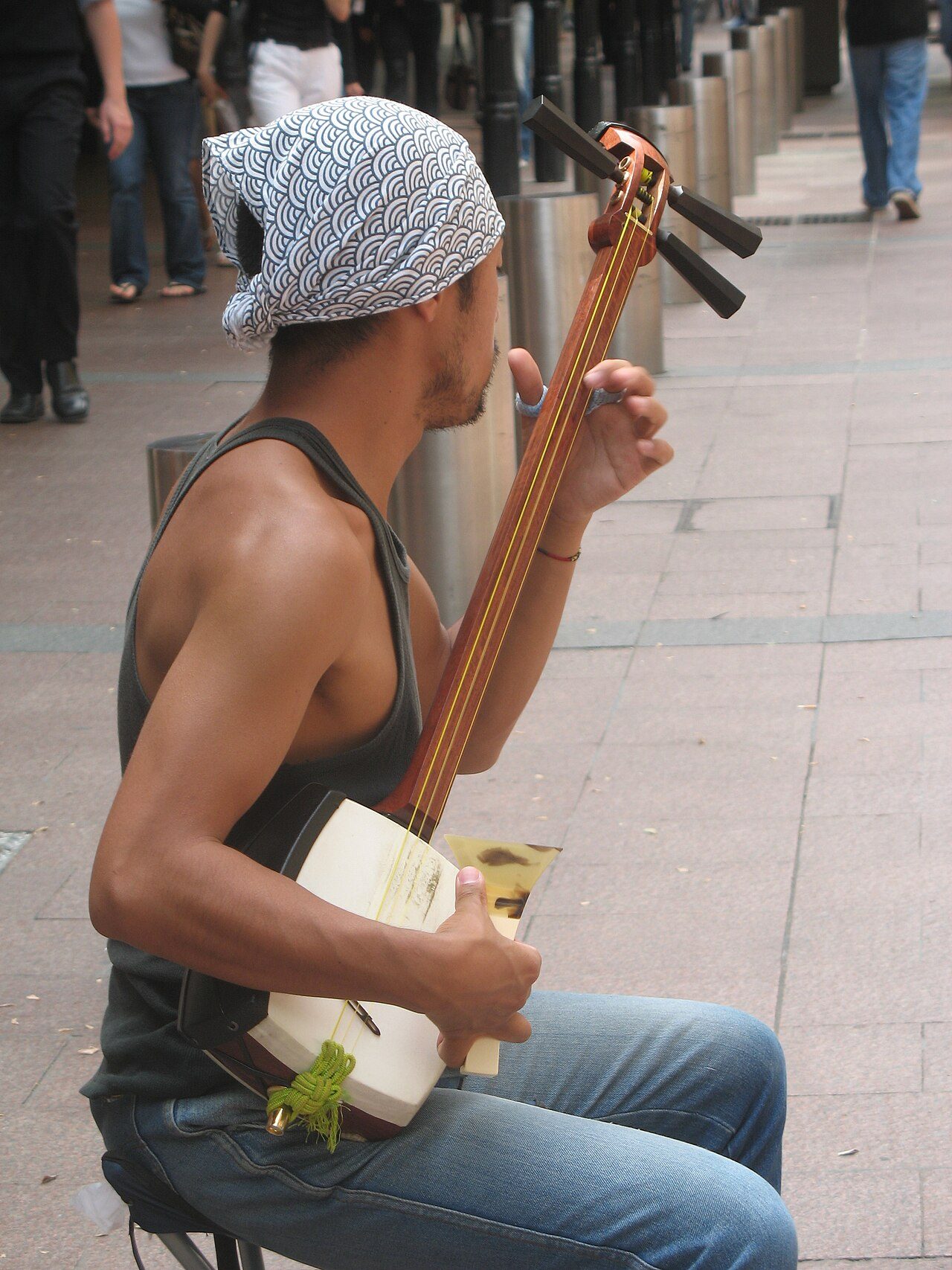
6 min read · 2 sourcesThe shamisen or samisen (三味線), also known as sangen (三絃) (all meaning 'three strings'), is a three-stringed traditional Japanese musical instrument derived from the Chinese instrument sanxian. It is played with a plectrum called a bachi. The Japanese pronunciation is usually shamisen but sometimes jamisen when used as a suffix, according to regular sound change (e.g. tsugaru-jamisen). In Western Japanese dialects and several Edo period sources, it is both written and pronounced as samisen. The construction of the shamisen varies in shape, depending on the genre in which it is used. The instrument used to accompany kabuki has a thin neck, facilitating the agile and virtuosic requirements of that genre. The one used to accompany puppet plays and folk songs has a longer and thicker neck instead, to match the more robust music of those genres. 1
Construction
The shamisen is a plucked stringed instrument. Its construction follows a model similar to that of a guitar or a banjo, with a neck and strings stretched across a resonating body. The neck of the shamisen is fretless and slimmer than that of a guitar or banjo. The body, called the dō (胴), resembles a drum, having a hollow body that is covered front and back with skin, in the manner of a banjo. The skin used depends on the genre of music and the skill of the player. Traditionally, skins were made using dog or cat skin, with cat skin favored for finer instruments; though use of animal skins was common throughout the 20th century, use of these skins gradually fell out of favor, starting around the mid 2000s, due to social stigma and the decline of workers skilled in preparing these particular skins. Contemporary shamisen skins are often prepared with synthetic materials, such as plastic. The sao (棹), or neck of the shamisen, is usually divided into three or four pieces that fit and lock together, with most shamisen made to be easily disassembled. The neck of the shamisen is a singular rod that crosses the drum-like body of the instrument, partially protruding at the other side of the body and acting as an anchor for the strings. The pegs used to wind the strings are long, thin and hexagonal in shape; though they were traditionally fashioned out of ivory, due to scarcity and trading regulations regarding and constricting the sale of ivory, many are now constructed from other materials, such as wood and plastic. The three strings of the shamisen are made of either silk (traditionally) or nylon. They are stretched between the pegs at the head of the instrument, and a cloth tailpiece anchored at the end of the rod which protrudes on the other side of the body. 1
Variations in construction and playing method
The construction of the shamisen varies in shape and size, depending on the genre in which it is used. The bachi used will also be different according to genre, if it is used at all. Shamisen are classified according to size and genre. There are three basic sizes: hosozao, chuzao and futozao. Examples of shamisen genres include nagauta, jiuta, min'yo, kouta, hauta, shinnai, tokiwazu, kiyomoto, gidayu and tsugaru. Shamisen used for traditional genres of Japanese music, such as jiuta, kouta, and nagauta, adhere to very strict standards. Purists of these genres demand that the shamisen be made of the correct wood, the correct skin, and are played with the correct bachi, with little room for variation. The tsugaru-jamisen, on the other hand, has lent itself to modern use, and is used in modern genres such as jazz and rock. As a more open instrument, variations of it exist for show. The tuning pegs, which are usually fashioned out of ivory, and bachi which are fashioned from a combination of ivory and tortoise-shell for example, are sometimes made of acrylic material to give the shamisen a more modern, flashy look. Recently, avant-garde inventors have developed a tsugaru-jamisen with electric pickups to be used with amplifiers, like the electric guitar. 1
Hosozao
The hosozao (細棹, literally "thin neck"), as its Japanese name implies, is the smallest kind of shamisen. The body is small and particularly square-shaped, with a particularly thin neck, which tapers away from the strings just as it approaches the body. Generally, the hosozao is used in nagauta, the shorter and thinner neck facilitating the agile and virtuosic requirements of kabuki. Hosozao shamisen built especially for nagauta ensembles are often simply known as nagauta shamisen. The hosozao is also often used in kouta, where it is plucked with the fingernails. 1
Chuzao
The chuzao (中棹, literally "middle neck") is a size up from the hosozao. As its name implies, the neck is slightly thicker. As the neck approaches the body of the instrument, the distance between the strings and the fingerboard is maintained, unlike the hosozao, where it tapers off. The fingerboard ends abruptly, and the rest of the neck curves sharply into the body of the instrument. The pronounced curve that occurs just before the neck meets the body is called hatomune (鳩胸, literally "pigeon's breast"). The result is an extended fingerboard that gives the chuzao a higher register than the hosozao. The chuzao is favored for jiuta-style playing, with a broader, more mellow timbre. It is also an "all-round" instrument that can be used across many genres. 1
Futozao
The futozao (太棹, literally "fat neck") shamisen is used in the robust music of gidayubushi (the music of bunraku), jōruri min'yo, and tsugaru-jamisen. In these genres, a thicker neck facilitates the greater force used in playing the music of these styles. The futozao of tsugaru-jamisen is quite a recent innovation, and is purposefully constructed in a much larger size than traditional style shamisen, and its neck is much longer and thicker than the traditional nagauta or jiuta shamisen. 1
The text above is adapted from the Wikipedia article “Shamisen”, available under the Creative Commons Attribution-ShareAlike 4.0 licence. 1
shamisen is Japanese plucked stringed instrument, according to the structured record cited below. This entry was generated automatically from that record and has not yet been reviewed by a person familiar with the tradition. 2
The source record links this tradition to 34 external registers, which can be verified through the citation. 2