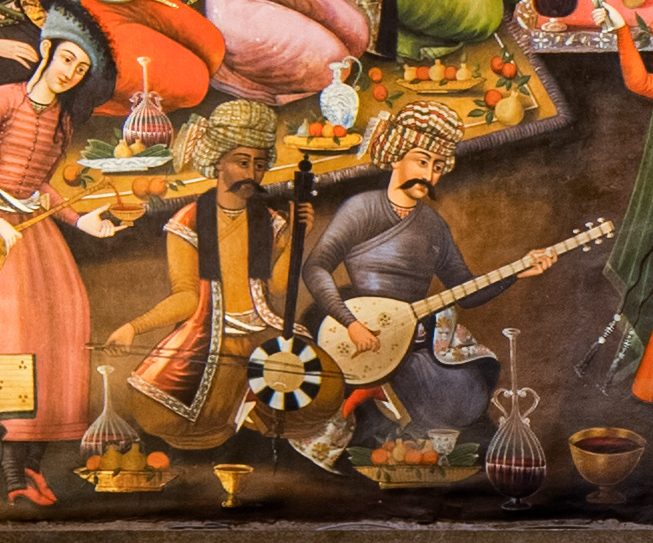
The tradition & historical record
1 min read · 2 sourcesThe Shashtar, Sheshtar or Shashtay (probably from Persian Şaş-tar or Şeş-tar, ششتار or ششتار, lit. 'six-string', 'having six strings') is a stringed musical instrument of the lute family. It was mentioned historically by Evliya Çelebi and Abd al-Qadir Maraghi. It is or was played in Iran/Persia, Afghanistan, Azerbaijan and elsewhere. It may have been developed during the Safavid era from the tambur. Like the tambur, it has a floating bridge and a wooden soundboard (not skin like the rubab etc.). The 6 gut strings were in 3 double courses, and thus it may be a forerunner of the Tar. 1
The text above is adapted from the Wikipedia article “Shashtar”, available under the Creative Commons Attribution-ShareAlike 4.0 licence. 1
Shashtar is musical instrument, according to the structured record cited below. This entry was generated automatically from that record and has not yet been reviewed by a person familiar with the tradition. 2
The source record links this tradition to 1 external register, which can be verified through the citation. 2