The tradition & historical record
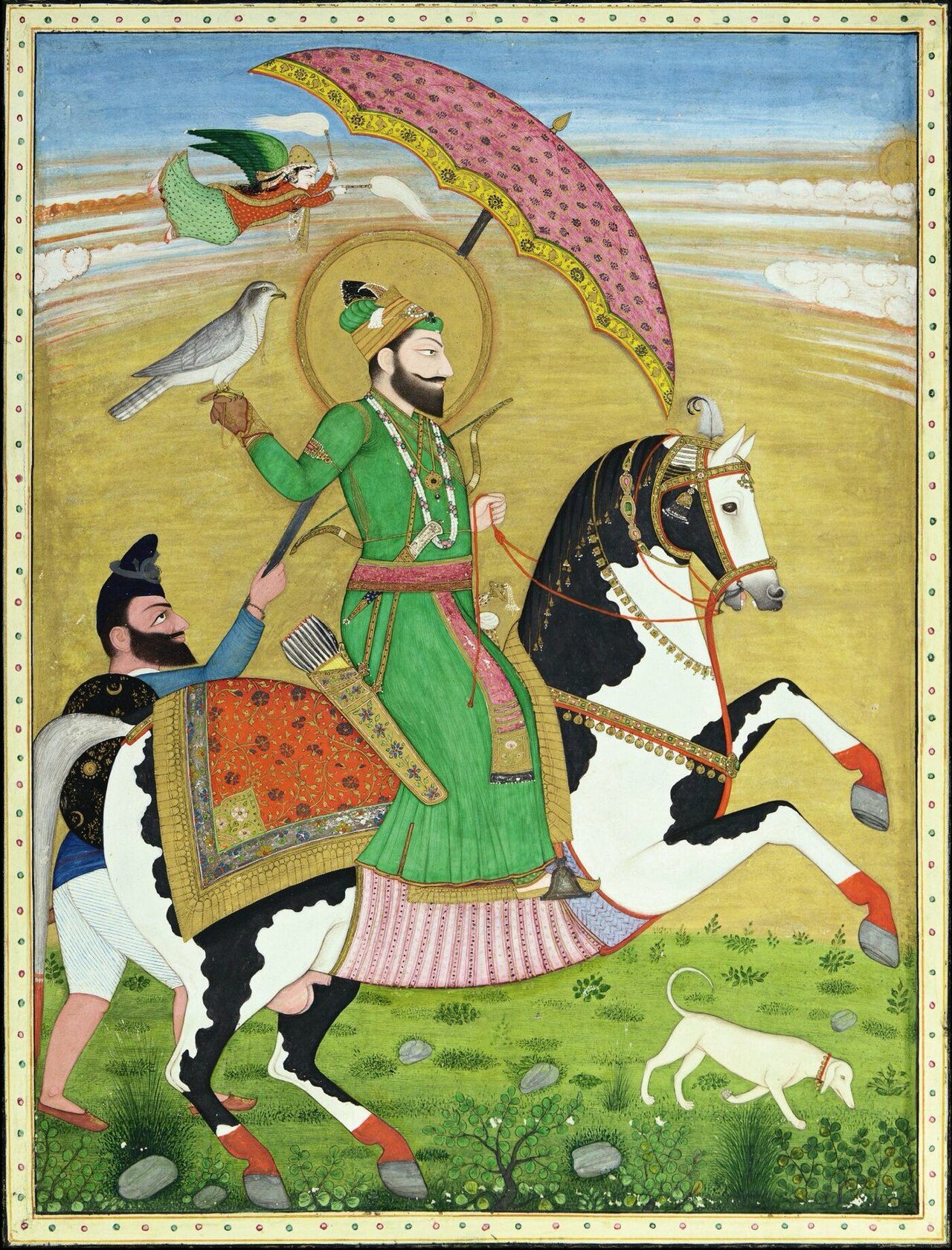
5 min read · 2 sourcesSikh art, also known as the Sikh School, is the artwork created by or associated with Sikhs and Sikhism. Sikh artwork exists in many forms, such as miniature, oil, and watercolour paintings, murals, and wood carvings. The first Sikh artists were influenced by the Pahari and Mughal schools, however the ushering in of European influences during the colonial-age would transform Sikh art by adopting Western methods and tastes for artwork. Today, Sikh art exists in varying forms and styles, being influenced by the digital age and Internet. 1
Definition
B. N. Goswamy defines Sikh art as "art made for Sikhs and by Sikhs". W. H. McLeod defines it more broadly as works made in areas under Sikh-rule, those with distinctly Sikh iconography, and those in a style identical to pieces made by Sikh artists or with Sikh iconography. Owing to Sikh artwork's late development, it inherited much from the pre-existing Mughal and Rajput (Pahari and Rajasthani) schools. 1
Terminology and categories
In 19th century Punjab, there were two main types of artists: musawirs and naqqashas. They worked independently of one another and focused on different spheres, with their styles, materials, and techniques differing from one another. The traditional term rasa describes the specific emotions evoked by an artwork, known as an aesthetic object or experience. 1
Musawirs
The Musawirs were painters who drew animated objects. Some artists who specialized in this field were Kishan Singh and Chajju, Imam Bakhsh, and Mohammad Bakhsh. The musawir artists relied on their own memory to reproduce an artistic depiction of someone. One method they used was going out into the bazaars to observe people and then returning to their studio to paint the people they witnessed using their recollection. Their works would be sold to patrons, displayed within havelis or religious sites, or be gifted to nobles and rulers as momentos. Some of the figuratives depicted by them include Sikh nobility, saints, or commonfolk. 1
Naqqash
The word 'naqqash' is equivalent to the meaning of chitrakar, and means "decorator" or "illuminator" and refers to a painter or artist who specialized in decoration, illumination, calligraphy, and ornamentation work of addresses, letter-heads, nikah-namahs, idis, janam-patris, and related documents. Naqqash artists were employed to illuminate Perso-Arabic manuscripts, ornamentation of addresses, letter heads, nikah-namahs (marriage certificates), idis, janam patris (horoscopes) and other kinds of records, and the embellishment of calligraphy. It was common for illuminators to also be able to work as calligraphists. The Sikh school of naqqash was initially influenced by Muslim and Vaishnavist Naqqash artists since the initial ones employed to work at the Harmandir Sahib complex during the beautification project by Ranjit Singh were of this background. Some Naqqashi artists belonged to a familial lineage of artists whilst others had been trained specifically by an existing naqqashi master as a pupil. There existed Naqqashi guilds and also ustad-shagird (teacher-disciple) groups. Training Naqqashi pupils mastered their art by developing "... a vocabulary both through experience and imagination". Guild supervisors or the master (in the case of a master-pupil grouping) would also offer suggestions to further beautify the end-result. A Naqqashi artist's mastery of the art form depended upon the number of years he had been training and his own comprehension of forms, style, pattern, colour application. A Naqqash's capacity to transform to physical art relied upon their grasp of literary sources, daily observations, and manual skills to showcase the language of visual art. 1
Prominent artisan families
The Naqqash artists often were linked to each-other by family bonds, an example being the household of Kehar Singh. The families were known as gharanas. The places and streets the artisan families lived and work in became known after them. Kehar Singh had two nephews who pursued a career in the arts, them being Kishan Singh and Bishan Singh. Bishan Singh had two sons who became artists, Nihal Singh and Jawahar Singh. Some of the prominent Sikh artisan lineages, along with prominent members, are as follows (with the lineages often being connected to each-other through marriage): 1
Lineage of Bhai Amir Singh Naqqash (Amir Singh → Rood Singh → Ganesha Singh → Hakim Gurcharan Singh) Lineage of Bhai Ambir Singh (Ambir Singh → Kehar Singh and Ram Singh) Lineage of Sangat Singh (Sangat Singh → Bishan Singh and Kishan Singh) Lineage of Charan Singh (Charan Singh → Gian Singh → Sohan Singh) The lineages of Amir Singh, Ambir Singh, and Sangat Singh were connected through marriage and blood, therefore they can be collectively grouped together and referred to as the "Kehar Singh-Kishan Singh" family. There were also non-Sikh lineages who played a role in developing Punjabi arts, such as the Chughtai family, whom were Muslim. Additionally, the Hindu family of Purkhu-Nain Sukh also worked for Sikh courts. 1
The text above is adapted from the Wikipedia article “Sikh art”, available under the Creative Commons Attribution-ShareAlike 4.0 licence. 1
Sikh art is school of art, according to the structured record cited below. This entry was generated automatically from that record and has not yet been reviewed by a person familiar with the tradition. 2
The source record links this tradition to 1 external register, which can be verified through the citation. 2