The tradition & historical record
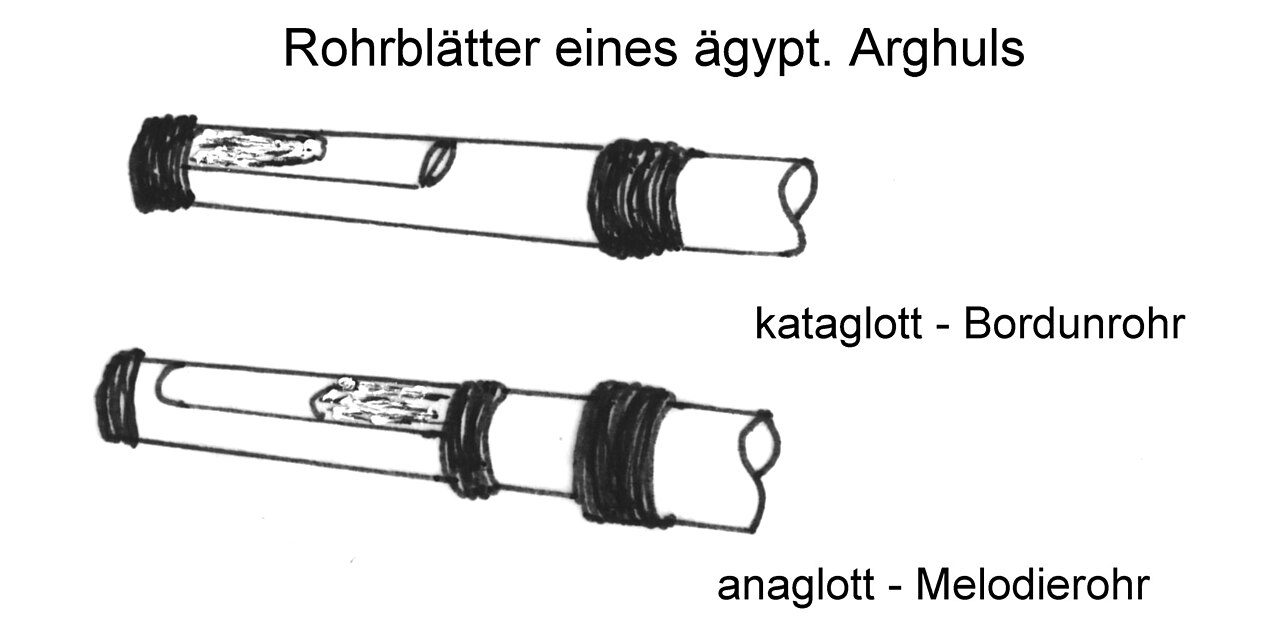
3 min read · 2 sourcesA single-reed instrument is a woodwind instrument that uses only one reed to produce sound. The very earliest single-reed instruments were documented in ancient Egypt, ancient Greece as well as the Middle East, and the Roman Empire. The earliest types of single-reed instruments used idioglottal reeds, where the vibrating reed is a tongue cut and shaped on the tube of cane. Much later, single-reed instruments started using heteroglottal reeds, where a reed is cut and separated from the tube of cane and attached to a mouthpiece of some sort. By contrast, in a double reed instrument (such as the oboe and bassoon), there is no mouthpiece; the two parts of the reed vibrate against one another. Reeds are traditionally made of cane and produce sound when air is blown across or through them. The type of instruments that use a single reed are clarinets and saxophone. The timbre of a single and double reed instrument is related to the harmonic series caused by the shape of the corpus. E.g. the clarinet is only including the odd harmonics due to air column modes canceling out the even harmonics. This may be compared to the timbre of a square wave. 1
Most single-reed instruments are descended from single-reed idioglot instruments called 'memet', found in Egypt as early as 2700 BCE. Due to their fragility, no instruments from antiquity were preserved but iconographic evidence is prevalent. 1
Classification
Single reed instruments fall under three Hornbostel–Sachs classes: 1
412.13 Free reeds. 422.2 Single reed instruments: The pipe has a single 'reed' consisting of a percussion lamella. These are the percussion reeds including clarinets and saxophones. 422.3 Reedpipes with free reeds: The reed vibrates through [at] a closely fitted frame, and there are fingerholes. 1
Comparing clarinets and saxophones
The following is a list of clarinets and saxophones, relative to their range and key of transposition from the opposite family: 1
Note that if one was to compare clarinets to their saxophone counterparts while considering their approximate lowest (concert) pitch†, the order would shift: 1
†The lowest possible pitch of each clarinet and saxophone is dependent on its manufacturer and model (the pitches used are typical of professional instruments). 1
Modern
Aulochrome Clarinet Heckel-clarina Heckelphone-clarinet Octavin Saxophone Tárogató Xaphoon 1
Historical
Mock Trumpet Chalumeau 1
Traditional
European Alboka Birbynė Chalumeau Diplica Ganurags Hornpipe Launeddas Pilili Mock trumpet Pibgorn Pku Sipsi Stock-and-horn Zhaleika Middle Eastern Arghul Double clarinet Mijwiz Sipsi Central Asian Bülban South Asian Tarpa Southeast Asian Pey pok Sarune Etek Sneng Toleat 1
The text above is adapted from the Wikipedia article “Single-reed instrument”, available under the Creative Commons Attribution-ShareAlike 4.0 licence. 1
single-reed instrument is class of musical instruments, according to the structured record cited below. This entry was generated automatically from that record and has not yet been reviewed by a person familiar with the tradition. 2
The source record links this tradition to 7 external registers, which can be verified through the citation. 2